But a plausible scenario about fear of AI could result when a rogue human coder may put in a malicious code (out of mischief ) in this far-from-equilibrium AI system and start a chain of events which may destroy the system.



The central danger is, therefore, not simply that AI will be monstrous if the accelerator is pressed hard on the speed of technology. It is that the accelerator on human institutions also needs to be pressed harder to govern increasingly powerful technology.
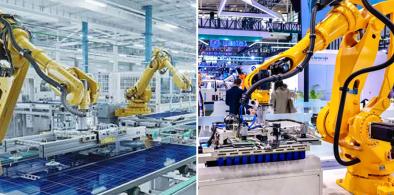
The fear of Chinese robots being the Trojan horse that can affect American and Western tech dominance and undermine cyber and military advantage will always be a strategic concern, despite attempts to view these fears as overblown.
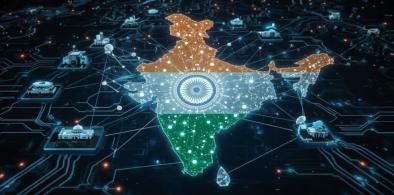
For a Viksit Bharat, data, computation and intelligence will become strategic resources. Protecting them is not protectionism; it is prudent nation-building. India should remain globally connected, internationally collaborative and technologically ambitious but sovereign enough to protect its citizens, institutions and national interests.

The real significance of AI, therefore, may not be about who is the first to cross some hypothetical finish line called AGI. It may be about who is able to diffuse AI most rapidly through the real economy, into factories, services, logistics, research and everyday business

But a plausible scenario about fear of AI could result when a rogue human coder may put in a malicious code (out of mischief ) in this far-from-equilibrium AI system and start a chain of events which may destroy the system.
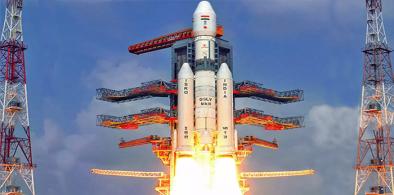
The purpose of privatisation, therefore, should not be to find a private buyer for every government-developed rocket. It should be to create an industry capable of designing, manufacturing, operating and eventually improving India's future launch vehicles.
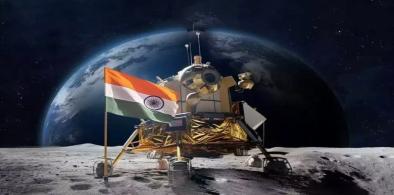
The last thing India needs is a debate in which concerns over public intellectual property become an argument against private participation. The country is already playing catch-up with the major space powers. We cannot afford to let a legitimate debate over ownership and sharing of value become an impediment to the much-needed privatisation of the space sector.

A common BIMSTEC policy statement on digital sovereignty would give the region a clearer collective voice and a stronger negotiating footing with foreign companies. Additionally, BIMSTEC can be used to initiate a shift from U.S. cloud storage companies to regional alternatives such as TATA Communications (India) and NIPA Cloud (Thailand).
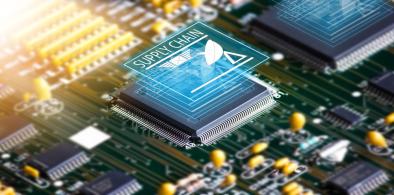
India is carving out a vital role in the global back-end chip infrastructure. Washington actively views India's rise in this sector as a strategic hedge, codifying tech cooperation through bilateral frameworks designed to shift critical supply lines away from East Asia.

The implications of mismanagement extend far beyond groundwater depletion. Foreign investors have withdrawn a record $30 billion from Indian equities so far in 2026. Regional data suggests investors have relocated their withdrawals across Taiwan and South Korea’s AI and semiconductor ecosystems.
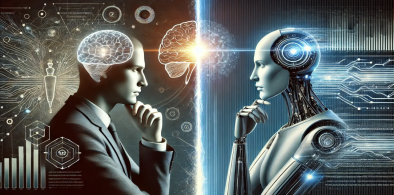
AI literacy should become as important as digital literacy. An informed user is ultimately the first and most effective line of defence against blindly accepting what a machine tells us.
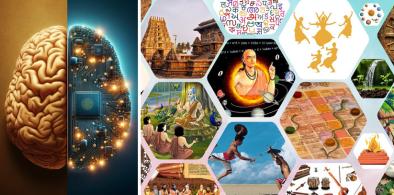
Rather than relying only on Western compliance checklists, AI development can be anchored in Atma-Bodha (self-awareness), training engineers to recognise how their algorithms alter human consciousness and social behaviour.

Biological systems behave very differently in orbit. Space research could lead to breakthroughs in cancer treatment, Alzheimer's therapies, protein crystallisation and even advanced prosthetics such as artificial retinas.

India therefore needs a serious conversation on algorithmic accountability. If AI increasingly informs policing, citizens deserve clarity on its legal basis, safeguards against misuse, limits on data retention, independent oversight and effective judicial remedies.

AI is already reshaping how gemstones get sold globally: visual search tools that let a buyer photograph a stone and find similar ones, AI chatbots that can answer basic buyer questions in multiple languages at 3 a.m. Colombo time, and generative tools that help small exporters produce professional product photography and listings
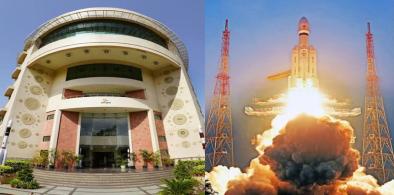
India now has companies capable of manufacturing rockets, satellites, electronics, structures and other space hardware. New private space companies are developing technologies at a speed that would have been difficult to imagine a decade ago.
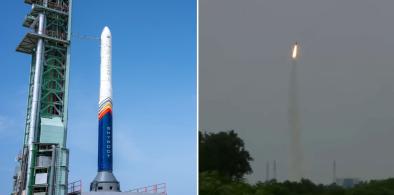
Beijing had regional dominance (e.g., the Shanghai Xingshu LEO projects). India has built a counter-weight. It now offers competitive, on-demand orbital routing through NewSpace India Limited (NSIL), the commercial arm of ISRO, and IN-SPACe, its regulator.

For people with mild to moderate distress, an AI-assisted system could provide brief, structured support based on evidence-based psychological techniques. For high-risk cases such as suicidal thoughts, psychotic symptoms, or acute trauma, the system should immediately refer the person to a human professional or a trained community health worker.
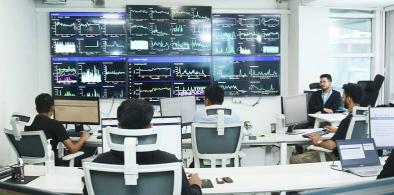
Nepal does not need to become Silicon Valley. It does not need to copy India, China, Singapore or Canada. Nepal needs an AI strategy rooted in its own realities: young talent, hydropower potential, local problems, growing IT services, tourism, agriculture, small businesses and a global diaspora.