
Representational Photo

Bangladesh's Trade Pact With US: A Strategic Shift By An Interim Administration?

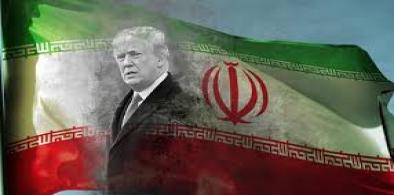
All of this would be consequential even under a fully elected government with a clear popular mandate. It becomes more troubling when done by an interim administration. Trade and security alignments of this magnitude shape a nation’s geopolitical posture for decades. They influence relations with China, Russia, India, the European Union, and ASEAN. They affect bargaining positions in multilateral forums. They alter perceptions among investors and strategic planners. After the national election on February 12,  the elected government will inherit this architecture. They will face a choice: comply and accept narrowed autonomy, or attempt renegotiation and risk economic retaliation.

Mohammad Deepak: A Beacon of Fraternity in an Age of Manufactured Hate

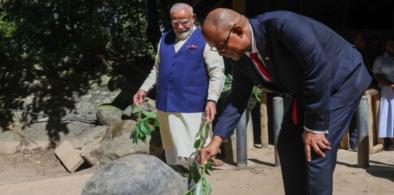
The Constitution of India enshrines fraternity as a foundational value alongside liberty, equality, and justice. Yet fraternity cannot survive on parchment alone; it requires everyday acts of courage. Deepak Kumar’s gesture — simple, instinctive, humane — stands in contrast to the flood of rhetoric that seeks to divide citizens along religious lines. It reminds us that the long history of Hindu-Muslim interaction in food, literature, architecture, festivals, and everyday life cannot be erased by slogans.  

Will A Rightwing Victory Transform Bangladesh? Jamaat's Rise Raises Uncomfortable Questions

If Jamaat comes to power it will likely begin with populist moves such as anti-corruption drives, predicts Ahmedur Chowdhury, a Bangladeshi writer and editor who has been living in Norway since surviving a 2015 attack. He says he fears  mobilisation of religious groups to push for declaring Bangladesh an Islamic republic and enforce Sharia law. The result would be shrinking freedoms for women, curbs on cultural life, and serious threats to freedom of expression, religious minorities, and secular political and cultural spaces.

Pakistan Mosque Blast: ISIS' Growing Shadow In The Subcontinent

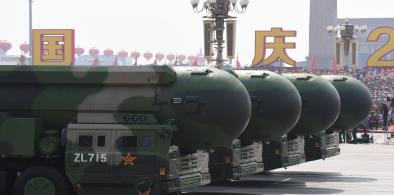
The threat from ISIS-K is real and growing. A resurgence in Pakistan would have serious implications for the broader region, including India. The danger is compounded if Pakistan once again attempts to clandestinely redirect ISIS-K towards Kashmir. What may appear as an isolated terror incident is, in fact, part of a wider pattern that demands sustained vigilance. Pakistan’s internal security instability risks creating openings for cross-border terror movements, potentially hardening new militant modules aimed at India and beyond.

More on Spotlight

Global South Must Reclaim Data Sovereignty: Need For Data Decolonization

Only by asserting ownership over data and algorithms can the South escape serving as the North’s digital underclass. The path forward demands digital decolonization—a reimagining of technology not as an instrument of extraction, but as a platform for justice, inclusion, and shared prosperity. The struggle for sovereignty has moved from the soil to the server.

Demographic Changes And National Identity: Fragmented Identity Groups Risk Societal Divisions

India provides valuable lessons. Despite its complex religious, linguistic, and ethnic diversity, India has preserved unity through a robust constitutional framework, civic nationalism, and legal consistency. Even contentious debates from population balance to cultural identity are ultimately rooted in democratic institutions. Western democracies can learn from this: pluralism prospers only when supported by strong governance and well-defined civic responsibilities.

The Uncertain And Questionable Road to Democracy in Bangladesh

After an uprising in 2024, Bangladesh is currently walking on the path to its national election in early 2026. If the ousted Awami League and its allies remain ineligible to participate in the next parliamentary election, ultimately, the central question remains: how will their huge number of supporters exercise their right to vote? Excluding a major political ideology from the electoral process risks making the election less inclusive and could generate new tensions

Climate Credit Markets in South Asia: The Next Frontier of Rural Finance

South Asia’s climate finance story reflects a familiar paradox: abundant potential constrained by institutional inertia. Carbon credit can reprice the region’s natural capital, transforming rural landscapes into financial assets. Yet credibility, governance, and inclusivity will define their success. For now, Morgan Stanley observes “ For millions of farmers across South Asia, that credibility is the difference between surviving climate volatility and profiting from combating it.

India’s AI Journey Is Redefining Digital Leadership

India’s goal is clear: to be among the few nations that do not merely consume technology but create and govern it. With its scale, talent, and democratic legitimacy, India is poised to emerge as a true digital superpower—one that shapes, not follows, the rules of the multipolar world.

Wrestling with Giants: India’s Strategic Manoeuvres In A Tri-Polar World

India’s position in the US-Russia-China tri-polar wrestling arena in 2025 is that of a clever, determined, and autonomous contender. It refuses to be pinned by Beijing’s might, Washington’s transactional approach, or Moscow’s nostalgia. Every move, whether economic, diplomatic, or military, is carefully calculated to preserve its space, grow its influence, and keep the balance constantly shifting. 

From Uprising To Uncertainty: Why The Bangladesh Transition Risks Losing Public Confidence

Muhammad Yunus has not yet successfully connected with the broader public or the key grassroots actors of the July movement, creating a perceptible disconnect. Without national consensus, holding peaceful and participatory elections remains difficult. Excluding the deposed ruling party from upcoming elections could undermine political inclusivity, depress voter turnout, and trigger unrest.

Mastering technology Will Not Only Win Wars, But Define Peace

The wars of the future will not be decided solely on land, sea, or air. They will be fought in code, space, and circuits. Nations that dominate these domains will command not just battlefields but geopolitics itself. The contest will be for speed of learning, adapting, and deploying innovation.

Narco-jihad: Pakistan’s ISI and Dawood Ibrahim threaten global security

Left unchecked, the narco-militant networks that flourish in shadow will continue to undermine social stability across South Asia and beyond. The choice, for policymakers in Washington, New Delhi, Dhaka and capitals across Europe, is to treat the problem as a criminal, financial and geopolitical threat - and respond with the seriousness it demands.

Bamiyan Buddhas Are A Test And Opportunity For The Taliban Now

The Taliban regime has started building a tourism complex and rebuilding a historic bazaar near the destroyed Bamiyan Buddhas without UNESCO consultations. Archaeological experts have warned that this could cause permanent damage to the UNESCO World Heritage Site. The damaged statues - where only the niches remain - are now belatedly being seen as a lucrative source of revenue for the financially crunched Taliban regime. 

Global Geopolitics Is BlindIng South Asia to Its Real Security Threats

We are, in effect, meticulously polishing our guns while the floodwaters rise around our feet. It is time for a profound strategic recalibration. We must pivot from a security doctrine based on state-centric containment to one based on region-wide, human-centric resilience.

South Asia Can Benefit from Its Common Educational Heritage

Initiatives under SAARC, though often criticized as politically dormant, have nonetheless sought to promote educational and cultural exchanges in fits and starts. Projects that highlight shared histories and traditions can help build a stronger regional identity and collective progress. Elements of ancient wisdom — such as holistic learning, ethical education, and personalized mentorship — continue to inspire modern educational reforms across South Asia.

The Phantom Capture: How a Faked Rafale Pilot Story Became a Case Study in Misinformation

The story of the alleged captured Rafale pilot is not a case of miscommunication. This is a textbook example of disinformation. It demonstrates how false narratives can be created, promoted, and weaponized in an age where information itself is a weapon of war. The lesson from this experience is plain. In this age of immediate communication, digital literacy and skepticism are critical civic virtues. 

Bangladesh Imam’s Kidnapping Drama: Islamist Plot To Incite Hatred Against Hindus?

Taken together - the staged abduction drama, Zakir Naik’s planned visit, and Zaheer’s clandestine movements - paint a deeply disturbing picture of Bangladesh’s current trajectory. Since the 2024 coup, Islamist influence has expanded alarmingly under the interim regime of Muhammad Yunus, creating fertile ground for extremist ideologies to spread under official tolerance. 

Caught in the Middle: Afghanistan’s Policy Options Between Rival Neighbors

India and Pakistan are both interested in establishing influence over Afghanistan. In pursuing control, both adopt a zero-sum approach. India fears that Pakistan’s influence in Afghanistan could create safe havens for anti-India elements such as Lashkar-e-Taiba and Jaish-e-Mohammad. Pakistan fears that India’s presence in Afghanistan could lead to its encirclement and threaten security along its northwestern borders.