

India's Pakistan Policy Needs Communication, Not Talks
Ultimately, sustainable peace between India and Pakistan cannot be built merely through meetings or declarations. It requires a fundamental transformation in Pakistan's approach towards terrorism, regional stability and bilateral relations. Until that happens, comprehensive dialogue is unlikely to produce meaningful outcomes.
 Jul 31, 2026
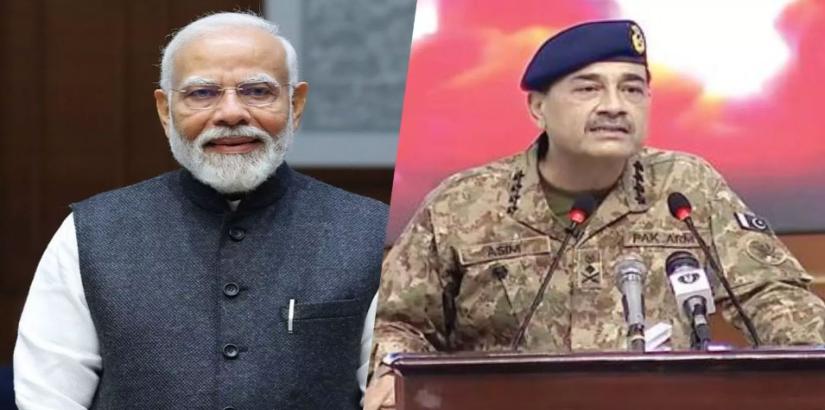
Calls for the resumption of India–Pakistan dialogue have resurfaced from an unlikely convergence of voices. Senior Rashtriya Swayamsevak Sangh (RSS) leaders, former military officers, Jammu and Kashmir Chief Minister Omar Abdullah, former Chief Minister Mehbooba Mufti, and more than a hundred eminent citizens from both countries have all argued, in varying ways, that communication between New Delhi and Islamabad should not be completely abandoned.
Simultaneously, Track 2 discussions between retired officials and strategic experts from both countries have continued quietly in Colombo and other locations. These developments have revived an old debate: should India resume engagement with Pakistan despite continuing security challenges?
The answer lies somewhere between outright rejection and unconditional dialogue. India is justified in refusing to return to business as usual so long as Pakistan continues to use terrorism as an instrument of state policy. Yet it is equally true that complete absence of communication between two nuclear-armed neighbours carries risks that neither side can afford. The present circumstances do not warrant formal bilateral talks, but they do require robust channels of communication that can prevent crises from spiralling into military confrontation.
India's position has hardened considerably since the April 2025 Pahalgam terrorist attack which claimed the lives of 26 civilians. The attack represented another reminder that cross-border terrorism remains the principal obstacle to any meaningful normalization of relations. New Delhi's military response through Operation Sindoor demonstrated that India is prepared to impose costs on terrorist infrastructure across the border. More significantly, India suspended the implementation of the Indus Waters Treaty, signalling that bilateral cooperation can no longer remain insulated from Pakistan's support for terrorism. The message was clear: "blood and water cannot flow together."
This marked a fundamental shift in India's Pakistan policy. For over six decades, the Indus Waters Treaty survived wars, military crises and prolonged diplomatic hostility. By placing the treaty in abeyance, India indicated that even the most durable bilateral arrangements cannot be taken for granted if the basic conditions of trust are repeatedly violated. Although water continues to flow naturally into Pakistan because India lacks the infrastructure to stop it immediately, the legal and institutional framework governing cooperation has effectively been suspended.
Pakistan, however, has responded by increasingly securitizing the water issue. Pakistan Army Chief Asim Munir has declared that Pakistan will take "all necessary measures" to secure its share of water, while Bilawal Bhutto Zardari, chairman of the Pakistan People's Party, has warned that any attempt to interfere with Pakistan's water rights could lead to war. Islamabad portrays the issue as one of national survival rather than treaty implementation, thereby transforming a technical water-sharing arrangement into another arena of strategic confrontation. Such rhetoric raises the political stakes while making diplomatic compromise more difficult.
Pakistan's Internal Challenges
At the same time, Pakistan's internal security situation continues to deteriorate. Balochistan has witnessed an alarming escalation in violence, with separatist groups such as the Baloch Liberation Army launching increasingly sophisticated attacks against security forces. The recent killing of nine police personnel in Ziarat district is only the latest reminder of the state's weakening control over parts of the province.
Simultaneously, the Tehrik-e-Taliban Pakistan remains active across several regions. Islamabad routinely blames India for these developments without presenting credible evidence, while overlooking the deeper structural causes of domestic insurgency and political instability.
The unrest in Pakistan-occupied Kashmir further complicates the picture. Sustained protests over governance failures, inflation, electricity shortages and political repression have exposed growing dissatisfaction among local populations. Reports of internet shutdowns, arrests of protest leaders and restrictions on food supplies have reinforced perceptions of administrative failure. These developments reveal that Pakistan today faces significant internal challenges that demand attention. A country grappling with multiple insurgencies, political instability and economic distress is hardly in a position to undertake serious and sustained peace negotiations.
India, meanwhile, has strengthened its diplomatic campaign against terrorism. The National Investigation Agency has filed charges against Lashkar-e-Taiba founder Hafiz Saeed in connection with the Pahalgam attack, while New Delhi is reportedly preparing to seek Pakistan's return to the Financial Action Task Force grey list by presenting fresh evidence relating to terrorist financing and state support for extremist groups. These initiatives indicate that India intends to maintain pressure through diplomatic, legal and financial instruments rather than relying solely on military responses.
Against this backdrop, advocates of immediate dialogue often invoke the argument that neighbours cannot be changed. That observation, famously articulated by Atal Bihari Vajpayee, remains valid. Geography dictates that India and Pakistan will continue to coexist. However, geography alone cannot substitute for political conditions necessary for meaningful negotiations. Dialogue is not an end in itself; it is a means to resolve disputes. If one side continues to employ terrorism while simultaneously demanding comprehensive engagement, the prospects for successful diplomacy remain extremely limited.
Communication Should not Cease
This does not mean communication should cease altogether. There is an important distinction between structured political dialogue aimed at resolving outstanding disputes and functional communication designed to manage crises. The latter remains indispensable. Even during periods of intense hostility, the hotline between the Directors General of Military Operations has helped reduce misunderstandings. Similar mechanisms should be strengthened rather than weakened.
The recent Track 2 meetings in Colombo illustrate this distinction. Although they produced no dramatic breakthroughs, they provided opportunities for retired officials, former military commanders and strategic experts to exchange assessments on terrorism, water issues and crisis management. Such interactions neither dilute India's official position nor imply acceptance of Pakistan's policies. Instead, they serve as useful instruments for understanding evolving perceptions, identifying areas of potential risk and preserving limited channels of engagement during periods when official dialogue remains politically impossible.
Equally significant are the recent statements by senior RSS leaders, former Army Chief General M. M. Naravane and leaders from Jammu and Kashmir advocating continued communication. These remarks should not be interpreted as calls for unconditional normalization. Rather, they reflect recognition that prolonged absence of contact between two nuclear powers increases uncertainty and raises the possibility of unintended escalation. Maintaining communication does not weaken deterrence; on the contrary, it strengthens strategic stability by reducing the risks of miscalculation.
Maintaining a Calibrated Policy
The challenge for India is therefore to maintain a calibrated policy that combines firmness with prudence. Counter-terrorism must remain the central determinant of bilateral engagement. Pakistan should not expect comprehensive political dialogue while cross-border terrorism continues. At the same time, India should preserve military hotlines, humanitarian communication, limited diplomatic contacts where necessary, and informal Track 2 exchanges that contribute to crisis management. Such an approach allows New Delhi to uphold its principled position without sacrificing strategic flexibility.
Ultimately, sustainable peace between India and Pakistan cannot be built merely through meetings or declarations. It requires a fundamental transformation in Pakistan's approach towards terrorism, regional stability and bilateral relations. Until that happens, comprehensive dialogue is unlikely to produce meaningful outcomes.
Nevertheless, complete silence is neither practical nor desirable. In an era of precision missiles, drones, cyber operations and compressed decision-making timelines, communication itself becomes an instrument of national security. Formal diplomatic talks may have to wait, but informal communication cannot. Preserving channels for de-escalation while maintaining uncompromising pressure against terrorism offers India the most realistic path for managing one of the world's most enduring and dangerous rivalries.
(The author is an Associate Fellow, Manohar Parrikar Institute for Defence Studies and Analyses (MP-IDSA), New Delhi. The views expressed are personal. He can be contacted at anand_rai@hotmail.com )





Post a Comment