BRICS summit

What's in a Name? Nomenclature Diplomacy Says Much About Changing Geopolitics

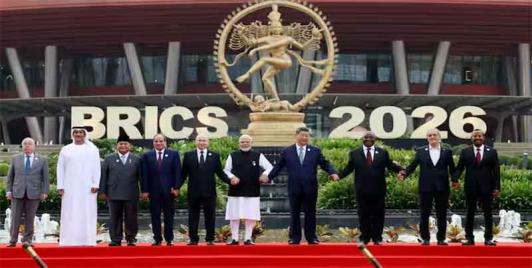
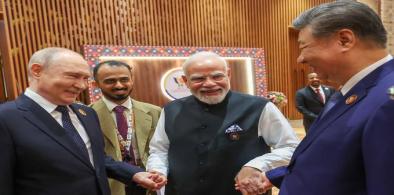
By removing the ‘Indo’ prefix from Indo-Pacific the US implicitly acknowledges that it no longer unilaterally defines the eastern strategic landscape. Regional organisations like BRICS continue to redefine the lexicon of ‘rules-based order’ to insulate themselves from western domination.

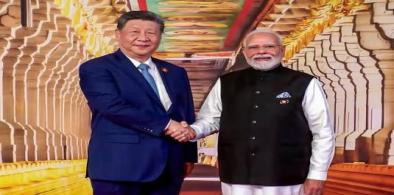
India-China Ties: Modi-Xi Meeting Signals Limited Thaw

The bilateral discussion between Prime Minister Narendra Modi and Chinese President Xi Jinping on the sidelines of the 18th BRICS Summit indicates surge in mutual ties, particularly by way of trade. However, little can be expected by way of full settlement of the boundary dispute.

EU Fast-Tracks FTA with India as BRICS Summit Signals Shifting Geopolitical Dynamics

The timing of the EU announcement coincided with the BRICS+ Summit in New Delhi, creating speculation about whether the EU was seeking to reinforce its strategic engagement with India amid the growing influence of the BRICS grouping.

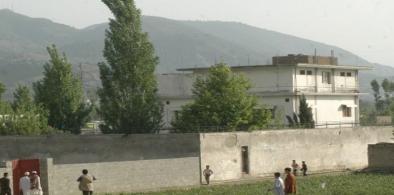
Never Forget Abbottabad: The Other Chapter of 9/11 Should not Fall Victim to Selective Memory

Abbottabad itself is symbolic. Just 30 miles north of Islamabad, along the historic Karakoram Highway, it is home to Pakistan’s premier military academy. For bin Laden to live there undetected is not simply a mystery—it is a reminder of the uncomfortable realities of counterterrorism

More on Geopolitics, Security and Strategic Affairs

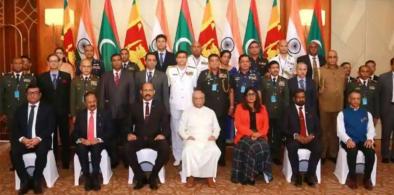
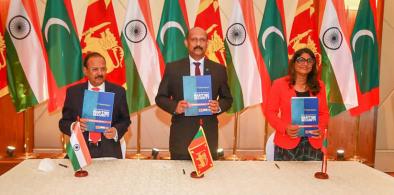
India-Sri Lanka-Maldives trilateral: Towards consolidating regional maritime security

The resumption of this interaction last held in New Delhi in 2014 is an important step forward in recognising the magnitude of the external and internal threat to maritime security and to develop a shared approach to the security of this region, writes Cmde Anil Jai Singh (retd) for South Asia Monitor

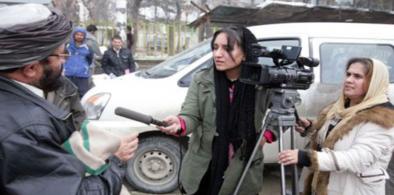
Women journalists in Afghanistan: Defiant in the face of violence

The protection for journalists remains the biggest challenge in Afghanistan, and while women journalists make up just 17 percent of the news force, 30 percent of them have reported violence, writes Farida Nekzad for South Asia Monitor

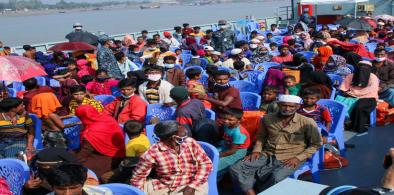
Bangladesh within its rights in relocating Rohingyas

It is the height of hypocrisy if the global community led by the West lets Myanmar off the hook  and instead pressurises poor Bangladesh to not only shelter more than a million people in the overcrowded country but even dictate locations for settling them, writes Subir Bhaumik for South Asia Monitor

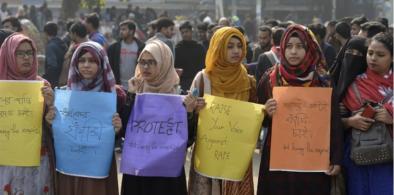
Can death penalty end Bangladesh’s rape culture?

Experts feel that impunity enjoyed by rapists in the country are not due to the fact that Bangladesh does not have a high punishment for rape - currently the highest punishment afforded is life imprisonment - but that rapists are convicted in only three percent of the cases, writes Tasmiah Nuhiya Ahmed for South Asia Monitor

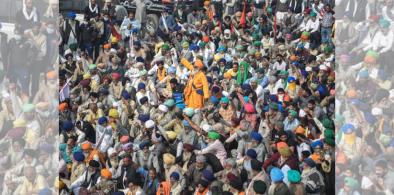
What ails India's agitating farmers?

The anger of these agitating farmers is yet another manifestation of the narrative of farmer distress that stalks the India growth story, writes N Chandra Mohan for South Asia Monitor 

Pakistan remains vulnerable to a 'terrorist takeover'; Taliban deal 'poorly advised', says former US National Security Advisor John Bolton

With the outgoing President Donald Trump having ordered a nearly full US troop withdrawal from Afghanistan after almost two decades in the war-torn country, in Bolton’s assessment  there are clear dangers of a serious instability that could threaten not only the South Asian region but the rest of the world, writes Mayank Chhaya for South Asia Monitor

Stymieing nuclear capability the dirty way: Yet China-Pakistan nuclear axis is ignored

Yet no nuclear scientist has been targeted in Pakistan, not even Abdul Qadeer Khan, father of Pakistan’s nuclear bomb who indulged in blatant nuclear proliferation with obvious government support, writes Lt Gen Prakash Katoch (retd) for South Asia Monitor
Two years after death, Sindh’s left-leaning leader still holds sway among masses

Rasool Bux Palijo has earned a place in the pantheon of leaders of South Asia who has earned lasting fame and created an ideological legacy in the struggle against martial law, feudalism, colonialism, and imperialism, writes Muhammad Abbas Khaskheli for South Asia Monitor 

Colombo-Delhi-Male dialogue: Looking beyond maritime security

India, Sri Lanka, and the Maldives agreed to expand the scope of intelligence sharing, including terrorism and cybersecurity, at the meeting to discuss common security threats, writes Sugeeswara Senadhira for South Asia Monitor

Pakistan's misguided cultural nationalism - and a losing battle with Indian content

Pakistani audiences seem unwilling to discard the supposedly "vulgar" stuff they are addicted to, given the common socio-cultural ethos of the subcontinent, writes Mahendra Ved for South Asia Monitor  

COVID-19 and South Asia: Sequencing of policy options

The spread of COVID-19 infections in South Asia has not been uniform across countries; while some countries were successful in controlling the pandemic, others were not, writes Partho Pratim Mitra for South Asia Monitor

‘Love jihad’ bills by BJP-ruled states against India's constitutional principles

The BJP governments in these states, in their quest to criminalize interfaith marriages, are going ahead with coming out with this law, despite not even a single case of ‘love jihad’ having been detected by the central investigative teams to date, writes Reeti Prakash for South Asia Monitor

With drastic troop cuts is US handing over Af-Pak to China?

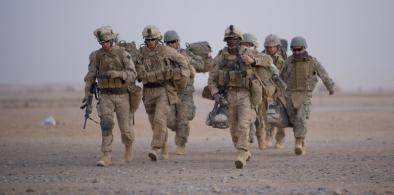
Till the Afghan National Security Forces (ANSF) are confident and sufficiently armed to stabilize the country, it would be prudent for the US to retain troop strength between 5000-8000 in Afghanistan, writes Lt Gen Prakash Katoch (retd)  for South Asia Monitor

Beyond Malabar: Quad needs to supplement military exercises with economic partnerships

The Malabar naval exercises could be seen as an obvious manifestation of the desire among members of the Quad to keep trade routes open, military confrontations in check and keep the Indo-Pacific Region open for legitimate rules-based economic activity, writes Raghbendra Jha for South Asia Monitor 

South Asian countries need to strengthen regional cooperation in food security, agriculture systems

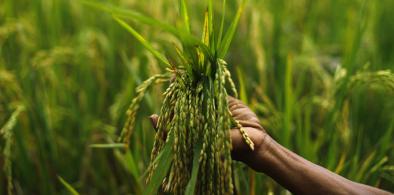
COVID-19 has brought into focus supply chain issues and with it a fundamental change in the way food availability and access is viewed, one that goes beyond the conventional focus on weather, area, production, and yield (APY) paradigm of crops, writes Partha Pratim Mitra for South Asia Monitor