Both the governments of Bangladesh and India can come out with policies that promote renewable energy sources, which will help to improve air quality and human health, writes Safen Roy for South Asia Monitor


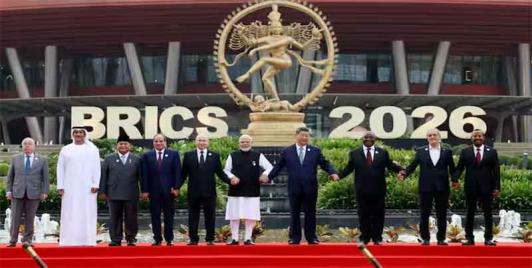
By removing the ‘Indo’ prefix from Indo-Pacific the US implicitly acknowledges that it no longer unilaterally defines the eastern strategic landscape. Regional organisations like BRICS continue to redefine the lexicon of ‘rules-based order’ to insulate themselves from western domination.
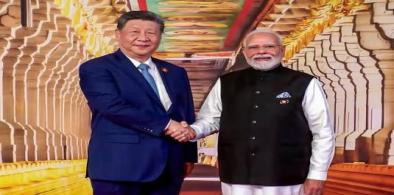
The bilateral discussion between Prime Minister Narendra Modi and Chinese President Xi Jinping on the sidelines of the 18th BRICS Summit indicates surge in mutual ties, particularly by way of trade. However, little can be expected by way of full settlement of the boundary dispute.
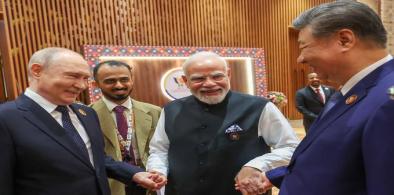
The timing of the EU announcement coincided with the BRICS+ Summit in New Delhi, creating speculation about whether the EU was seeking to reinforce its strategic engagement with India amid the growing influence of the BRICS grouping.
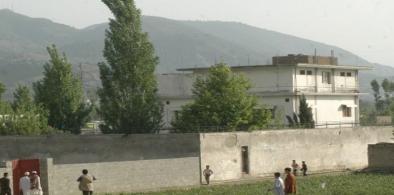
Abbottabad itself is symbolic. Just 30 miles north of Islamabad, along the historic Karakoram Highway, it is home to Pakistan’s premier military academy. For bin Laden to live there undetected is not simply a mystery—it is a reminder of the uncomfortable realities of counterterrorism
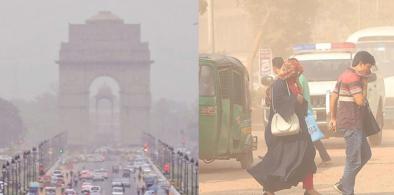
Both the governments of Bangladesh and India can come out with policies that promote renewable energy sources, which will help to improve air quality and human health, writes Safen Roy for South Asia Monitor
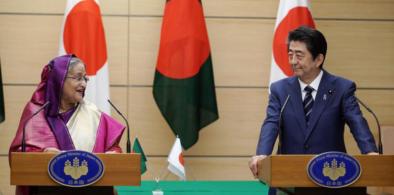
Attracting Japanese companies shifting out of China thus is consistent with Bangladesh’s Look East policy. To facilitate this a Special Economic Zone is being built, writes N Chandra Mohan for South Asia Monitor
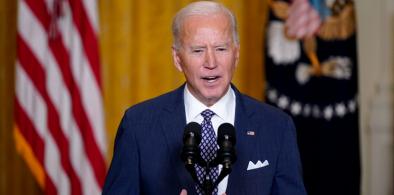
The US-Taliban peace deal also needs to be rejected, as it is a disaster in the making for Afghanistan, the region as well as for America since it would turn Af-Pak into a terror cauldron and a springboard to launch terror attacks on the US and its allies, writes Lt Gen Prakash Katoch (Retd) for South Asia Monitor
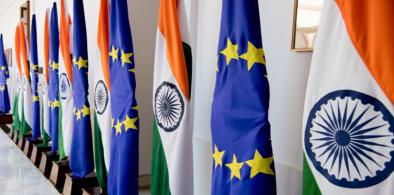
Can the EU hope for forward-looking language on at least a limited trade deal between India and the EU?, writes Amb Bhaswati Mukherjee (retd) for South Asia Monitor
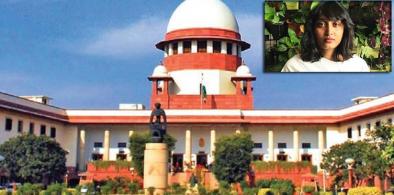
The Supreme Court of India has categorically held that criticism of the government, however harsh, does not amount to sedition unless violence is incited, writes Rahul Machaiah for South Asia Monitor
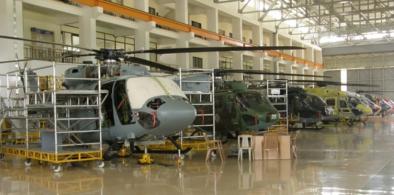
Fifty years of bitter experience should prompt the Prime Minister’s Office (PMO) to initiate a major paradigm-shift in India's defence-industrial programmes, writes Admiral Arun Prakash (retd) for South Asia Monitor
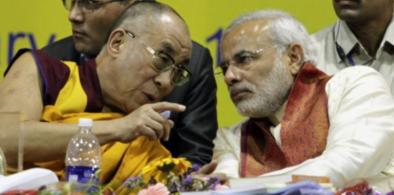
India must seek a larger role for the Dalai Lama and the Central Tibetan Administration in the international arena, write Pradeep S. Mehta and Jithin Sabu for South Asia Monitor
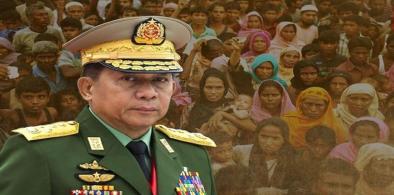
Bangladesh should keep raising the Rohingya issue in all international forums. It should continue its efforts in various diplomatic arenas to exert more international pressure on Myanmar for a quick Rohingya repatriation, write MD Sakib Hossain & Kawsar Uddin Mahmud for South Asia Monitor
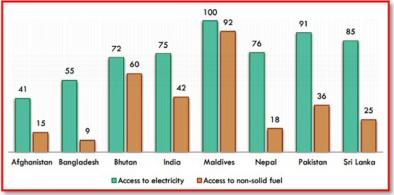
Asia has significant scope for regional cooperation and collaboration among its energy-deficient and energy-sufficient regions to enhance its overall energy security, writes Partha Pratim Mitra for South Asia Monitor
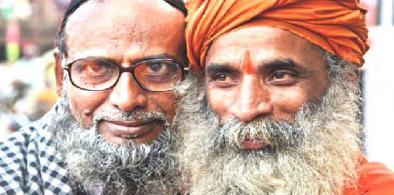
Communal or sectarian violence poses a serious threat not only to India’s secular and democratic spirit but also wreaks serious havoc on its economy, writes Asif Rameez Daudi for South Asia Monitor
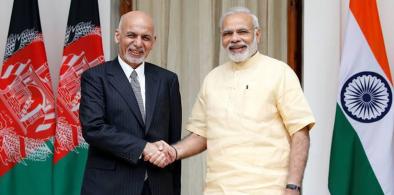
The Shahtoot Dam project will be India’s second-largest in Afghanistan after the Salma Dam project. This would invariably help mitigate water scarcity in the country, writes Amb Tahir Qadiry for South Asia Monitor
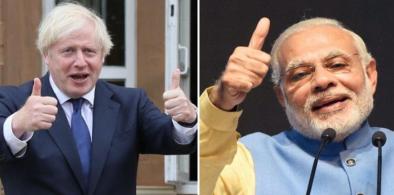
Brexit could translate into an opportunity for India to reset the legal terms of its trade with the UK and EU at the multilateral level as well as through free trade agreements (FTA). This remains a formidable challenge, writes Amb Bhaswati Mukherjee (retd) for South Asia Monitor
India's much weaker economic clout in comparison to China's, its controversial and polarising domestic policies, and the lack of dependability have all prompted the rest of its neighbours to embrace the Dragon, helping strengthen its "string of pearls" strategy, writes E D Mathew for South Asia Monitor
Being Asia’s third-largest economy, India has been criticized by the US, China, and the EU for rising trade barriers and restrictive investment policies at the World Trade Organization’s (WTO) Trade Policy Review, writes Manjari Balu for South Asia Monitor
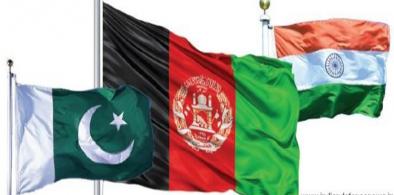
It is critical for India to make some uncomfortable choices to safeguard its strategic interests in Afghanistan, write Prashant Rastogi and Swati Sinha for South Asia Monitor