

Pakistan’s Endless Afghan Question: Refugees, Rivalries and Strategic Distrust
The anti-Taliban narrative of Pakistan is proving to be counterproductive as it is helping the Taliban to increase its regional outreach and internal consolidation of power. People in Afghanistan are uniting to support the regime’s unyielding posture towards Pakistan.
 Sep 27, 2026
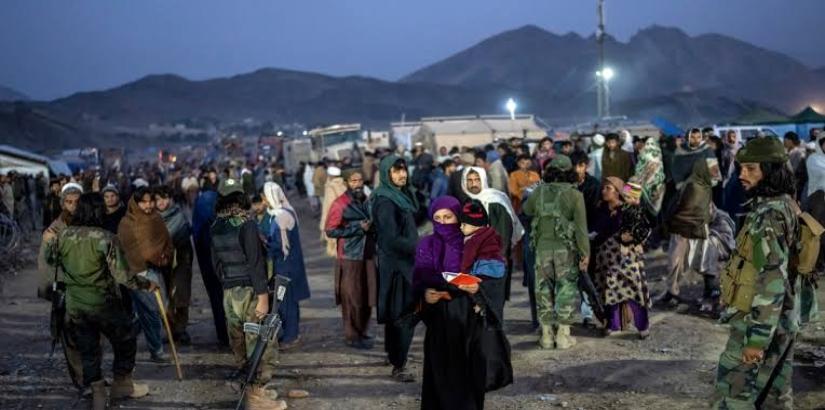
After returning to power in Afghanistan in 2021, the Taliban’s relations with Pakistan underwent a significant deterioration. The reason being deep-seated grievances among the Taliban leadership, who allege that Pakistan manipulated them to fulfil its geopolitical interests, including the ambition to control Afghanistan as a subservient nation and augment its strategic depth.
Pakistan harboured reservations against the Taliban’s nationalist sentiments, fearing they might reawaken Greater Pashtunistan, an issue Pakistan believed it had successfully relegated to the annals of history and forgotten. The ideological allure of the Taliban’s governance model among extremists’ schools of thoughts in Pakistan may have added to the anxiety of the present Pakistani establishment.
The Pakistani government endorsed and propagated the same ideology via Deobandi madrasas to train the Taliban in the past. These connections have now become a source of dispute due to their combined capacity to challenge the authority of the Pakistani state through violence.
The ideology and migrants have been frequently used as a tool to shape the dynamics of interstate relations which have had major political and security implications on the region for decades. Against the backdrop of strategic distrust, the contemporary relationship between the two countries was marred by Pakistan’s allegations of the Taliban’s support to the anti-Islamabad Tehrik-e-Taliban Pakistan (TTP) and the forced migration of Afghan refugees. In light of these issues, the evolving relationship between Afghanistan-Pakistan requires closer examination.
Creating the TTP Monster
Pakistan alleges Afghan Taliban’s support to the TTP, a primary source of contention between the two nations, though it did not produce any evidence to support such claim. Contrarily, the Taliban leadership maintained that the TTP is solely an internal affair of Pakistan.
Periodic resurgence of the TTP is not a new phenomenon. The inception of TTP as an umbrella organisation of terrorist groups in Pashtun tribal regions was a product of Pakistan’s military campaigns against Al-Qaeda during its pledged support to the US-led War on Terror. However, the TTP has in turn posed a significant security challenge to Pakistan in the last two decades.
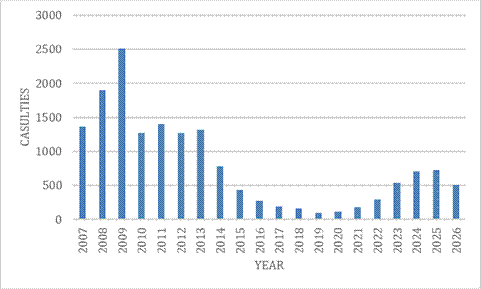
Security forces and civilian casualties in terrorist attacks in Khyber Pakhtunkhwa and erstwhile Federally Administered Tribal Areas, from 2007 to 2026. Data Source: South Asia Terrorism Portal
Following the attack on the school in Peshawar in 2014, Pakistan’s military launched Operation Zerb-e-Azb against the TTP in FATA, forcing many of its fighters to migrate to Afghanistan’s border provinces. Some of these TTP factions established relations with the Taliban, while some pledged allegiance to the Islamic State and announced its offshoot, the Islamic State Khurasan Province (ISKP).
Ongoing Pakistan’s military operations against alleged TTP’s strongholds, extending from border regions into the interiors of Afghanistan, challenges sovereignty of the Taliban regime. The TTP enables Pakistan to maintain its meddling in Afghanistan’s internal affairs and to exert pressure over the Taliban regime.
Afghanistan's Flirting with Terror
The UNSC reports indicate that other international terrorist groups are being harboured by the Islamic Emirate of Afghanistan. Taliban is an ideological force; hence, it might continue sheltering some of these groups even going against its own interests, as it did in the past when it gave refuge to Osama Bin Laden.
But in the last five years there is hardly any evidence that suggests the involvement of Afghanistan-based terrorist organisations, except ISKP, in cross-border terrorist attacks. The attacks on Crocus City Hall in Moscow and skirmishes on the borders of Central Asian countries were claimed by ISKP. It has resulted in Russia, Central Asian Republics and China intensifying engagements with the Taliban to track down these attackers.
Aiding US-led coalition forces during the War on Terror and supporting the Taliban simultaneously was a calculated effort by Pakistan to assert dominance over Afghanistan’s domestic affairs, regardless of who settled in Kabul. The Taliban might use those same strategies against Pakistan to spread its own ideological and political ambitions. Following the long standing position of previous Afghan governments, the Taliban also refuses to recognise the Durand Line as an international border between two countries, and instead laying claim over Pashtun-majority areas in Pakistan.
In the Doha Agreement, the Taliban made a formal commitment not to permit the use of Afghan territory by terrorist organisations. Nevertheless, their organisational identity is fundamentally connected to their ideological posture, implying that any departure from this would result in a complete loss of purpose. Thus, a priority for the regime is the expansion of its ideologically driven governance model, serving as confirmation of its success.
Pakistan’s approach of leveraging the Taliban’s ideological sway to further its own geopolitical aims in the past has resulted in the current predicament. The Taliban can utilise the same in certain segments of Pakistani society to compel the Pakistani government to settle bilateral disagreements.
Diminishing Utility of Afghan Refugees
Since 2001, Pakistan has regularly deported Afghan refugees. The deportation efforts’ intensity correlates with the domestic political and security climate in Pakistan. In response to the TTP resurgence in 2014-15 and deteriorated political relations between Pakistan and Afghanistan, nearly 600,000 Afghans were deported in 2016.
The ongoing deportation drive can be traced back to the victory of Imran Khan in the 2018 General Elections in Pakistan and the support his political party Pakistan Tehreek-e-Insaf (PTI) is still receiving in Pashtun-dominated areas. After coming to power, he announced a plan to issue national identity cards to Afghan refugees born in Pakistan and allowed them to open bank accounts. Prime Minister Imran Khan in August 2021 said that the Taliban has, “broken the shackles of slavery” in the context of withdrawal of US troops from Afghanistan.
The first high-level outreach to the Taliban was in September by DG ISI, a close confidant of Irman Khan who visited Kabul where he famously said, “Don't worry, everything will be okay.” The PTI government hosted meetings of Islamic countries to gather support for the Taliban in December 2021. Imran Khan’s approach to the Taliban may have created a fear among influential political families from Punjab and Sindh of increasing domination of Pashtuns in Pakistan politics, leading to the consolidation of his political position. The riots that erupted on May 9, 2023, primarily in Lahore and Peshawar following the arrest of Imran Khan, provided an opportunity for the PMLN-PPP coalition government to initiate the forced deportation of Afghan migrants.
According to the recent UNHCR survey, support for refugees remains resilient in most of the countries, but funding is shrinking. The rising popularity of anti-immigration far-right political parties in Western countries has kept governments busy drawing new migration policies. The present dispensation in Pakistan seized this moment to deport Afghan refugees to consolidate their own position by,
v Isolating Imran Khan from his support base.
v Popularising the move as a key economic and security strategy aims to lessen the financial burden caused by refugees and to remove TTP supporter base.
v Adding to Taliban woes by sending waves of millions of returning migrants.
Afghan refugees were used by the Pakistani government as political leverage, both to maintain pressure on the Afghan government and to solicit international financial aid. Most of the Taliban leaders and cadres are from Afghan refugee camps in Peshawar, Karachi and other cities and trained in Pakistani Deobandi madrasas. Now deported refugees are from the second and third generation who have never been to Afghanistan but also lost their geopolitical utility as they are more Pakistani nationals than Afghan.
Pakistan Facing Tough Choices
Pakistan and Afghanistan find themselves trapped in a cycle of escalating violence which again endangers the region’s stability. Russia and China, among other regional countries with substantial geopolitical and economic stakes in the area, attempted to de-escalate the situation to protect their interests. But they have gradually changed their approach, taking cognisance of Pakistan’s policy objectives and increased bilateral engagement with the Taliban to establish economic relationships and to maintain humanitarian aid flow. The Taliban is receiving backing from regional powers to counter ISKP, facilitating the elimination of a competing group.
The forced deportation of refugees and the collateral damage from Pakistani military airstrikes which have reportedly resulted in civilian casualties ultimately benefit the TTP. Khyber Pakhtunkhwa province is experiencing an escalation in the frequency and severity of TTP assaults. The anti-Taliban narrative of Pakistan is proving to be counterproductive as it is helping the Taliban to increase its regional outreach and internal consolidation of power. People in Afghanistan are uniting to support the regime’s unyielding posture towards Pakistan.
The Pakistani government is facing considerable pressure from Pashtun nationalist parties and religious leaders to take a more lenient approach toward Afghanistan and Afghan refugees. The security agencies are once again blamed for using the factions of TTP as a tool against these pressure groups. The PTI is heading a provincial government in KP and it is still a popular political party in Pashtun communities.
To overcome its dilemma, Pakistan may attempt to instigate regime change in Afghanistan, expecting a new government will foster better relations. This scenario could lead to the Taliban’s resurgence as an insurgent group, potentially mirroring historical events. This will not only destabilise Afghanistan but also escalate the violence in Pakistan.
The other path forward involves Pakistan discontinuing the use of proxy groups to attain political objectives. Because of prevailing socio-political realities, both choices are equally challenging and complex to implement.
(The writer is a Research Associate with the National Security Program at Delhi Policy Group (DPG). The views expressed are personal. He can be reached at shrey.sdd@gmail.com/ @shreyas_dd )





Post a Comment