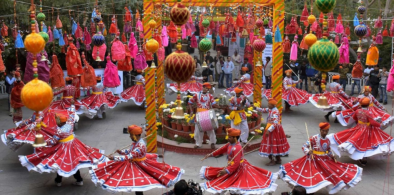
Representational Photo

He Taught India How to Laugh at Itself: Reflections on Johnny Walker's Birth Centenary

Impressed by Kazi’s mimicry and raw acting skills, Dutt took a gamble on the bus conductor, cast him, and renamed him after his favourite Scotch — Johnny Walker.

Empowering Grandmothers in India and Africa: Sanjit 'Bunker' Roy, a Life of Relentless Rural Empowerment

Between 2005 and 2011, 140 African women, most of them grandmothers, traveled to Tilonia from villages in Africa to be trained as solar engineers. None of the women could read or write, nor could speak Hindi. So, they were taught using sign language and colour codes during their six-month-long training. By the time they finished the course and returned to their African villages they were qualified to install, maintain, and operate household, solar-powered lighting systems

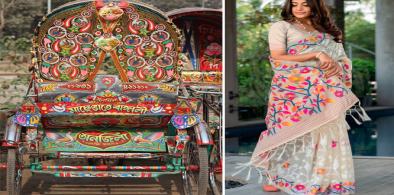
Monetizing Folklore in Bangladesh's Modern Cultural Economy

Today, Bangladesh's young game designers and animators are going back to their roots. They are creating immersive gaming worlds that are based upon the mud, magic and monsoon of the Bengal Delta. By transforming their oral storytelling traditions into structured digital intellectual property rights, these studios are developing cross-media franchises. 

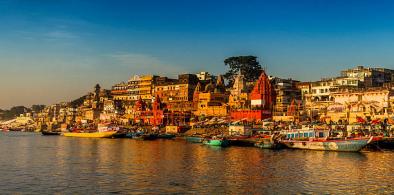
Revisiting a Bend in the Ganges: Ancient Indian City Offers an Eternal Lesson

Eventually, Kashi became a civilisational capital of India. Poets, saints, scholars, musicians, artisans, and even ordinary citizens helped shape the city. For millennia, seekers and scholars travelled from far and wide in search of knowledge, learning, and even emancipation. Its modern institutions carry that legacy forward. 

More on Culture, Literature, Society and Gender

South Asia's Literary Stages Need to Give Recognition to Translators

A literary festival succeeds when readers leave with better questions about a book. Giving translators a substantive place in the program would add questions about language, interpretation and the work of bringing one readership into contact with another. South Asia's literary stages can acknowledge that work by giving its practitioners a name, a fee and a conversation worth joining.    

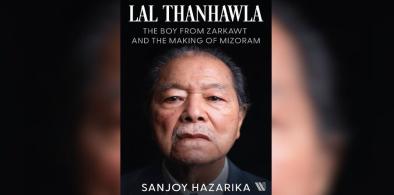
The Political Biography of a Former Chief Minister: A Life That Mirrors Mizoram

The enduring lesson of Mizoram is not that the state won and the insurgents lost. It is that both sides eventually found a political space in which neither needed to win everything. That is the essence of accommodation and perhaps the most enduring lesson Lal Thanhawla’s life offers India.

The Empty Chair at Islamabad: When Taliban Saw Women's Rights Subordinated by Islamic Law

The Taliban, therefore, is not challenging whether Islam should shape women’s rights. Both the OIC and the Taliban begin from that premise. The disagreement is over what Islamic rights mean and, more importantly, who has the authority to define them. 

Who Defines Where Home is? Confronting Partition Trauma and its Aftermath Eight Decades Later

As of January this year, at least 296 Bangladeshis have died in border areas over the past decade, as India’s Border Security Forces (BSF) pushes “illegal Bangladeshis” across the border in the dead of night.

'The Election Commission Expose': A Seminal Moment for Indian Journalism

It is true that only a handful of newspapers have the resources and persistence to pursue big stories of the kind that came alive in the EC exposé. Nevertheless, to the extent that it inspires others to pursue even smaller news stories with steadfastness this could potentially redeem the otherwise sordid state of affairs in the Indian media.

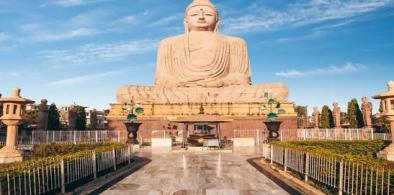
India-Mongolia Buddhist Partnership: A Civilisational Bridge Linking India’s Buddhist Heritage with Mongolia’s Contemporary Revival

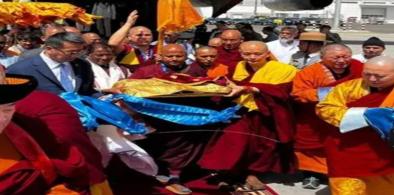
The profound emotional connection was vividly evident in 2022 when, as the Indian delegation accompanying the relics entered the Gandan monastery, members of the crowd reached out to touch them, expressing their reverence for those who had come "from the land of the Buddha".

In the Undying Quest for Peace and Harmony in South Asia: Reflections of a Veteran 'Peacemonger'

One idea which both young and senior activists are exploring is about the possibility of a series of visits by youth teams to the South Asian capitals to meet with the leadership. They want to explain how deeply young people are affected and committed to address the crisis of climate change, global warming, and especially the fragility of the mountain regions as witnessed in the recent devastation in Nepal.

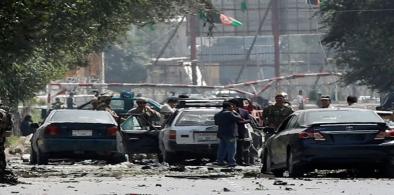
When the Machinery of Terror Becomes Television Spectacle: Taliban's War Museum Reporting Needs Broader Contextualisation

The Taliban may curate the museum. The newsroom must curate the context. Without that context, international television risks giving an extremist movement something it has always sought, not necessarily agreement, but attention; not necessarily legitimacy, but spectacle. 

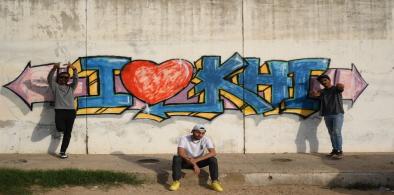
Three Young Karachi Rappers: And a Working-Class Neighborhood Becomes its Own Historian


For an Indian audience, the most meaningful response to W.R.A.P. is not the comforting declaration that Indians and Pakistanis are identical. Such a claim can erase real histories and differences as readily as nationalism exaggerates them. 

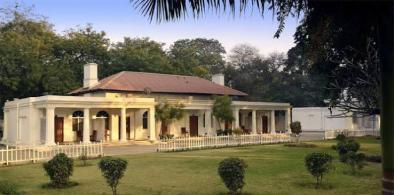
Erasing Colonial Symbols Won't Feed India's Families: A Call for Economic Pragmatism

But tearing down a clubhouse will not lower a family's grocery bill or write a line of exportable code. India's chance to close the gap with the economies that outran it will not wait for a hearing date in September, and neither should the country's attention.

Taslima Nasrin’s Return and the Politics of Selective Protection

Taslima Nasrin’s homecoming deserves to be welcomed. A writer should be able to return to a city she considers home without fearing violence. The harder test will come when the symbolism fades. Will the government protect her if her criticism becomes inconvenient to the people now celebrating her return?

Jewish Footprints and Connections that Shaped Sri Lanka’s History

Today, the Chabad Houses in Colombo and on Sri Lanka's southern coast have attracted considerable attention amid a rise in anti-Semitic incidents and rhetoric. It is noteworthy that Colombo once had an active synagogue, which served as a regular place of worship for British Jewish servicemen World War II

Repositioning India as the Capital of Buddhist Tourism: A Blueprint for a Global Destination

Buddhist tourism as an important tool of India’s soft power. The shared Buddhist heritage can help develop cultural ties with Japan, Sri Lanka, Thailand, Myanmar, Vietnam, Mongolia, South Korea, Bhutan, Cambodia, Laos, Singapore, and several other Buddhist-majority nations through cooperation in archaeology, monk-to-monk dialogues, youth programs, academic exchanges, and cultural festivals

Mohenjo-daro’s ‘Dancing Girl’: The Silence Surrounding Women in Public History

Mohenjo-daro offers South Asia an opportunity to look backwards without dividing the past into national possessions, and to recognise that the region’s cultural memory is older and more interconnected than its modern inheritors.

How a Film by a Boston-Based Immigrant is Dismantling the Model-Minority Concept

Jam Boy represents a much-needed question for the South Asia diaspora, about why it takes a third aggressor for us to see the common struggles that we share, and why it is only in these situations that we remember that our ideas of home are the same.

Newsletter Subscription

The subscriber's email address.
Stay informed - subscribe to our newsletter.