RemoteBase, a technology start-up based in Islamabad, has raised $1.4 million in investments from Silicon Valley investors, reflecting, what some feel, the growing tech ecosystem of Pakistan



The ambition exists across the region. Young Indian companies are building rocket engines and computer chips, products India has long bought from abroad. Pakistan sent a delegation to Silicon Valley to show what its technology industry can do
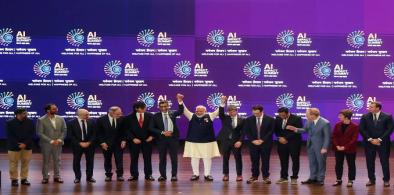
A country can only be as independent in its diplomacy as it is in its economy. A nation that imports its phones, its chips and much of its energy, will always have less room to manoeuvre than one that makes what the world needs.
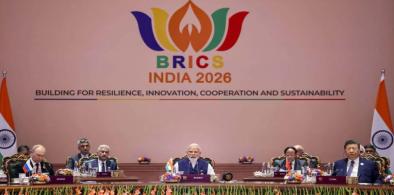
The difference between Xi's New Delhi proposal and the language of the declaration illustrates the distinction between China's ambitions for AI cooperation and the level of agreement achieved among BRICS members. The declaration did not reject China's AI diplomacy; it simply did not explicitly endorse the proposed open-source community.

The AI revolution may indeed change warfare. But the laws of physics, engineering and economics have not been repealed. AI may be extraordinarily powerful in the data centre. The real challenge is carrying that capability to the battlefield.

RemoteBase, a technology start-up based in Islamabad, has raised $1.4 million in investments from Silicon Valley investors, reflecting, what some feel, the growing tech ecosystem of Pakistan

The Federation of Indian Chambers of Commerce & Industry (FICCI) and Boston Consulting Group (BCG) on Saturday unveiled 'India FinTech: A USD 100 Billion Opportunity' report

Apple's iPhone contract manufacturer Wistron Corporation of Taiwan resumed operations at its mobile plant in Karnataka's Kolar town, state Industries Minister Jagadish Shettar said

The brand value of the Indian Premier League (IPL) went down for the first time in six years - by 3.6 per cent over one year

Bangladesh will procure 1.50 lakh tonnes of rice under direct procurement method (DPM) from India
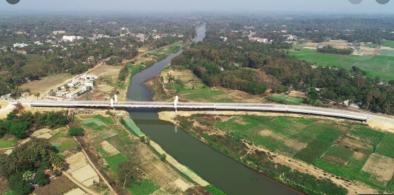
A large number of Indian industrialists in Bangladesh turned their eyes to Tripura, after Prime Minister Narendra Modi dedicated the Maitri Setu, a 1.9 km-long double-lane Maitri Setu (friendship bridge) over River Feni, connecting Tripura with Chattogram (Chittagong) seaport on Tuesday

In a major fillip to Cairn Energy, courts in five countries, including the US and the UK, have given recognition to an arbitration award that asked India to return $1.4 billion.
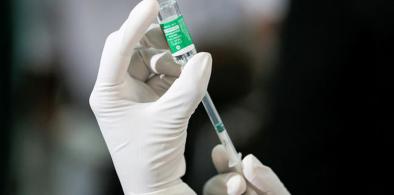
Sri Lankan authorities denied reports of delay in procurement of one million Covishield vaccines from Serum Institute of India and said the vaccines will arrive in the country by March and April

Trinidad conglomerate ANSA Merchant Bank has finally taken over Bank of Baroda (Trinidad and Tobago) Limited on March 1. The bank will continue to function as Bank of Baroda until month-end

Despite COVID-19, export of oranges have increased by 30 percent this year compared to the previous year, according to Bhutanese exporters

Days after the Sri Lanka Cabinet announced the proposal to clear an investment by India’s Adani Ports to jointly develop the West Container Terminal Port in Colombo, Indian High Commission in Sri Lanka said they were not involved in clearing any such proposal
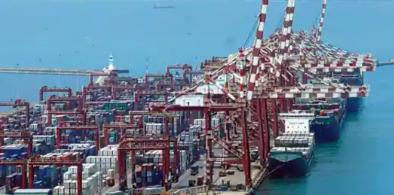
A month after scrapping the 2019 East Container Terminal deal with India and Japan, Sri Lanka has approved a proposal to jointly develop the West Container Terminal of Colombo Port in Sri Lanka with India’s Adani Ports, the Daily Mirror reported

Pakistan and Qatar have signed a long-term Liquefied Natural Gas (LNG) supply deal for additional 200 million cubic feet a day (MMCFD), reported Dawn

China Railway Group Ltd (CREC) - the Chinese construction company in charge of the Padma Bridge Rail Link Project in Bangladesh - has alleged mismanagement and said that pending payments is slowing the project, a press release by Forethought PR Limited, the CREC's communication agent in Bangladesh, said
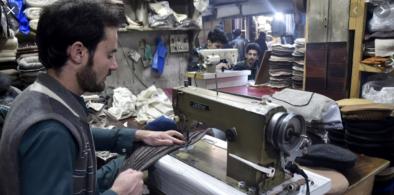
Several dying small-scale industries in India are looking at a comeback with Indian Prime Minister Narendra Modi's thrust on Aatmanirbhar Bharat that also focuses on self reliance and import reduction