
India's Poverty Reduction: But Is It Translating into Shared Economic Prosperity?
India has demonstrated that economic growth, social transfers and improved access to essential services can substantially reduce extreme deprivation. But the next stage will be considerably more demanding. It requires a different pattern of growth: one that creates productive jobs, raises real wages, increases women's economic independence and distributes the gains from growth more widely
 Nov 01, 2026

The reported decline in India's extreme poverty, from 27.1% in 2011 to 2.6% in 2023, as reflected in the World Bank's October 2026 Poverty and Equity Brief, is undoubtedly a major development. Driven by consumption growth, rising employment, particularly among women, and expanded social programmes, it represents, according to the Bank, a substantial improvement in the material conditions of millions of people.
However, the figures need to be examined beyond their statistical significance. India has made considerable progress in reducing extreme deprivation, but the evidence does not yet establish that it has achieved a comparable transformation in the quality, economic security and distribution of household incomes.
Understanding Poverty Beyond the Statistical Decline
While poverty reduction is apparent on the face of it, the measurement requires qualification. The World Bank uses two thresholds: $3 a day (2021 PPP), updated in June 2025, to measure extreme poverty, and $4.20 a day (2021 PPP) as the poverty benchmark for lower-middle-income economies, which is the more relevant benchmark for India.
The reported decline from 27.1% to 2.6% at the extreme-poverty threshold is striking. However, the $4.20 measure provides a more complete picture of India's deprivation: 16.1%, or approximately 342 million people, remain below that threshold.
There is also a methodological issue. The World Bank revised its poverty estimation methodology following the introduction of the Modified Mixed Reference Period (MMRP) in household consumption surveys, along the lines of the Government of India's approach.
Under MMRP, instead of asking respondents what they spent over the previous 30 days, varying recall periods are used to obtain more accurate consumption data. These include a short seven-day recall period for daily items such as oils, fruits and vegetables; a 30-day recall period for standard items such as fuel and rent; and a one-year recall period for infrequent expenses such as clothing, education and medical bills.
A change in methodology makes comparisons with previous poverty estimates difficult and requires caution when interpreting long-term trends.
Poverty reduction does not necessarily mean a corresponding improvement in income distribution. This is an important distinction that often gets overlooked.
The World Bank's poverty estimates are based primarily on household consumption expenditure, not a comprehensive measurement of household income or wealth.
A household can improve its consumption through higher earnings, government food subsidies and transfers, lower prices of essential goods, borrowing or drawing down savings. These have different implications for economic security.
The October 2026 reporting on the World Inequality Database indicates that India's richest 10% receive approximately 58% of national income and own around 65% of national wealth, while the bottom half receives only 15% of income. These estimates use a different methodology from the World Bank's household consumption data; therefore, they are not directly interchangeable.
Nevertheless, they highlight a serious distributional concern. The implication is important: India can substantially reduce extreme poverty without necessarily reducing the concentration of economic power and wealth.
Employment Growth and the Quality of Jobs
The employment question is perhaps the weakest link in the development narrative. The report identifies employment expansion, particularly among rural women, as a contributor to poverty reduction. The contradiction is striking: India is reducing measured poverty while continuing to face difficulties in generating adequately remunerated employment for its educated and younger population.
The World Bank's April 2026 Development Update also highlights the importance of better-quality jobs and stronger formal employment creation.
Table 1: Female Employment in India (Worker Population Ratio)
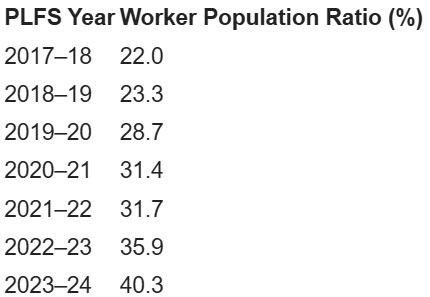
Table 2: Comparison Across Employment Categories for Women (Share of Workforce)
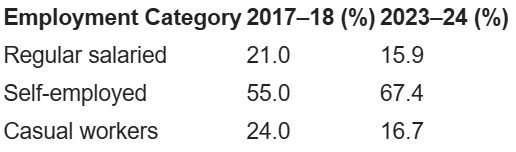
Table 3: Regular Salaried Workers' Wages – All-India Time Series
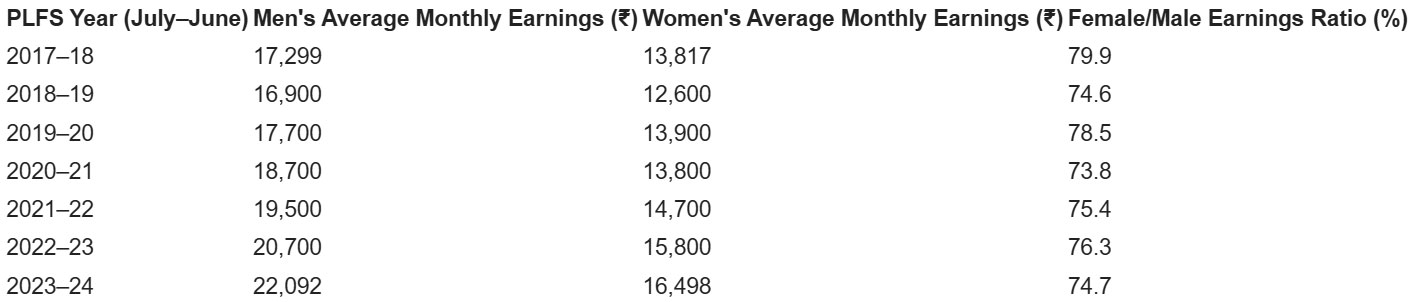
Source: Economic Survey 2024–25 and Periodic Labour Force Surveys (various years). Ratios calculated from reported nominal earnings. Regular salaried and self-employed earnings are monthly, while casual earnings are daily. PLFS: Periodic Labour Force Survey.
It would be observed that between 2017–18 and 2023–24, female employment increased, as reflected in the higher worker-population ratio for women (Table 1). However, the quality of employment appears to have deteriorated, with a decline in the share of regular salaried employment and an increase in self-employment among women (Table 2). There was also a decline in the female-to-male earnings ratio (Table 3).
Regional Concentration and Structural Challenges
Regional concentration is also important in understanding the structural nature of India's poverty problem. The reported concentration of approximately 57% of India's poor in the belt stretching from Uttar Pradesh to West Bengal should not be treated as a minor statistical observation. It points towards a geographical concentration of weak economic opportunities.
For states such as Bihar, Jharkhand, Uttar Pradesh and West Bengal, the challenge is not simply to increase consumption but to change the structure of employment.
The underlying problems in these states include continued dependence on low-productivity agriculture, insufficient labour-intensive manufacturing, limited opportunities for formal employment, migration arising from inadequate local employment opportunities, gaps in education and skills, and women's limited access to paid work.
All these factors point towards a geographical concentration of weak economic opportunities. The challenge in these states is not simply to increase consumption but to transform the structure of employment.
A poverty-reduction strategy for eastern India must therefore be linked to industrial development, agricultural value chains, logistics, micro, small and medium enterprises (MSMEs), and investment in human capital.
The World Bank acknowledges the contribution of food assistance and social welfare programmes. It would not be correct to underestimate this contribution. Food security programmes can protect vulnerable households against inflation and prevent temporary income shocks from pushing them into extreme deprivation.
However, welfare transfers cannot substitute for a productive employment strategy.
There are two distinct policy objectives. The first is to ensure that nobody falls below a minimum consumption standard, which requires an effective social protection system. The second is to create opportunities for sustainable economic advancement, which requires investment, productivity growth, skills and decent employment.
India needs both. It should not regard the success of one as evidence that the other has been achieved.
Beyond Poverty: Nutrition, Vulnerability and Economic Security
There are three additional dimensions that deserve attention.
Nutrition and health: Monetary poverty reduction does not automatically eliminate malnutrition, inadequate healthcare or high out-of-pocket medical expenditure. The Multidimensional Poverty Index (MPI), which includes three core dimensions – health, education and standard of living – has shown improvement, but important deficiencies remain. There is a need to examine these deficiencies and bring about further improvements through appropriate policy changes.
Economic vulnerability: A family marginally above the $4.20 threshold is not necessarily economically secure. A spell of unemployment, a medical emergency or a food-price shock can reverse its progress and push it back into poverty.
The adequacy of the poverty benchmark: The World Bank itself recognises that international poverty lines are primarily useful for global comparisons. National poverty lines are more appropriate for assessing deprivation within individual countries and designing domestic policy. Consequently, the 2.6% extreme-poverty figure should not become the sole measure of India's development success.
A Different Pattern of Growth
The central issue is the transition from poverty reduction through improved consumption to poverty reduction through productive economic transformation.
India has demonstrated that economic growth, social transfers and improved access to essential services can substantially reduce extreme deprivation. But the next stage will be considerably more demanding. It requires a different pattern of growth: one that creates productive jobs, raises real wages, increases women's economic independence and distributes the gains from growth more widely.
The country has made substantial progress in reducing deprivation; it has yet to demonstrate that this progress is translating into broadly shared economic prosperity.
(The writer is an economist, a retired Special Secretary, Government of India, and a commentator on financial, geoeconomic and regional development issues. The views expressed are personal. He can be reached at ppmitra56@gmail.com.)







Post a Comment