

Representational Photo

Can AI Improve Student Learning? Only if it is Used the Smart Way

AI will make you a better student if you treat it like an intense sports coach—someone who pushes you, quizzes you, and forces you to run the laps yourself. But if you treat it like a private driver who carries you across the finish line, your own academic skills will totally vanish.

Progress of Education in Jammu and Kashmir: It's not Mere Enrolment That Matters but Learning and Skills

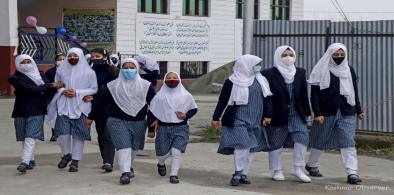
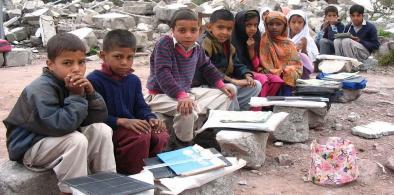
Ultimately, the question is not simply whether children enter school but whether they remain in the system and acquire the knowledge and skills necessary for life. That is the standard against which Kashmir’s educational progress must be measured.

Beyond GDP: Economic Growth, Social Wellbeing, and Lessons From the Bhutan Model

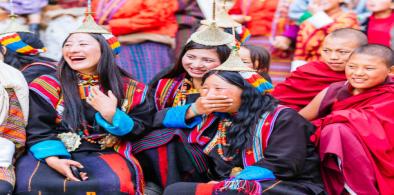
Bhutan's approach does not reject economic growth. Instead, it seeks to balance material progress with social, cultural, environmental and psychological well-being. The country's GNH framework provides a basis for assessing how public policies affect different dimensions of people's lives.

Indian Cricket's Search for a Selector: Despite the Game's Glamour, Few Takers for the Thankless Job

For all the glamour surrounding Indian cricket, the selector remains one of its least celebrated figures. He must look beyond the next headline, the next controversy, and even the next defeat. His finest decisions may never make the headlines. His mistakes certainly will.

More on Education, Sports and Gen Z Voices

Rethinking Climate Security in South Asia - Through AI

South Asia’s climate risks are shared across countries. Rivers such as the Ganga, Brahmaputra and Indus do not respect national boundaries, and torrential rains in one country can lead to floods in another. Satellite data, flood forecasts and flood warnings could, therefore, be shared to enhance disaster preparedness across the region.  

Transnational Education: Making International Skills Development Inclusive

The British Council's South Asia dialogue on TNE brought together policymakers, quality-assurance agencies, experts and higher education leaders from five South Asian countries and the United Kingdom. The discussions covered TNE policy, quality assurance, partnership management and mutual recognition of qualifications.

Better Opportunities for Youth can Transform Balochistan’s Future

The CMSPP can help Balochistan address one of the most pressing challenges it encounters today – youth unrest and militancy. The radical Islamic groups and terrorist organizations often utilize the discontent of the youth of Balochistan to further their own agendas.

The Cockroach Republic: Not just a Creature of Filth; it Signals a Survival Grammar

The power of the cockroach in the current viral moment of the CJP seems to resonate with something Kafkaesque that is crawling beneath: unwanted, impossible to eliminate. The apparent insult is meant to make someone feel unworthy. But when an insult is taken up by a community, it culminates in a “badge”, where shame becomes performance, humiliation becomes satire, and satire culminates in political self-recognition.

The Cockroach's Evolution: Acquiring a Life Beyond the Insult

The CJP’s journey, however, is no longer confined to the politics of examination failures and youth precarity. Its School Thik Karo campaign has extended the movement’s work towards accountability for basic public-school infrastructure, while its latest mobilisation has turned to electoral accountability. 

‘Himalayasia’: Can a Mountain Range Give South Asia the Identity It Never Had?

Whether or not “Himalayasia” ever catches on as a name, the underlying question it poses is a serious one for a region that houses a quarter of the world’s population, spends tens of billions of dollars a year arming itself against its own neighbors, and still trades more easily with the far side of the globe than across its own borders

South Asia Needs Cross-Border Internships, Not Only Degrees Abroad

South Asia often discusses youth mobility after a student has already decided to leave the region. A stronger regional system would give students another option before that point: international experience that is close enough to be practical, but different enough to change what they learn.

School Absenteeism and Growing Coaching Culture: Are we Compromising the Future of an Entire Generation?

If dummy admissions, prolonged school absenteeism, and an unregulated coaching culture continue unchecked, we may end up producing students who have spent enormous amounts of time and money on education without actually receiving the education they need.

Education as a Game Changer for South Asia: India can Become an Educational Leader

If South Asian governments urgently review and reform their education systems, the region can all benefit within 15 years from our demographic dividend and unleash the region's immense knowledge and growth potential within a generation.New education systems must be interactive and inter-operative to allow free movement of professionals, capital and labour around the region

The Reconstituted Nalanda: Can it Leverage its Civilizational Memory to Become an Alternative Academic Hub for the Global South?

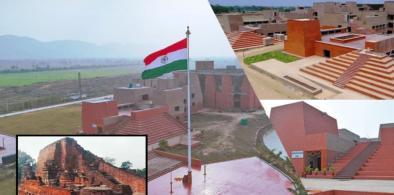
Nalanda serves as a counterweight to the historic monopoly of Western universities over social, political, and ecological theory. It invites Asian and African scholars to address regional dilemmas such as resource sovereignty, post-colonial statehood, and sustainable modernization using indigenous analytical categories.

'Girls going to schools would be the real revolution in Afghanistan'

The daughters and granddaughters of these warlords, like those of several key Taliban commanders, live and study abroad. Sabori’s school in Archi is half-closed, owing to the ban on education for girls over 12 years of age. Several underground schools have sprung up where even some Taliban foot-soldiers send their daughters. 

Where Happiness is a Measure of Governance: What Bhutan’s Democratic Consolidation Can Teach Global South Nations

As democracies around the world confront public dissatisfaction, Bhutan reminds us that the health of a democracy cannot be measured only through the ballot box.  It must also be evaluated through the well-being, dignity, security, and trust experienced by citizens.

India's Education Deficit: Real Reforms Lie in Making Coaching Redundant

India's digital infrastructure can certainly deliver free coaching to millions. But an even greater achievement would be to build an education and employment system in which families no longer feel compelled to buy coaching in the first place. Making bottled water cheaper is useful. Making the water from taps trustworthy is the real solution.    

India’s Education Report Card: Student Retention, not Enrolment is Key to Success

The message is clear. India needs not merely more children entering classrooms, but more children staying, completing and learning. Achieving the ambitions of NEP 2020 and SDG 4 will require sustained public investment, stronger secondary-school retention, better support for vulnerable learners and a sharper focus on completion.

For a Developed India, Its Young Need to Be Instilled with Civic Values First

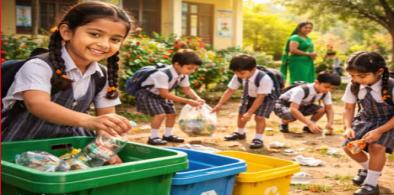
The virtues like civic discipline or gender sensitivity in India are not at premium. Basic civic sense is conspicuous by its absence. It gets manifested as indiscriminate littering, spitting, traffic indiscipline, vulgar or derogatory comments against women etc. Such attitudes find manifestation in foreign destinations as well.

Newsletter Subscription

The subscriber's email address.
Stay informed - subscribe to our newsletter.