

China and the Emerging Scenario in the Bay of Bengal
China's expressed interest in modernising and upgrading both Chattogram and Mongla ports suggests the emergence of an interconnected infrastructure network linking the Bay of Bengal with southwestern China through Myanmar. If realised, such connectivity would enhance trade flows, improve regional logistics and deepen China's economic footprint across the Bay of Bengal littoral, while simultaneously increasing Bangladesh's importance as a regional transit and connectivity hub.
 Jul 01, 2026
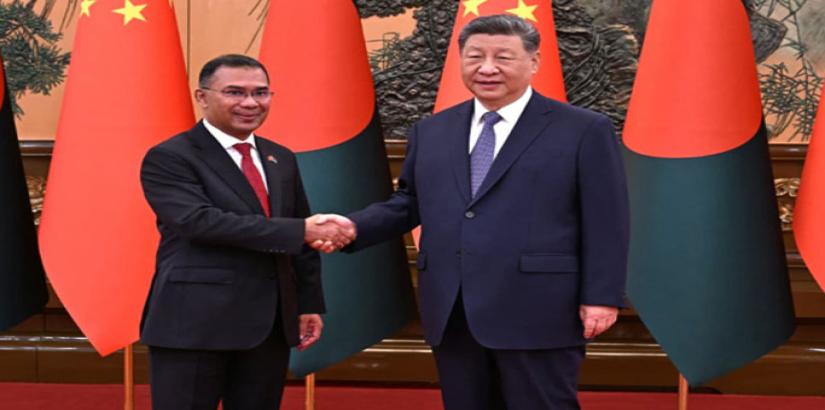
Two recent developments—the U.S. decision to drop the word "Indo" from the nomenclature of the Indo-Pacific Command and China's growing involvement in the Mongla port area, viewed alongside the proposed Bangladesh-China-Myanmar (BCM) Corridor—appear to signal an expanding Chinese footprint in the Bay of Bengal.
While the Indo-Pacific concept has gained significant international traction over the past decade, the adjoining Bay of Bengal has simultaneously acquired increasing geopolitical and geostrategic importance. Owing to its economic potential, ecological significance, and rich cultural and historical linkages, the Bay has emerged as a dynamic space witnessing growing strategic, commercial and connectivity-related activities.
India's Strategic Stakes
Whether because of its offshore oil and gas reserves or its strategic location, the Bay of Bengal holds considerable political, strategic and economic significance for India. Although the BIMSTEC regional organisation has appeared slow to move, India has taken the lead in several areas, including providing weather forecasting through the BIMSTEC Centre for Weather and Climate and promoting maritime cooperation through the Information Fusion Centre–Indian Ocean Region, in which BIMSTEC member countries participate.
Through BIMSTEC and its broader defence cooperation, India has increased its presence in the Bay of Bengal. India hosts the Bongosagar exercise with Bangladesh. The Tiger Triumph 2025 India-U.S. tri-service exercise and the recent MILAN 2026 exercise, hosted by the Indian Navy and involving 42 warships, submarines and 29 aircraft, reflect India's growing presence in the region.
Connectivity Challenges
While the BIMSTEC Master Plan for Transport Connectivity has been signed, progress remains limited. India had successfully initiated several cross-border connectivity projects with Bangladesh, but these remain stalled for now. Likewise, the Kaladan Multi-Modal Transit Transport Project remains incomplete because of the continuing ethnic conflict in Myanmar.
Thus, despite sustained efforts, cross-border connectivity remains a work in progress for India and its neighbours. Indeed, the push-ins across the West Bengal border and the closure of the Free Movement Regime along the India-Myanmar border have further complicated India's ties with both Myanmar and Bangladesh.
Although the recent visit of Myanmar President Senior General Min Aung Hlaing to India was officially described as a success, it produced few tangible outcomes. More importantly, Myanmar's complex ethnic landscape remains in turmoil, with armed ethnic groups continuing their resistance to the military government. Reports of Rohingya killings in Rakhine State and Chin refugees fleeing into Mizoram continue to emerge, while India's engagement with these ethnic groups remains limited. Consequently, India's prospects for expanding cross-border connectivity remain stagnant.
China's Expanding Footprint
Meanwhile, China has continued its engagement with both Myanmar's military administration and various ethnic groups. It would therefore not be surprising to see progress on the Bangladesh-China-Myanmar (BCM) Corridor, which evolved from the earlier BCIM (Bangladesh-China-India-Myanmar) Corridor after India stepped away from the initiative.
Although recent discussions between Bangladesh and China regarding the proposed BCM Corridor remain at an exploratory stage, the project holds significant potential. The envisaged route would connect Bangladesh with southwestern China through Myanmar, potentially reducing cargo transit time between Bangladesh and China to around 24 hours. Given China's longstanding interest in developing Myanmar's Kyaukpyu Port, the corridor is also likely to stimulate investment in transport and logistics infrastructure across the region.
China's presence in the Bay of Bengal has expanded significantly over the past two decades through a combination of infrastructure investments, connectivity projects and growing naval activity. If any country can operationalise the BCM connectivity corridor in this conflict-ridden region, it is China.
For Bangladesh, the initiative could complement the development of its maritime gateways. China's expressed interest in modernising and upgrading both Chattogram and Mongla ports suggests the emergence of an interconnected infrastructure network linking the Bay of Bengal with southwestern China through Myanmar. If realised, such connectivity would enhance trade flows, improve regional logistics and deepen China's economic footprint across the Bay of Bengal littoral, while simultaneously increasing Bangladesh's importance as a regional transit and connectivity hub.
India-Bangladesh Relations
While tourist visas between India and Bangladesh have resumed, bilateral relations continue to remain politically and strategically strained. Delhi's deliberate go-slow approach towards Dhaka since August 2024, along with India's perceived support for former Prime Minister Sheikh Hasina, has not helped the situation. Hasina had also found refuge in India on an earlier occasion, but the circumstances were different.
At present, Hasina's periodic political statements and the departure of most senior Awami League leaders from Bangladesh do little to enhance the party's standing, leaving open questions about the future of the country's oldest political party. While Bangladesh Prime Minister Tarique Rahman may visit India later this year, apart from discussions on the renewal of the Ganges water-sharing arrangements and difficult border-related issues, the bilateral agenda appears rather limited.
While the Bay of Bengal is attracting substantial external interest, India does not appear unduly concerned about the changing regional landscape. Is this because India's primacy in the region remains unquestioned, or because India has only limited strategic interest in the Bay of Bengal?
(The author teaches international politics at O.P. Jindal Global University, Haryana. Her research focuses on India's extended neighbourhood, regionalism and cross-border issues. The views expressed are personal. She can be reached at sreeradha.datta@jgu.edu.in)





Post a Comment