

A Divided EU Faces Growing Scrutiny Over Taliban Contacts
Some analysts accuse the EU of double-standards arguing that the EU has been condemning Taliban policies since they assumed power, but were now holding direct discussions with them. Such meetings undermine the EU's credibility as a defender of human rights and democratic values.
 Jun 28, 2026
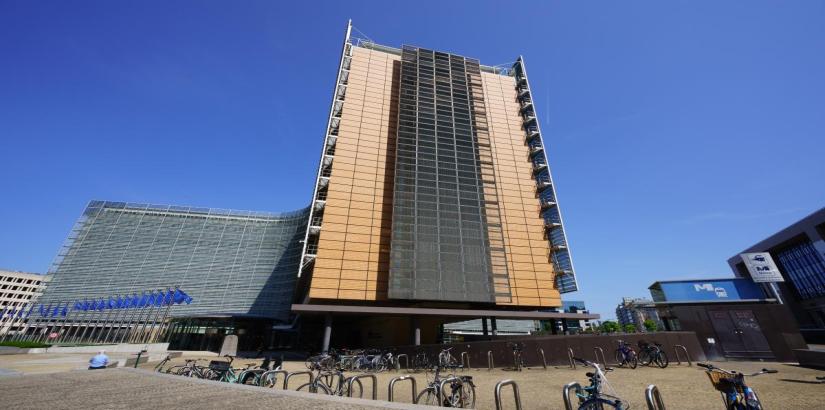
The widespread resentment toward the Taliban in Europe became evident after the European Commission recently invited the de facto rulers of Afghanistan to Brussels for discussions on the return of Afghan nationals with criminal records.
When news of the invitation emerged last week, it triggered a wave of protests and condemnation from human rights organisations, members of the European Parliament, and sections of the European media.
Anti-Taliban demonstrations were organised in Brussels, with some activists calling for the immediate arrest of the Taliban delegation upon their arrival in the EU’s political capital.
A group of 47 Members of the European Parliament urged Belgian Foreign Minister Maxime Prévot to deny visas to Taliban representatives, warning that such engagement risks conferring political legitimacy on the regime.
The Belgian government issued the five-member Taliban delegation one-day visas valid only within Belgium. The delegation arrived in Brussels from Türkiye.
Fearing the negative reaction, the European Commission kept the Taliban visit under wraps and only confirmed it officially after the meeting had concluded on 23 June.
EU Commissioner for migration and internal affairs , Magnus Brunner, told journalists on Wednesday 24 June that 20 EU member states had asked the EU’s executive body to coordinate the one-day meeting that was linked to security issues and that's why this second meeting actually took place.
The first one was held in January in Kabul on the technical level and the second one was on 23 June related with the operational way to send Afghan criminals and serious offenders back to Afghanistan.
He stressed that both meetings were of a “technical “ nature implying that no high-level officials or politicians participated and noted that 15 representatives from EU members attended the Brussels meeting.
It was the Taliban’s first visit to Brussels since they returned to power in August 2021. According to European media reports, EU member states received about one million asylum applications from Afghans between 2013 and 2024 but the figures do not say how many of them have criminal records.
Shift in EU Policy?
Some analysts accuse the EU of double-standards arguing that the EU has been condemning Taliban policies since they assumed power, but were now holding direct discussions with them. Such meetings undermine the EU's credibility as a defender of human rights and democratic values.
The Taliban foreign ministry said the delegation, led by the ministry’s spokesperson Abdul Qahar Balkhi, held bilateral and multilateral meetings with EU member states during the visit.
In a statement posted on X, Balkhi said the discussions focused on restoring consular services for Afghans in Europe, confidence-building measures, and the challenges facing Afghan migrants whose asylum applications have been rejected.
“The visit is expected to open new avenues for positive engagement, strengthen efforts to address the problems of Afghans living abroad, and expand cooperation based on mutual respect and shared interests,” Balkhi said. He did not disclose any other details.
While EU officials stress that the talks do not means any recognition of the Taliban, for European observers and commentators the political significance of the event is important. They argue that the very act of hosting Taliban officials in Brussels signals a significant shift in Europe’s policy towards them.
The EU has condemned Taliban's social policies, particularly restrictions on girls’ education, that have excluded many Afghan women and girls from secondary education and university studies and also restricted their public movements and participation.
Formal Recognition Eludes Taliban
EU officials are trying to strike a balance between pressing the Taliban on human rights and dealing with practical issues that require direct contact with Afghanistan’s current rulers. Brussels has rejected accusations that the talks amount to political recognition.
Another aspect of this issue that has largely been overlooked is why the Taliban accepted what many see as humiliating conditions to attend the meeting in Brussels — including a one-day visa restricted solely to Belgium.
The Taliban themselves may need to reflect on what this says about their international standing. Nearly five years after returning to power, the Islamic Emirate has secured formal recognition from only one country - Russia.
China, the United Arab Emirates, Uzbekistan and Pakistan all have designated ambassadors to Kabul.
While several Muslim and non-Muslim states maintain some form of diplomatic presence in Afghanistan, not a single Muslim-majority country has officially recognised the Taliban government.
At the same time, the Taliban remain in conflict with one of their Muslim neighbours, Pakistan, further underscoring the diplomatic isolation they continue to face.
The Indian Government initially didn't recognize the new Afghan government. However it has since improved their relations with the Emirate, calling for cooperation and mutual development. Afghan Foreign Minister Amir Khan Muttaqi visited India for a week in 2025, which brought both countries closer.
Divisions Within Europe
The EU Delegation to Afghanistan has re-established its presence in Kabul to ensure the delivery of assistance to the Afghan people, to facilitate operational coordination and promote the interests of the EU, and in addition to maintain a close watch on Russian and Chinese influence in the country.
On 23 June the EU announced a new allocation of 20 million euros for the International Organization for Migration (IOM) to scale up assistance for displaced people and returnees in high-return areas in Afghanistan.
The Taliban debate has revealed growing divisions within Europe over how best to deal with Afghanistan .
This brings one back to the key question: does hosting Taliban officials in Brussels signify normalising relations with them? The answer, at least for now, is not necessarily.
(The author is Brussels-based Non Resident Fellow of the New Delhi-based Society for Policy Studies who has been tracking and reporting on EU and European and EU affairs for the past four decades. The views expressed are personal. He can be reached at nawab_khan@hotmail.com. X: @NawabKhan10)





Post a Comment