

Lessons from Trump-Iran Deal: Strategic Autonomy is not a Luxury for India
India's rise as a major global power will depend not on the promises of allies or the intentions of adversaries but on its capacity to build economic strength, military capability, technological innovation, and strategic resilience. Partnerships will remain important. Cooperation will remain valuable. Engagement with the United States and other powers will continue to serve Indian interests. But the foundation of India's security cannot rest in Washington, Moscow, Beijing, or any other foreign capital.
 Jun 17, 2026
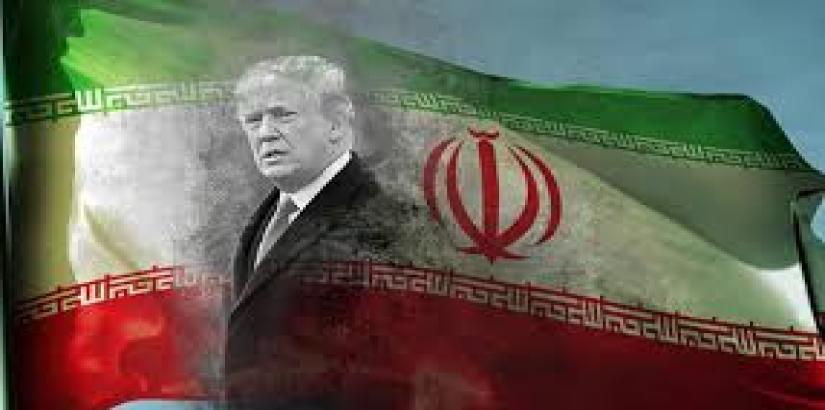
The emerging agreement between the Trump administration and Iran is being presented by its supporters as a diplomatic achievement and by its critics as a strategic concession. Yet from an Indian perspective, the debate should not focus solely on the agreement’s details. The larger lesson is far more important. Regardless of whether the deal succeeds or fails, it reinforces a reality India has understood for decades: great powers ultimately act in their own interests, not those of their partners.
This is not a criticism unique to the United States. It is a fundamental truth of international politics. Nations pursue policies that serve their domestic priorities, economic needs, electoral calculations, and strategic objectives. Alliances matter. Partnerships matter. Shared values matter. But when national interests clash with external commitments, they almost always prevail.
Reality of Iran and a Strategic Reminder
For India, the Trump-Iran negotiations should therefore be seen not merely as a Middle Eastern development but as a strategic reminder that maintaining independent decision-making and strategic autonomy remains an essential pillar of Indian foreign policy.
For years, Donald Trump criticised Barack Obama's nuclear agreement with Iran. He argued that the deal provided Tehran with economic relief and political legitimacy while failing to eliminate the long-term threat posed by the Iranian regime. His criticism resonated with many observers who believed that Iran had successfully extracted concessions while preserving key elements of its regional influence.
Yet the current negotiations appear to reveal the same reality that confronted previous American administrations. Every president enters office promising a tougher approach. Every administration vows to secure a better deal. Yet sooner or later, strategic fatigue, domestic political pressures, economic concerns, and the desire to avoid military confrontation push policymakers back towards negotiation.
The challenge is not merely Iran's nuclear programme. Iran is part of a broader geopolitical system that combines ideology, regional influence, military capabilities, proxy networks, and economic leverage. Nuclear facilities are only one component of a much larger strategic architecture.
Strategic Environment and Regional Stability
From New Delhi's perspective, this distinction is critical. India's interests in the region extend far beyond nuclear proliferation; regional stability is crucial for energy security, trade routes, the diaspora, and economic stability. The Gulf's security directly affects India's long-term strategic goals.
Indian policymakers should view regional stability as vital not only for diplomatic outcomes but also for safeguarding India's long-term security and economic interests.
This is where caution becomes necessary.
History suggests that agreements narrowly focused on a single aspect of a broader challenge often fail to deliver lasting stability. A deal may slow a nuclear programme, but it does not automatically address missile development, proxy networks, regional competition, maritime security, or ideological ambitions. These issues continue to shape the strategic environment regardless of what is written in a diplomatic document.
India understands this reality better than many countries because it has spent decades confronting complex security challenges that cannot be reduced to a single issue. Cross-border terrorism, ideological extremism, proxy warfare, and regional instability are not theoretical concepts for India. They are lived experiences. New Delhi has repeatedly learned that security threats often operate through interconnected networks rather than isolated actors.
The broader lesson extends beyond Iran itself.
What should concern Indian strategists is the recurring tendency of major powers to redefine their commitments in response to shifting domestic priorities. The United States remains the world's most powerful military and economic actor. It is an important partner for India in defence cooperation, technology, trade, intelligence sharing, and Indo-Pacific security. None of these realities should be dismissed.
However, a partnership should never be confused with permanence.
Recent history offers multiple examples of shifting American priorities. The withdrawal from Afghanistan demonstrated how quickly decades of investment can be reconsidered when domestic political calculations change. Policy toward the Middle East has fluctuated significantly between administrations. Commitments that appear firm under one president may be reassessed by the next.
This is not necessarily evidence of bad faith. It is evidence of how democratic powers function. Leaders respond to voters, economic conditions, public opinion, and political pressures. The mistake lies not in American behaviour itself but in assuming that any external power will consistently prioritise another nation's interests above its own.
India has historically avoided that mistake.
Balance in External Relations
Since independence, Indian foreign policy has been guided by a deep awareness of geopolitical realities. Whether through non-alignment during the Cold War or strategic autonomy in the contemporary era, New Delhi has sought to preserve decision-making freedom while maintaining relationships with multiple centres of power.
This approach has often been misunderstood abroad. Critics have portrayed strategic autonomy as indecision or excessive caution. In reality, it reflects a sophisticated understanding of international politics. By avoiding excessive dependence on any single power, India reduces its vulnerability to policy shifts, leadership changes, and geopolitical disruptions.
The Trump-Iran negotiations reinforce the wisdom of this approach.
Energy security requires diversifying suppliers and transport routes to reduce vulnerability and ensure resilience across India's strategic infrastructure.
Economic strength is equally important. Nations that depend excessively on external actors for technology, manufacturing, supply chains, or strategic resources inevitably face constraints during periods of crisis. India's long-term objective should therefore be to enhance resilience across every major sector while remaining integrated with the global economy.
At the same time, New Delhi should continue to strengthen partnerships with countries that share common interests. Cooperation with the United States remains valuable and necessary in many areas. Collaboration with France, Japan, Australia, Israel, the Gulf states, and Southeast Asian partners also contributes to India's strategic position.
The key principle is balance.
India's goal should not be dependence on one power or opposition to another. It should be the creation of sufficient national strength to engage confidently with all major actors while remaining free to pursue independent choices.
That is ultimately the lesson emerging from the Trump-Iran negotiations.
The debate over the agreement often centres on whether Washington is too accommodating or too confrontational. While those questions matter, they are secondary from an Indian perspective. The more significant issue is what the episode reveals about the nature of international politics.
No major power acts as a permanent guardian of another nation's interests. No alliance eliminates the need for self-reliance. No diplomatic agreement can substitute for national preparedness. And no external actor, regardless of its power, will care more about India's security than India itself.
This is not a pessimistic conclusion. It is a realistic one.
Strategic Autonomy not a Luxury
India's rise as a major global power will depend not on the promises of allies or the intentions of adversaries but on its capacity to build economic strength, military capability, technological innovation, and strategic resilience. Partnerships will remain important. Cooperation will remain valuable. Engagement with the United States and other powers will continue to serve Indian interests. But the foundation of India's security cannot rest in Washington, Moscow, Beijing, or any other foreign capital.
It must rest in New Delhi.
The Trump-Iran deal may eventually be judged a success, a failure, or something in between. History will decide that question. What India should remember, however, is the broader lesson that transcends any single agreement: in an uncertain world, strategic autonomy is not a luxury. It is a necessity. Nations that preserve their independence of action endure. Nations that place their future in the hands of others eventually discover the limits of external guarantees.
For India, that lesson remains as relevant today as it has ever been.
(The writer, an Indian Army veteran, is a strategic analyst. Views expressed are personal. He can be reached at manojchannan@gmail.com; linkedIn www.linkedin.com/in/manoj-channan-3412635; X @manojchannan )





Post a Comment