

Rajiv Gandhi Assassination: Grim Reminder of Historic Mistake 35 Years Later
History offers a different lesson now: had India’s proposal been accepted, the war might have ended with far fewer casualties. Instead, the LTTE’s miscalculation culminated in Rajiv Gandhi’s assassination—driven by fears that his return to power would bring back the Indian Peace Keeping Force. The belief that opposing India could achieve a separate Tamil state proved catastrophic.
 May 30, 2026
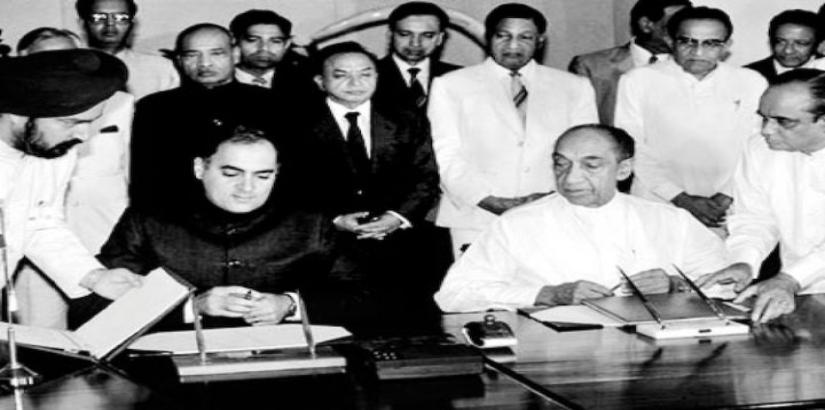
Thirty-five years ago, on 21 May 1991, a historic tragedy occurred when former Indian Prime Minister Rajiv Gandhi—one of the most influential leaders of his time—was assassinated in Tamil Nadu. In the aftermath, Dharmalingam Siddharthan, who later became the leader of the People’s Liberation Organisation of Tamil Eelam (PLOTE), a Tamil militant movement in Sri Lanka that eventually turned towards democracy, made a notable statement.
He is now one of the senior leader of the Democratic Tamil National Alliance (DTNA). His words were recorded by Indian journalist Narayanaswamy inThe Hindu on the 30th anniversary of Gandhi’s assassination. Siddharthan said: “I can say without hesitation that Ezharai Sani gripped Prabhakaran on May 21, 1991, and it will not leave him until he dies. According to astrology, Ezharai Sani (a bad phase of life) lasts seven-and-a-half years, after which it passes away.”
This author personally knows that Siddharthan was among those who realised early on that antagonising India would have serious consequences for the Tamil struggle in Sri Lanka. Even in later conversations, Siddharthan repeated the same point—that with Rajiv Gandhi’s assassination, he had lost hope that the Tamil struggle could succeed.
India’s decisions at that time remain deeply sensitive in Sri Lankan politics. The civil war ended in May 2009, coinciding with the anniversary of Gandhi’s death. Yet, even 39 years after the Indo–Sri Lankan Accord was signed, Sri Lanka has not moved beyond the framework proposed by India. Despite seventeen years since the end of the war, a durable resolution to the ethnic conflict has not been achieved. India continues to press for constitutional implementation, while Tamils still look to New Delhi for support. History has shown that India’s approach—though controversial—was strategically sound.
Cold War and Colombo’s Missteps
Why did India intervene? Narratives differ, but the facts are clear. The Cold War’s geopolitical anxieties shaped India’s decisions, compounded by Sri Lankan President J.R. Jayewardene’s pro-American tilt. Ignoring India’s security concerns, Jayewardene sought military assistance from China, Pakistan, Israel, and South Africa.
During her visit to Washington in 1971, Prime Minister Indira Gandhi emphasised India’s regional primacy, stating: “It is not for one country to tell another what it should do. My duty is to put the situation in my country and its neighbourhood in order.” This clearly indicated India’s regional priorities. In 1982, during another visit to Washington, she pointed out: “We have no global interests. But we are deeply interested in the world and its affairs. Yet, we cannot get involved in power gripping.” Indirectly, she emphasised: do not dictate India’s regional choices.
Yet by 1984, Jayewardene’s overtures to Washington and Beijing deepened India’s mistrust. He even briefed them on progress made in implementing the Voice of America agreement and discussed the possibility of providing facilities for the U.S. Navy in Trincomalee. These moves alarmed New Delhi, leaving India little choice but to intervene. In response, India began training Tamil militant groups—not to partition Sri Lanka, but to prevent external powers from exploiting them. Indira Gandhi remained firm: Sri Lanka’s territorial integrity was non-negotiable.
India’s Strategic Tightrope in the Cold War
India’s foreign policy at the time was shaped by the U.S.–Soviet bipolar order. While India upheld non-alignment, Washington leaned towards Pakistan and funneled weapons through third countries. President Richard Nixon bluntly declared, “India must be slapped down,” and ordered the U.S. 7th Fleet Task Force 74, led by the nuclear-powered carrier USS Enterprise, into the Bay of Bengal. Against this backdrop, Prime Minister Indira Gandhi cut through the panic: “They think they can scare us with a big ship.”
To balance U.S. pressure, India invoked a new treaty of peace and friendship with the then Soviet Union signed just a month before the war over East Pakistan. Meanwhile, in Sri Lanka, President Jayewardene’s administration failed to grasp the political realities around it and overestimated its position. This miscalculation pushed New Delhi to adopt a tougher stance.
Miscalculations and Consequences
Indira Gandhi’s special envoy and key advisor on the Sri Lankan ethnic issue, Gopalaswami Parthasarathy, told Tamil leaders directly that arms training was not intended to create a separate state. India would never support separatism and would never allow it. From the beginning, India’s intention was clear: a political arrangement within a united Sri Lanka, where Tamils could live with dignity—similar to Tamil Nadu’s role in India. A section of Sinhalese political groups, along with LTTE leader Prabhakaran, failed to grasp this nuance. Later, President Ranasinghe Premadasa, who succeeded Jayewardene, pursued an openly anti-India stance and even provided arms to the LTTE—a fact later revealed.
History offers a different lesson now: had India’s proposal been accepted, the war might have ended with far fewer casualties. Instead, the LTTE’s miscalculation culminated in Rajiv Gandhi’s assassination—driven by fears that his return to power would bring back the Indian Peace Keeping Force. The belief that opposing India could achieve a separate Tamil state proved catastrophic.
Echoes in Sri Lankan Politics
Dissatisfaction with the fact that Tamil armed groups were trained by India still lingers in southern Sri Lanka. Political campaigns occasionally revive accusations that New Delhi sought to carve up the island for the sake of Eelam Tamils. Yet the reality is more complex. In the fearful climate of the 1980s, India aimed to bring Tamil groups under its control, recognising the danger of external powers exploiting them. The Eelam Revolutionary Organisation of Students (EROS), a Tamil militant movement based in England, had already established contacts with Palestine and was sending members for training. India feared such networks could eventually be turned against its own interests. Intervention, therefore, was a defensive measure, not an expansionist one.
Indira Gandhi’s stance was consistent: Sri Lanka’s territorial integrity had to remain intact. In 2010, during an interview with this author, then Tamil National Alliance leader R. Sampanthan recalled meeting Indira Gandhi. She told him: “I will get you a solution without hurting the feelings of the majority of the people.” The remark underscored India’s balancing act—seeking justice for Tamils without destabilising Sri Lanka.
Lessons from Indira Gandhi
Indira Gandhi’s approach to Sri Lanka mirrored her broader regional concern. Asked before the India-Pakistan war whether she supported Bangladeshi guerrillas, she replied: “The question is not whether we support it or not—the question is why such things are happening. I do not think we can be blind to what is happening in our neighbouring countries.”
This perspective shaped India’s intervention in Sri Lanka. Colombo’s pro-Western stance, combined with rising Tamil militancy, created conditions that New Delhi could not ignore. Yet even in direct intervention, India drew clear boundaries.
Lessons of 1991
Thirty-five years after Rajiv Gandhi’s assassination, its shadow still looms over Sri Lanka. The Indo-Sri Lankan Accord remains the benchmark for ethnic reconciliation, yet implementation has stalled. Tamils continue to look to New Delhi, while Colombo hesitates. The lesson of 1991 is clear: antagonising India leads only to disaster.
Rajiv Gandhi’s death was not just a personal tragedy; it was a turning point in South Asian geopolitics. It underscored the dangers of misreading India’s intentions and the futility of opposing its regional primacy. The assassination of Rajiv Gandhi stands as a grim reminder of that historic mistake.
(The author is Founding Director, Centre for Strategic Studies–Trincomalee (CSST), Sri Lanka, and a geopolitical analyst. Views expressed are personal. He can be contacted at jjathi@gmail.com / director@trincocss.org / www.trincocss.org.)







Post a Comment