

Slow Drift Towards Catastrophe: Why the Primary Institutional Mechanism for Managing Nuclear Weapons Continues to Fail
Non-nuclear weapon states arrived at the conference with legitimate frustration. Nuclear arsenals are being modernized at enormous cost. The New START Treaty expired in February 2026 without a successor framework — the first time since the early 1970s that no binding limits govern the strategic arsenals of the United States and Russia. China is expanding its arsenal faster than any other nuclear power.
 May 26, 2026
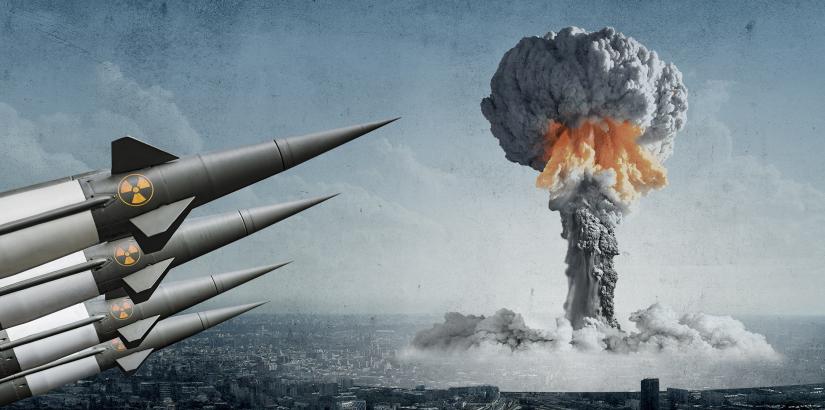
On 22 May 2026, the 11th Review Conference of the Nuclear Non-Proliferation Treaty concluded in New York without a consensus outcome document — the third consecutive time a Review Conference has ended in failure, following the collapses of 2015 and 2022. Despite four weeks of intensive negotiations, four successive draft documents, and the considerable diplomatic skill of Conference President Ambassador Do Hung Viet of Vietnam, states parties proved unable to bridge fundamental disagreements over nuclear disarmament, non-proliferation obligations, and the governance of emerging technologies.
The Under-Secretary-General for Disarmament Affairs, Izumi Nakamitsu, urged states to take three consecutive failures "very seriously." That counsel deserves to be heeded — because what failed in May 2026 was not merely a diplomatic process. What failed was the international community's primary institutional mechanism for managing the most dangerous weapons ever created.
This article examines the structural and proximate causes of the conference's collapse, assesses what the failure reveals about the condition of the global nuclear order, and proposes a realistic pathway forward.
Iran: The Final Dealbreaker
In the conference's closing hours, it was Iran that prevented the adoption of even the significantly weakened fourth revised draft — Rev. 4. The draft had attempted to address concerns about Iran's nuclear programme through carefully neutral language referencing unresolved safeguards issues and calling for a diplomatic solution. Iran refused to accept any document that named its nuclear programme as a concern, insisting its activities were entirely peaceful.
The Iranian delegation's position was shaped by a separate but deeply connected grievance: the 2025 and 2026 airstrikes by the United States and Israel on Iranian nuclear facilities — strikes that several states parties condemned as contrary to NPT principles and international law. Iran demanded explicit condemnation of these attacks in the outcome document. The United States refused. This bilateral impasse, superimposed upon an already fractured negotiating environment, proved irresolvable.
The United States delegation, in its closing statement, described Iran's blocking of consensus as "disgraceful and embarrassing" and warned that the world may have "witnessed the end of the relevancy of the Review Conference process." Whether or not that assessment proves accurate, it reflects a genuine crisis of institutional credibility that cannot be dismissed.
The Disarmament Deadlock
Beneath the Iran crisis lay a deeper and more enduring structural failure: the inability of nuclear-armed states to meaningfully implement their disarmament obligations under Article VI of the NPT. Non-nuclear weapon states arrived at the conference with legitimate frustration. Nuclear arsenals are being modernized at enormous cost. The New START Treaty expired in February 2026 without a successor framework — the first time since the early 1970s that no binding limits govern the strategic arsenals of the United States and Russia. China is expanding its arsenal faster than any other nuclear power.
Against this backdrop, the draft outcome document's disarmament section was progressively weakened through successive revisions. Language calling for urgency in disarmament negotiations, references to No First Use commitments, calls for a New START successor, criticism of arsenal modernization and expansion, and stronger formulations on legally binding negative security assurances were all removed or diluted before the final draft. France and Russia objected even to language noting "the lack of progress on good faith negotiations" — arguing, in effect, that disarmament obligations could be conditioned on a more favorable strategic environment. This position finds no support in the plain text of the NPT, which imposes unconditional Article VI obligations on nuclear-armed states.
Nuclear Sharing and Extended Deterrence
NATO's nuclear sharing arrangements — the forward deployment of American nuclear weapons in allied non-nuclear states — emerged as another significant fault line. Many non-nuclear weapon states and China expressed concern that these arrangements are inconsistent with the spirit, if not the letter, of the NPT. The draft document had attempted to reflect these concerns through neutral, factual language. NATO states pushed back against even this minimal acknowledgment, with some arguing that nuclear sharing prevents rather than promotes proliferation. Language on nuclear sharing was ultimately removed entirely from Rev. 4 — a capitulation to alliance pressure that left many non-nuclear states deeply dissatisfied.
Artificial Intelligence and Emerging Technologies
Several states pushed for strong, specific language addressing the integration of artificial intelligence into nuclear command, control, and communications systems. The initial draft had included references to maintaining human control over nuclear weapons and to the risks of entanglement between conventional and strategic forces. Both formulations were dropped from the final draft. What remained was general language acknowledging that discussions on risks associated with emerging technologies should continue. In an era when AI-enabled early warning systems, autonomous battlefield management tools, and machine-assisted targeting technologies are compressing human decision-making timelines in ways that could prove catastrophic during a crisis, the conference's failure to establish even basic normative guardrails around AI and nuclear weapons — including through a strengthened application of UNGA Resolution 80/23 — represents a serious missed opportunity.
Ukraine, North Korea, and the Politics of Naming
The ongoing war in Ukraine — including attacks on and around the Zaporizhzhia Nuclear Power Plant — created persistent tensions throughout the conference. Russia's 2022 blocking of the final document over Ukraine-related language cast a long shadow. The Conference President attempted to navigate this by adopting general principles against attacks on nuclear facilities without naming specific countries — a necessary compromise that nonetheless left many states unsatisfied.
References to North Korea's nuclear and missile programmes, which had appeared in earlier drafts, were removed from Rev. 4 in an attempt to avoid further confrontation. Many states, including Japan and the Republic of Korea, expressed deep regret at the inability of the conference to send even a basic message of condemnation to Pyongyang.
What the Failure Reveals
Three consecutive failed Review Conferences are not a coincidence. They are a symptom. What the 11th Review Conference exposed, with unusual clarity, is that the NPT is operating under conditions of structural strain for which its existing institutional mechanics were not designed.
The Treaty entered into force in 1970 and now counts 191 states parties. Its review mechanisms have not been substantially updated in over two decades. As Conference President Viet himself noted, "at that age, even some of the best machines can start to creak." But the problem is not merely procedural. It is substantive and geopolitical.
The NPT was built on a bargain: non-nuclear states would forgo nuclear weapons in exchange for a genuine commitment by nuclear-armed states to pursue disarmament. That bargain is visibly fraying. Nuclear-armed states have modernized and in some cases expanded their arsenals while treating Article VI as an aspirational statement rather than a binding legal obligation. Non-nuclear states have grown increasingly unwilling to uphold non-proliferation commitments in the absence of reciprocal disarmament progress. The result is a growing legitimacy deficit at the heart of the Treaty — one that no amount of careful diplomatic drafting can paper over indefinitely.
The geopolitical environment has compounded this structural problem. The war in Ukraine has introduced active nuclear rhetoric and attacks on nuclear facilities into the European security environment for the first time since the Cold War. U.S.-China strategic competition is intensifying. The collapse of the New START framework has removed the last binding numerical limits on the world's two largest nuclear arsenals. North Korea continues to expand its capabilities outside any international framework. Iran's nuclear programme has become a flashpoint for military action. Against this backdrop, maintaining consensus even on basic disarmament principles has become structurally difficult in ways that procedural reform alone cannot address.
Reform the NPT Review Process
Conference President Viet noted that the NPT's review mechanics have not been updated in over two decades. Three consecutive failures make the case for procedural reform compelling. The current requirement for consensus on outcome documents gives any single state the ability to block agreement — a structural vulnerability that Iran exploited in 2026, as Russia had in 2022. Options for reform include moving toward qualified majority voting on outcome documents, establishing intersessional working groups with the authority to develop binding recommendations, and creating permanent institutional mechanisms for strategic stability dialogue between nuclear-armed states outside the five-year review cycle. None of these reforms will be easy. All of them are necessary.
Reaffirm the NPT's Legitimacy
Ultimately, the NPT's legitimacy depends not on the eloquence of its drafting but on the credibility of its implementation. As Nakamitsu emphasized in her closing remarks, non-proliferation and disarmament are two sides of the same coin. Nuclear-armed states cannot indefinitely expect non-nuclear states to honor non-proliferation commitments in the absence of meaningful disarmament progress. The next Review Conference will be held in 2031 in New York — a five-year window in which concrete steps could rebuild institutional credibility. That window is not unlimited.
Learning from Failures
The 11th NPT Review Conference ended as it began — against a backdrop of rising nuclear risks, deteriorating arms control architecture, and deepening mistrust between nuclear-armed and non-nuclear states. The proximate cause of its failure was Iran's blocking of consensus in the final hours. But the structural causes run far deeper: the erosion of the disarmament bargain at the NPT's core, the geopolitical fragmentation of the international security environment, the emergence of new categories of technological risk that existing treaty structures were never designed to address, and the growing unwillingness of nuclear-armed states to treat their Article VI obligations as genuinely binding.
Three consecutive failures cannot be normalized. The NPT remains, as China's delegation noted in its closing remarks, the cornerstone of the international non-proliferation and disarmament architecture. But cornerstones require maintenance. A treaty that commands universal rhetorical reaffirmation while its core obligations go systematically unimplemented is not a functioning arms control regime — it is an increasingly hollow institutional shell.
The alternative — a world in which the primary institutional mechanism for managing nuclear weapons continues to fail, while arsenals modernize, geopolitical rivalries intensify, and technological risks multiply — is not stability. It is a slow and entirely predictable drift toward catastrophe. The next five years will reveal whether states parties have learned anything from three consecutive failures — or whether 2031 will simply mark the fourth.
Primary Sources: UN Press Release DC/3912 | Arms Control Association | NPT Official Documents | Reaching Critical Will | UN Disarmament | IAEA
(The author is a policy professional in international relations and trade policy, formerly associated with the Ministry of External Affairs (Policy Planning & Research Division) and the Ministry of Heavy Industries, Government of India. Views expressed are personal.He can be reached at @Nicholeballawar (https://x.com/Nicholeballawar)








Post a Comment