Thousands protest in PoJK's Rawalakot

Pakistan: Oppressor at Home, Peace Broker Abroad

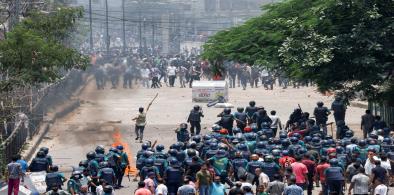
This contradiction—peace abroad, repression at home—defines Pakistan’s current posture. While Islamabad seeks international recognition as a mediator, its domestic record is marred by bloodshed and denial of democracy. The JAAC movement, rooted in basic economic grievances, has become a symbol of resistance against this hypocrisy. 

Myanmar, India and the Northeast: Balancing Security, Connectivity and Geopolitics

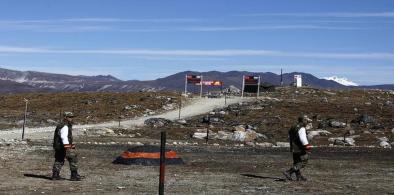
The strategic significance of the offensive lies in control over Kachin State’s heavy rare-earth deposits, which account for roughly half of the world’s supply and are critical for electric vehicles and wind turbines. The KIA took control of these lucrative mining areas near Pangwa and Chipwi in late 2024 and has since heavily fortified its positions.

Xi Jinping’s Loosening Leverage Over North Korea Amid Shifting Indo Pacific Security Dynamics

China in recent times has elevated some of its key bilateral relations, Vietnam, Pakistan, North Korea, to the level where they are now considered by Beijing as  consequential to regional and global peace and stability. China’s foreign and 'grand strategy' is aimed at realizing a shared destiny for mankind and nurturing a new type of great-power relations within a multipolar world. This requires a strategic alignment between China’s strategy and others.

Bangladesh's 'Red Telephone' Breach: More to it Than Meets the Eye?

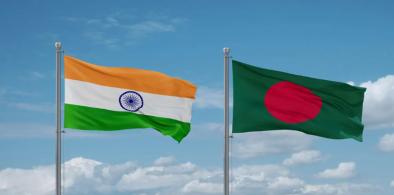
More importantly, the alleged sabotage occurred during a period of political transition following the developments of August 2024. Institutional loyalties, political rivalries, and competing networks of influence continue to shape Bangladesh's political landscape. In such a context, any breach involving the Prime Minister's secure communications infrastructure deserves careful examination.

More on Geopolitics and Strategic Affairs

Sharing stories and voices of South Asia: Can a Kathmandu film festival act as a catalyst for regional collaboration?

Film Southasia is more than just a film festival. It brings together creative voices from across the region, establishing Kathmandu as a regional hub where South Asian storytellers connect across borders. It has become a special space where artists can share their stories and break down the barriers that often keep South Asian countries apart. Over the years, the festival has welcomed many iconic cultural figures, including poet-filmmaker Gulzar, actor Shabana Azmi, and directors Shyam Benegal and Goutam Ghose.

Sustaining democracy and development in Jammu & Kashmir: Looking beyond the 2024 elections

The thrust cannot simply lay on maintaining security in the region, but also a complete transformation of relations. This requires a reconciliation between the Hindus and Muslims of the region who have suffered through communal violence. The de-essentialization of religious identity is crucial in building fraternity and retaining long term internal peace in the region, while at the same time limiting Pakistani intervention

Bangladesh’s security crisis threatens regional equilibrium in South Asia

Bangladesh stands at a perilous juncture, grappling with an unprecedented security crisis in the aftermath of the July 19 jailbreak. The escape of over 2,241 inmates, including militants and top criminals, has exposed deep vulnerabilities in the nation’s security apparatus and highlighted the urgent need for action.

Post-uprising Bangladesh grapples with power, inclusion, and hope; rethink of ties with India

The aspirations of Gen-Z are on the walls, calling for a more tolerant and pluralistic society, with a sense of justice. "All political parties have heard that and understand that the newer generation are the most important voting bank at this moment. They don’t believe in the binary we have lived in for such a long time."

The changing state of Pakistani politics, for better or for worse

Today in Pakistan universities have proliferated and where in 2000 there were about 1 million post secondary students, in 2020 there were nearly 5 million and they have expectations, and they are also more political. But it is also the 30 and 40 year olds, generations of Pakistanis who are frustrated with the lifestyle of the rich and corrupt, and of a military they increasingly see in a similar light.

Pollution blows with the wind: South Asia's public health challenge needs harmonized regional action

In the larger South Asia context, air pollution does not follow national boundaries and therefore the solutions for all the airsheds cannot come from any one city or a country. The countries in South Asia – India, Bangladesh, Nepal, and Pakistan - that share a common airshed are impacted by the transboundary pollution. More than half of the air pollution across major cities in South Asia is not local but transboundary in nature.

South Asia's climate crisis needs a regional response

Regional bodies like the SAARC, the South Asian Association for Regional Cooperation, have the potential to foster cooperation on climate adaptation, disaster preparedness, and trans-border pollution control. However, geopolitical tensions, particularly between India and Pakistan, hinder progress.

India's Caribbean outreach carries geoeconomic and geopolitical significance

In the years gone by, India was defined by its religious and cultural strengths, but it has now taken Prime Minister Modi, with a new initiative, to give a boost to India-Caribbean ties through a purely development agenda. It is hoped that CARICOM would set up the mechanisms to get this agenda going. Is it that India is now showing its readiness to take on American and Chinese frontiers aimed at becoming a leader of the Global South if not a world power?

Securitization of the South Asian refugee: Where national security trumps human security

While the South Asian states securitize, local politics has often scapegoated refugee populations, turning majority insecurities into electoral capital – a fear that refugees’ encroachment  on physical and political spaces, jobs, land, corner welfare resources meted out by the state and place undue pressures on infrastructure; acase in point the rhetoric against Bangladeshi migrants in India.

Is Pakistan’s economy turning the corner?

Managing the country’s debt remains a priority. Pakistan has $26 billion in debt servicing obligations for FY25, but the government has already paid $5.7 billion. It hopes to roll over $14.1 billion of this debt, but a shortfall of $6.3 billion remains. While this presents a challenge, the government is exploring ways to address the gap without relying heavily on expensive, short-term loans. 

Sri Lankan government likely to take a more balanced approach between India and China

The JVP policy towards India took a u-turn when its youthful cadres were highly appreciative of the Indian assistance given during the tsunami and later at the height of the economic crisis two years ago. India’s $4 billion aid tops the list of overseas assistance. India also rushed food, fuel and medicines that helped end the long queues for these and other essentials.

Pakistan's Afghanistan aspirations: From strategic depth to strategic despair

Given this situation, Pakistan has not only failed to secure strategic depth in Afghanistan but has instead found itself trapped in a strategic dilemma. The Taliban have not cooperated with Pakistan in neutralizing the TTP and have consistently denied the TTP’s presence in Afghanistan, despite evidence indicating the group’s activity in the border areas between Afghanistan and Pakistan. This cooperation extends beyond providing safe havens

Karachi-Chittagong port connectivity bodes well for regional trade prosperity and growth

Direct maritime connectivity between Karachi and Chittagong will be crucial to the growth of trade and commerce between the two nations and beyond. They may significantly cut down on the time and expense of shipping products between them and will potentially be crucial in forging connections with other Middle Eastern, Central Asian and East Asian nations, including Russia and China.

Can India and Pakistan ever be friends?

Even among the practitioners, some have been over the years lauded as hawks for playing tough with their subcontinental rivals and some derided as doves for seeking reconciliation and understanding only to be rebuffed. But one thing that Pakistan experts in India agree on, be they former diplomats, security officials, academics, or strategic analysts, is that the one single barrier to conciliation and friendship was the all-powerful Pakistan Army which, in the words of Stephen Cohen, who had authored a book on the Pakistan Army, "imposes its own vision of a Pakistani nation.”

COP28 in Dubai made history: Will COP29 in Baku mar the future?

Even though prices of solar and other clean energy are falling rapidly, the level of global electricity production from  coal and gas has not changed significantly. Countries that attended COP28 in Dubai returned after making history. Countries attending COP29 in Baku may end up wondering about the future of that history.