
From Barracks to Embassies: Munir’s Expanding Military Footprint in Pakistan's Foreign Policy
It would be simplistic to assume that every retired general appointed as an ambassador is an instrument of Asim Munir's influence. It would be equally complacent to dismiss the wider institutional implications of placing so many former military officers in diplomatic positions across several regions.
 Oct 25, 2026
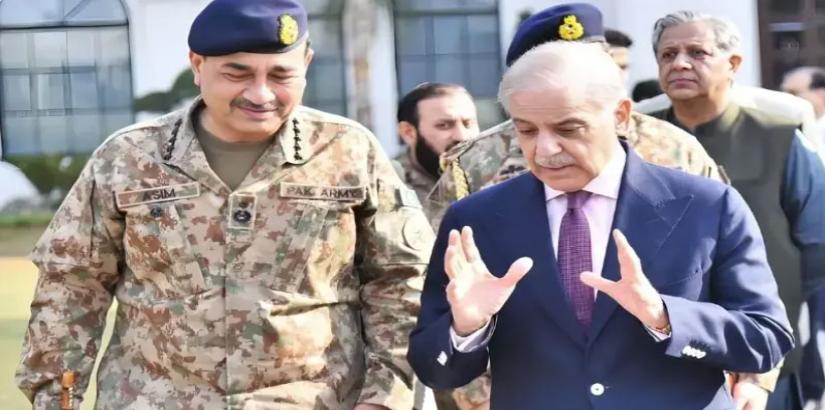
The appointment of nine retired senior military officers to Pakistan’s diplomatic missions abroad is unlikely to be dismissed as a routine administrative decision. The disclosure by Foreign Minister Mohammad Ishaq Dar in the Senate has brought into focus a familiar question about Pakistan’s power structure: where does the authority of the civilian government end and where does the military establishment begin?
The appointments include former army generals, an air marshal and a vice admiral among 17 non-career ambassadors and high commissioners. Their proposed postings span the Middle East, Africa, Europe and Asia. The geographical spread matters. This is not simply a case of one or two retired officers being entrusted with diplomatic assignments. It represents a substantial military presence among those chosen to represent Pakistan overseas, even if the precise rationale for each appointment remains unclear.
The disclosure does not, by itself, establish that the appointments were irregular, that the officers lack diplomatic ability or that Field Marshal Asim Munir personally dictated the selections. Yet the scale of military representation invites scrutiny. In a country where the armed forces have historically exercised extraordinary influence over strategic decisions, foreign policy and political life, the appointment of retired officers to diplomatic posts inevitably carries implications beyond personnel management.
Motive Behind the Appointments
The central question is whether Islamabad is making use of specialised experience or extending the military establishment’s influence into another sphere of governance. The two possibilities are not mutually exclusive. An officer may possess valuable strategic knowledge and still be part of a wider institutional shift that strengthens the army’s position at the expense of civilian authority.
The timing makes the appointments particularly significant. Under Asim Munir, the military's position in Pakistan's power structure has become a subject of intense debate. The army chief's elevation to the rank of field marshal in May 2025, following the military confrontation with India, further underlined his standing within the establishment. His influence cannot be measured by his formal military responsibilities alone. It must also be viewed against the army's longstanding role in shaping Pakistan's security priorities, political choices and relations with major powers.
The appointments may therefore serve a purpose beyond filling vacancies in overseas missions. Retired officers can remain closely connected to the military establishment and its institutional outlook even after leaving active service. Their presence in diplomatic positions could help ensure that Pakistan's external representation remains aligned with the army's strategic thinking.
Pakistan's history provides a useful context. The military has ruled the country directly for extended periods and has exercised substantial influence even under elected governments. Defence and national security have traditionally remained areas in which the army enjoys considerable authority. Its influence has also extended into economic enterprises, public administration and political decision-making. Diplomacy, especially where India, Afghanistan, China, the United States and the Gulf states are concerned, is closely linked to the military's understanding of national security.
The appointment of retired military officers to diplomatic missions can consequently be seen as another means of reinforcing this influence. Ambassadors are not merely ceremonial representatives. They engage foreign governments, assess political developments, cultivate influential contacts and report back to their capitals. They also help shape how the host country understands their government's intentions. Officers with military backgrounds may be particularly useful when relations involve defence cooperation, intelligence sharing, arms procurement or strategic partnerships.
Uncomfortable Question for Sharif Government
There is, however, a crucial distinction between giving the military a voice in foreign policy and allowing its institutional priorities to dominate the entire diplomatic process. The former is normal in most countries. The latter can distort the balance between military objectives and wider national interests.
If the new appointments are intended to improve coordination between the armed forces and Pakistan's foreign missions, they could have practical value. If they are intended to extend the army's influence over the civilian machinery of the state, they would reinforce an existing democratic deficit. The available information does not conclusively establish which explanation applies. The pattern, however, makes the question difficult to ignore.
The more uncomfortable question concerns Prime Minister Shehbaz Sharif's government. Ambassadorial appointments are a formal responsibility of the civilian executive. The prime minister and foreign ministry are expected to ensure that those selected possess the ability, experience and judgement required to represent the country. If the appointments reflect the government's independent assessment of national requirements, they can be defended on their merits. If they reflect pressure from the military establishment, the picture is considerably less reassuring.
The distinction matters because a civilian government cannot be judged solely by its occupation of ministerial offices. Its real authority lies in its ability to make consequential decisions, set priorities and accept responsibility for their outcomes. Where the military has the final say on important questions of security and foreign policy, civilian authority becomes narrower than its constitutional position suggests.
The presence of retired generals in embassies does not automatically establish civilian weakness. Democracies routinely appoint people from outside the professional diplomatic service. Former ministers, academics, business leaders and specialists have served as ambassadors in various countries. Their appointments can bring valuable contacts and fresh perspectives. The concern arises when a particular institution appears to receive disproportionate representation without a transparent explanation of the criteria used.
For Pakistan's civilian leadership, the challenge is to demonstrate that these appointments were made through a credible process and serve the country's interests rather than those of any single institution. Otherwise, the government risks appearing to endorse a widening military footprint while possessing little independent control over the direction of foreign policy.
Appointments not Without Precedent
The question of professional suitability deserves equal attention. Military officers and career diplomats may both serve their country with distinction, but their professional training prepares them for different responsibilities.
Military service emphasises command, discipline, operational planning, threat assessment and the achievement of clearly defined objectives. In a crisis, decisions may have to be made quickly, with little room for ambiguity. The consequences of hesitation can be immediate and severe. An officer learns to identify threats, assess capabilities and act within a chain of command.
Diplomacy operates in a more complicated environment. Negotiations often involve ambiguity, conflicting interests, carefully calibrated language and compromises that may not produce immediate results. A diplomat must understand not only what another government says but also what it cannot say publicly. Building trust can take years, while a poorly judged remark can undo months of painstaking work.
A military officer may view a dispute primarily through the prism of deterrence, capability and strategic advantage. A diplomat must also consider economic interests, domestic politics, public opinion, international law, historical sensitivities and the possibility of a mutually acceptable settlement. Neither approach is inherently superior. Each has its place, and effective statecraft requires them to complement rather than displace one another.
This difference becomes especially important when Pakistan's relations with India are considered. Military preparedness and deterrence are significant elements of the relationship, but they cannot by themselves resolve disputes, restore confidence or create the conditions for sustained engagement. Diplomacy requires the ability to keep channels open even when political relations are strained. It demands patience, restraint and an appreciation of how the other side interprets words and actions.
An experienced general can certainly acquire these skills. Senior officers frequently interact with foreign counterparts, negotiate defence agreements and participate in international security discussions. Some develop an excellent understanding of regional politics and international affairs. But familiarity with military diplomacy is not automatically equivalent to the full range of skills required of an ambassador.
The same applies to career diplomats. Years in the foreign service do not guarantee wisdom, imagination or success. The real test is the individual's capacity to understand the assignment, adapt to the host country's political environment and advance national interests without creating unnecessary friction.
The problem, therefore, is not that military officers are incapable of becoming good diplomats. It is whether the selection process assesses their suitability for the job rather than treating senior military service as sufficient qualification in itself.
The current appointments are not without precedent. Pakistan has regularly appointed retired military officers to ambassadorial positions, particularly in countries where defence and security ties are important.
In March 2003, a report in Dawn recorded that 10 of the 12 non-career envoys appointed during the period covered by the government's disclosure were retired army officers or other senior military personnel. In January 2013, Dawn reported the appointment of three more retired generals as ambassadors, taking the number of capitals represented by former military officers to at least six. In January 2021, retired Lieutenant General Bilal Akbar was nominated as Pakistan's ambassador to Saudi Arabia, a posting that has often been held by former military officers.
These precedents show that the present development is not an entirely new departure. It is part of a longer pattern in which Pakistan has used retired military personnel for diplomatic assignments. The nine appointments are notable because of their number and geographical spread, rather than because they establish an entirely new practice.
The record also suggests that such appointments cannot simply be classified as failures. Retired officers have served in countries where defence cooperation, military training, strategic consultations and security relationships are central to bilateral ties. Their professional backgrounds can provide an advantage in such circumstances. Pakistan's ambassador to Saudi Arabia, for example, operates in a relationship where defence links form an important part of the broader partnership.
There are practical reasons why the appointments could prove beneficial. Pakistan faces a difficult external environment. It must manage its relationship with China, sustain important links with Gulf countries, deal with persistent security concerns involving Afghanistan, and navigate its complicated relationship with India. It also needs foreign investment, access to international markets and support from influential partners.
Impact on Foreign Service Morale
But there are risks. If military appointees concentrate primarily on security concerns, economic diplomacy, cultural engagement, educational exchanges and public outreach could receive less attention. Pakistan needs ambassadors who can attract investment, explain economic reforms, build relationships with businesses and universities, and improve the country's international standing. These responsibilities require a wider outlook than defence cooperation alone.
There is also the danger of weakening morale within the foreign service. Career diplomats spend years acquiring language skills, regional expertise and experience in negotiations. If prestigious ambassadorial posts are increasingly allocated to people from outside the service, professional officers may question whether their experience and performance are valued. The result could be frustration, reduced motivation and the loss of institutional expertise.
A diplomatic service also depends on continuity. Its officers develop an understanding of bilateral relationships over successive postings and pass that knowledge to their successors. External appointments can enrich the system, but excessive reliance on them may weaken this accumulated experience.
The experiment will work only if appointments are based on merit, assignments are matched to expertise, and ambassadors are assessed on measurable outcomes. Their performance should be judged by their ability to advance Pakistan's interests, not by their military rank or their proximity to the establishment.
The use of people from military backgrounds in diplomatic roles is not unique to Pakistan. Countries routinely appoint defence attachés to embassies, send serving officers to international military organisations and deploy senior officers to negotiate security arrangements. Some former military personnel have also moved into wider diplomatic or political responsibilities.
The distinction is between military expertise as an asset and military authority as a substitute for diplomatic judgement. A defence attaché has a specialised remit. An ambassador, by contrast, is responsible for the full range of relations with the host country, including politics, trade, consular affairs and public diplomacy. The two roles can complement each other, but they are not interchangeable.
Pakistan's own history illustrates the difference. Its repeated use of retired officers shows that military backgrounds have long been considered relevant to ambassadorial appointments. Yet the available evidence does not support a blanket verdict that the practice has consistently improved or damaged the country's diplomacy. Individual performance and the requirements of each posting matter more than the appointee's former uniform.
Whither Balance of Power?
The question is whether Islamabad has a clear policy for deciding when a military background offers a genuine advantage and when a career diplomat would be better equipped for the assignment. Without transparent criteria, even a well-qualified appointee may become the subject of suspicion. That is an avoidable cost for a country whose international credibility is already under pressure.
Ultimately, the appointment of nine retired military officers among 17 non-career diplomats is about more than who occupies Pakistan's embassies. It raises questions about the balance of power within the state, the professional independence of the Foreign Service and the extent to which civilian institutions can shape the country's external relations.
It would be simplistic to assume that every retired general appointed as an ambassador is an instrument of Asim Munir's influence. It would be equally complacent to dismiss the wider institutional implications of placing so many former military officers in diplomatic positions across several regions.
For Shehbaz Sharif's government, the appointments offer an opportunity to demonstrate that non-career selections can serve a coherent national policy. For Munir, they will inevitably invite questions about the boundaries of military influence. For Pakistan's career diplomats, they raise concerns about professional recognition and the future of their service.
(The writer is an Indian editor of four-plus decades and a commentator on regional, international, social, cultural and science-related matters. The views expressed are personal. He may be contacted at krajuster@gmail.com)







Post a Comment