

India-China Eight-Point Agreement: A Tactical Thaw, but Trust Remains Elusive
Hopes for Sino-Indian relations centre on a cautious diplomatic thaw, institutionalised border stability and renewed high-level engagement. Indian negotiators and defence planners are well aware that “trust must be verified”. While the activation of these eight points provides valuable channels to prevent an accidental kinetic clash on the ground, the real test of China’s sincerity will not be the joint statements signed in Beijing, but whether it ceases infrastructure build-ups and respects the historical patrolling rights of Indian troops along the LAC.
 Sep 14, 2026
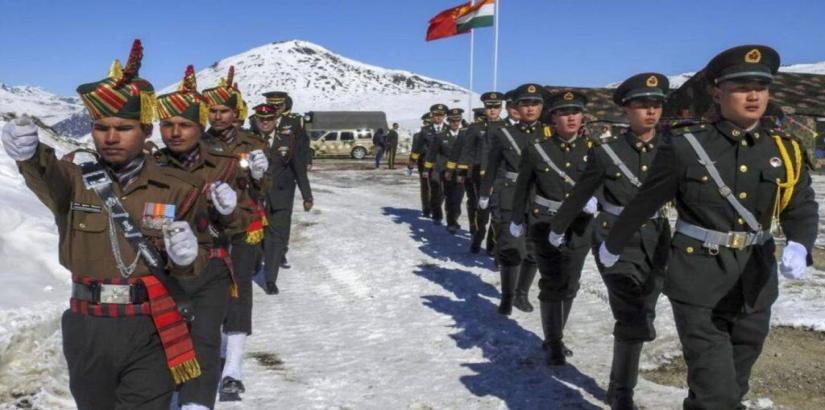
The 25th round of Special Representatives (SR) talks, co-chaired by National Security Adviser Ajit Doval and Chinese Foreign Minister Wang Yi in Beijing in August 2026, ended with India and China reaching an eight-point consensus, featuring plans for new military hotlines and additional border meeting points.
China, which has been illegally occupying 2.5 square kilometres (sq km) of Tibet since 1951, grabbed approximately 43,180 sq km of Indian territory. It began with consolidating 38,000 sq km of Indian territory in the Aksai Chin region during the 1962 India-China War. India and China have been holding formal political and diplomatic negotiations to resolve their border disputes for 45 years, dating back to the first round of official talks held in 1981.
How China Negotiates
It will be relevant to mention the Chinese style of discussion and negotiation during these meetings. While high-level military and diplomatic negotiations between India and China have always been long, marathon sessions lasting anywhere from 12 to over 16–20 hours became a hallmark of the Corps Commander-level talks and Working Mechanism for Consultation and Coordination (WMCC) meetings following the 2020 Line of Actual Control (LAC) standoffs.
Unlike international summits that rely on simultaneous interpretation, where listeners hear the translation through headphones in real time, bilateral border talks strictly utilise consecutive translation. An officer speaks or reads out a position statement in Mandarin or English, pauses, and the interpreter translates it into the other language. This mechanically doubles the duration of the entire conversation.
The Chinese are known for the officious reading of position papers. Chinese military and diplomatic officials rely heavily on rigidly prepared scripts and historical political position papers. Indian negotiators frequently note that Chinese representatives meticulously read out exhaustive, highly formal arguments regarding specific coordinates, ridge lines, such as the Finger areas of Pangong Tso, and historical treaties before actual back-and-forth negotiations begin.
Disagreements are dealt with map by map. The border dispute is fought over metres of terrain, patrolling points and buffer zones. Translating highly technical geographical coordinate data, verifying overlapping satellite maps, and cross-checking precise local topographical names—which often differ entirely in Hindi/Ladakhi and Mandarin/Tibetan—slow down the pace significantly.
The key features of the eight-point consensus were:
(a) Both nations agreed to follow instructions from their top leaders to keep peace along the border and improve overall relations.
(b) For a fair boundary solution, both sides are to apply the 2005 Agreement on Political Parameters and Guiding Principles.
(c) Expert groups will speed up talks for an “Early and Substantial Harvest” on boundary delimitation and border management.
(d) Ground issues will be handled quickly through existing diplomatic and military channels to prevent miscalculations.
(e) An expert-level meeting on trans-border rivers and hydrological data sharing is scheduled for September.
(f) India will host the 26th round of Special Representatives’ talks in 2027.
On new military hotlines, the Indian Army and People’s Liberation Army (PLA) agreed to set up two new border hotlines in the Eastern (Arunachal Pradesh frontier) and Middle (Uttarakhand–Himachal Pradesh) sectors.
On meeting points, it was decided that two additional designated meeting places for senior military commanders would be established in these sectors, with locations such as Tawang and Joshimath identified on the Indian side.
Given China’s historical approach to border agreements—often characterised by incremental normalisation, grey-zone tactics and strategic backtracking—analysts and security experts urge strict vigilance regarding the implementation of the eight-point consensus.
This meeting was neither entirely groundbreaking nor merely “old wine in a new bottle.” Instead, strategic experts view it as a highly tactical exercise in “institutionalising stability” and preventing active conflict, even as deep structural differences remain unresolved.
An “Early and Substantial Harvest”
A fresh approach that emerged from talks between national security leaders from both nations was an “Early and Substantial Harvest”—a diplomatic plan for India and China to first settle easy, low-dispute parts of their 3,488-kilometre border while leaving major, complex territorial disputes for later discussions.
What this involves is:
(a) Both sides identify sectors where boundary differences are minimal or non-existent.
(b) Provision of clear maps of these agreed zones and installation of physical boundary pillars for long-term clarity.
(c) Highly contested or sensitive flashpoints are put on hold to prevent immediate military standoffs.
The positive implications are:
(a) It breaks decades of total deadlock by producing tangible, real-world agreements on parts of the frontier.
(b) A lower military presence in peaceful sectors could help ease daily friction and prevent accidental clashes.
(c) Improvement in trust, with small successes creating positive momentum for future diplomatic talks.
The risks are:
(a) Whereas the 2005 agreement stated that the border must be resolved through a single, comprehensive package deal, this approach will proceed piece by piece, potentially leading to long delays.
(b) Critics warn that settling isolated sectors, such as the Sikkim sector, could give China tactical leverage near sensitive zones such as trijunctions and the Siliguri Corridor, without securing equal gains for India in the Western sector.
(c) This process could reduce an actual “boundary resolution” to mere “border management”, leaving core disputes permanently unresolved.
Implementation will involve specialised expert groups working under the Ministry of External Affairs’ coordination framework. Their first objective is to finalise official terms of reference to decide which specific boundary segments qualify for an early harvest.
While this marks a major shift in how both countries handle their long-running border issues along the LAC, much will depend on how sincerely the Chinese Communist Party and PLA implement these measures on the ground, as they have a long record of not implementing many of their commitments on paper.
Based on past precedents, the following can be expected during the implementation process:
Delays in Formalising “Terms of Reference”: The very first step of the consensus requires the Expert Group on Boundary Delimitation and the Working Group on Border Management to finalise their Terms of Reference. China frequently uses administrative and bureaucratic stalling tactics to prolong foundational framework talks. Expect prolonged debates over definitions and procedural rules, allowing Beijing to buy time while claiming diplomatic progress is “actively moving forward.”
“Salami Slicing” and Grey-Zone Activities: The eight-point pact calls for an “Early and Substantial Harvest” of boundary delimitation and an improved understanding of the LAC to avert miscalculations. Even if formal military hotlines and additional commanders’ meeting points are set up in the Middle and Eastern sectors, China has historically continued non-military, grey-zone assertions. These include the infrastructure expansion of “Xiaokang” (border prosperity) villages and civilian grazing pressures to subtly alter the status quo on the ground without triggering an overt military reaction.
Asymmetric Compliance and Strategic Linkages: The agreement covers non-military protocols, such as reopening border trading points, increasing batches for the Kailash-Manasarovar Yatra, and sharing hydrological data on trans-border rivers. China often implements low-stakes “people-to-people” or economic points smoothly to project goodwill. However, it maintains an “asymmetry of verifiability” on high-stakes security matters. Beijing will likely try to delink border transgressions from these cooperative steps, expecting India to fully normalise trade and economic relations while keeping the core boundary dispute ambiguous.
While both sides reaffirmed their commitment to the 2005 Political Parameters and Guiding Principles for settling the boundary, China has repeatedly tried to reinterpret or bypass this clause when claiming areas in the Eastern Sector (Arunachal Pradesh). There is a high likelihood of China challenging Indian sovereignty through “cartographic aggression”, such as renaming places and publishing altered maps, while simultaneously claiming it is adhering to the 2005 framework.
Need to Be Water-Wise with China
While there has been no explicit or official military threat from Beijing to use water as a weapon, geopolitical analysts and regional experts have increasingly labelled China’s massive upstream infrastructure projects in Tibet—specifically the colossal Medog Hydropower Project on the Yarlung Tsangpo, which becomes the Brahmaputra in India—as a potential “water bomb”.
This anxiety has spiked sharply following catastrophic flash floods along the China-Nepal border. The recent devastating floods in the Nepal-Tibet border region were triggered by natural glacial collapses and rock-ice avalanches rather than an intentional dam burst. However, they demonstrated how fragile the Himalayan ecosystem is.
China’s construction of a massive multi-stage super-dam near the Great Bend of the Yarlung Tsangpo in Medog County—situated in a highly active seismic and earthquake-prone zone very close to the Indian border—has led strategists to warn that structural failures, seismic damage or sudden, unannounced water releases could act as an uncontrolled “water bomb” for downstream nations such as India and Bangladesh.
During the disaster near the Nepal border, local and national authorities criticised Beijing for a perceived lack of timely, real-time emergency communication regarding sudden upstream debris blockages and swelling barrier lakes, reigniting fears over how China might manage data-sharing during a crisis on shared transboundary rivers.
The effectiveness of implementation of the eight-point consensus and the “Early and Substantial Harvest” formulation is expected to be highly asymmetric, separating rapid confidence-building measures from much slower, highly complex structural boundary negotiations. The “Early and Substantial Harvest” formulation—which tasks the Expert Group on Boundary Delimitation and the Working Group on Border Management with finding preliminary settlements on parts of the border—will face significant procedural delays.
Hopes for Sino-Indian relations centre on a cautious diplomatic thaw, institutionalised border stability and renewed high-level engagement. Indian negotiators and defence planners are well aware that “trust must be verified”. While the activation of these eight points provides valuable channels to prevent an accidental kinetic clash on the ground, the real test of China’s sincerity will not be the joint statements signed in Beijing, but whether it ceases infrastructure build-ups and respects the historical patrolling rights of Indian troops along the LAC.
A positive development that came about during the September 12–13, 2026 BRICS Summit in New Delhi was Prime Minister Narendra Modi and President Xi Jinping stressing the importance of peace and tranquillity in border areas. PM Modi stated that peace and quiet on the border are necessary for normal relations, though readouts showed slightly differing positions on formally linking the boundary dispute to overall bilateral ties.
He highlighted three key principles for future relations: mutual respect, mutual sensitivity and mutual interest. Both leaders agreed that differences should not turn into open disputes and reaffirmed a commitment to working towards a fair, mutually acceptable boundary settlement and a strategic, long-term perspective to stabilise ties following the 2020 border clashes.
(The author, a strategic affairs analyst, is a former spokesperson, Defence Ministry and Indian Army. The views expressed are personal. He can be contacted at wordsword02@gmail.com)





Post a Comment