

Why Dhaka and Delhi Must Find Common Ground - and Their Shared Space
If India says the security of its Northeast, border management, trade and connectivity matter, Bangladesh can equally say that water sharing, deaths at the border, market access, energy security, river management and sovereign equality matter to it.
 Sep 29, 2026
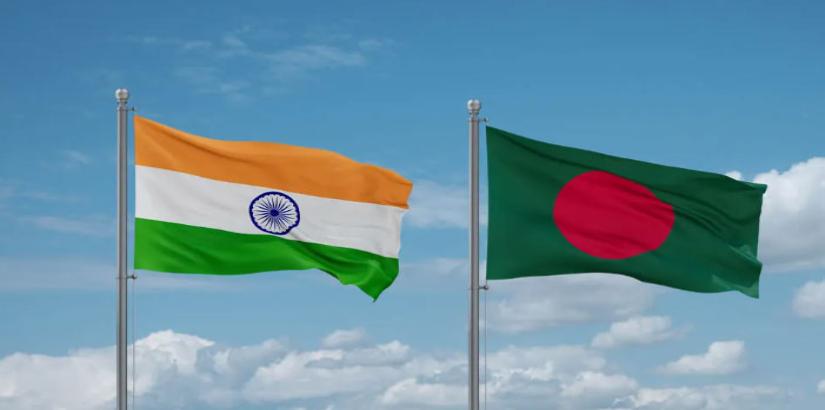
The old political bargain has run its course. The most important question in the current Bangladesh-India relationship is perhaps not simply whether India will send Sheikh Hasina back to Bangladesh, or when Prime Minister Tarique Rahman may visit New Delhi. The larger question is whether the two countries can move beyond the old framework of their relationship and build a new equation based on mutual interests.
A recent statement by India's External Affairs Minister S Jaishankar points in that direction. He said a relationship works when it meets the test of mutual interest and when both sides find a landing point or common ground. In the present reality of Dhaka-Delhi relations, this is more than a routine diplomatic phrase.
For more than a decade, Bangladesh-India relations were built heavily around political trust between New Delhi and the Awami League government. That period also produced extensive cooperation in security, trade, power, infrastructure and connectivity. Bangladesh benefited from many of those links, but a growing section of public opinion came to see the relationship as too closely tied to one political arrangement and increasingly asymmetrical.
After the turbulent political change of 2024, that equation could no longer operate in the same way. Both governments are now trying to rebuild engagement after a prolonged period of strain. The challenge is to replace personality-centred political trust with a more durable, institutional and interest-based relationship.
Need to Find Common Ground
"Common ground" should be a bargaining framework, not a slogan.
The important part of Jaishankar's statement is that he did not announce a settlement on any single dispute. Instead, he described a principle of mutual interest for managing the relationship: India will pursue its own interests, but a workable relationship also requires recognition of the other side's interests.
In diplomacy, mutual interest creates room for bargaining. If India says the security of its Northeast, border management, trade and connectivity matter, Bangladesh can equally say that water sharing, deaths at the border, market access, energy security, river management and sovereign equality matter to it. The point is not that every issue can be traded against another, but that the relationship must recognise both sides' priorities.
Bangladesh needs India, but Bangladesh is also important to India. Bangladesh gives India's landlocked Northeast some of its most economical access to the Bay of Bengal, while India provides Bangladesh with a huge neighbouring market, raw materials, electricity and overland access to Nepal and Bhutan. The real equation, therefore, is not a zero-sum contest over who needs whom more. The question is how both countries can turn interdependence into reciprocal strategic value.
Test of Hasina's Extradition
At present, the most politically sensitive obstacle in Dhaka-Delhi relations is Sheikh Hasina's extradition. Bangladesh has formally sought her return, while India says the extradition request remains under examination through its legal and judicial process. Bangladesh has continued to press the issue, including through a renewed extradition proposal and an Interpol request.
From Dhaka's perspective, this is not merely a personal or partisan matter. It is tied to questions of justice, sovereignty and the legitimacy of the post-2024 political order. From India's perspective, the issue is also sensitive because Hasina's government maintained a long and unusually close political and security relationship with New Delhi. That legacy makes a legal question politically charged on both sides.
Public discussion has included speculation about what conditions India might seek before extradition. India has not publicly outlined such a package of special conditions. Its stated position is narrower: New Delhi has said the request is under legal review and any decision will follow applicable law and due process. That legal caution may be understandable in Delhi, but prolonged uncertainty carries real political costs in Dhaka.
Bangladesh, however, also faces a strategic choice. If the entire relationship with India is reduced to the Hasina issue, broader national interests may suffer. Yet the matter cannot be treated as marginal either. Hasina has publicly said she intends to return to Bangladesh in December, and the Bangladesh government has said she would be provided security and brought before the legal process if she returns. The relationship between two states is broader than one individual, but this individual case now has consequences for the wider relationship.
This is where common ground must become practical. Dhaka can recognise India's legitimate security concerns while expecting progress on water and border security; India can seek trade and connectivity benefits while supporting greater market access for Bangladesh; regional security cooperation can coexist with respect for Bangladesh's strategic autonomy and internal political choices.
Tarique's India Visit
Prime Minister Tarique Rahman's possible visit to India could become an important moment in the reset. However, the visit remains unconfirmed despite repeated invitations and weeks of diplomatic discussion. That uncertainty itself shows how closely the visit has become linked to the broader political atmosphere between the two capitals.
The success of any visit will depend on the agenda. Foreign-policy analysts have already identified a crowded bilateral agenda: Hasina's extradition, the Ganges Water Sharing Treaty, border management, trade restrictions, energy, visas and connectivity. The Rohingya crisis, regional security and the Bay of Bengal should also be part of a wider strategic conversation.
Bangladesh should therefore make a simple principle clear: friendship with India is necessary, but cooperation should be reciprocal and consistent with sovereign equality. A productive relationship cannot rest on one-sided concessions or on rebuilding political trust with a single party or personality.
De-Risking and Diversification
Another important part of Jaishankar's remarks concerned de-risking. He argued for de-risking through diversification, with countries and businesses relying on more partners and sources instead of becoming excessively dependent on one supply chain or relationship. The principle is relevant to Bangladesh as well.
Rebuilding ties with India does not require Bangladesh to disturb the balance of its relations with China, the United States, Japan, Turkiye, the Middle East or Europe. Bangladesh's strategy should be to widen options and bargaining capacity, not to replace one dependency with another. Dhaka has itself described its approach as a balance-first policy based on sovereignty, equality, non-interference and mutual benefit.
If India expects Bangladesh to consider Indian security and strategic interests, New Delhi should also accept Bangladesh's diversified foreign policy as a normal reality. Excessive dependence on any single power would be risky for Dhaka; viewing Bangladesh mainly through a security lens would be equally shortsighted for Delhi.
Bangladesh's China Ties
Jaishankar's remarks on China offer a useful comparison. He acknowledged that a stable border can create room for economic cooperation with China even while India competes with Beijing and works to strengthen its own capabilities. If India can combine competition and cooperation with China, Bangladesh's relationship with China should not automatically be interpreted as an anti-India position.
Bangladesh's own foreign minister has publicly said that the country's relations with India and China are not a zero-sum game. That is a useful principle. China is a major source of trade, investment and infrastructure finance in Bangladesh, and the two countries continue to discuss defence and technology cooperation. At the same time, Bangladesh has unavoidable geographic and economic realities in relation to India.
The sensible strategy is therefore not "India or China" but a balanced approach that protects Bangladesh's national interest. The government's recent China engagement has itself been described as an effort to expand diplomatic and economic space while keeping multiple channels open.
The Trust Deficit
The current strain in Dhaka-Delhi relations is rooted not only in unresolved disputes, but also in a deficit of trust. Some in India worry that Bangladesh's political changes could pull Dhaka closer to Beijing. In Bangladesh, many have long believed that India became too closely identified with one political force and too involved in the country's internal political reality.
These perceptions will not disappear through slogans. A new language of equality, mutual respect and mutual interest will matter only if it produces visible outcomes. Progress on border killings, the Ganges and other water issues, trade barriers, movement of goods, normalisation of visa access, energy cooperation and regular security dialogue would make common ground credible. India and Bangladesh already have dozens of bilateral mechanisms covering many of these areas; reactivating those institutional channels is therefore essential.
A Crisis and an Opportunity
Dhaka needs a national-interest matrix before the next negotiation. The present situation is both a crisis and an opportunity for Bangladesh. With the old political equation broken, Dhaka can build a new foundation for the relationship around measurable national interests.
Before major negotiations, Bangladesh should prepare a clear national-interest matrix. It should identify which issues need early agreement, which require long-term bargaining, and which involve core national-security or sovereignty concerns. Water, border management, trade, energy and connectivity should be approached through evidence, priorities and measurable outcomes rather than emotion alone.
India, too, needs to engage with post-2024 Bangladesh as it is, not as an extension of the old political order. South Asian geopolitics is changing, the Bay of Bengal is becoming more strategically important, and Bangladesh is widening its economic and diplomatic options. A stable, trust-based relationship with Bangladesh remains a strategic asset for India, but it will be sustainable only if it is broader than security cooperation or political loyalty.
The new bargain must be based on reciprocity
The future of Bangladesh-India relations will be determined not by how much one side concedes to the other, but by how effectively the two countries align their common interests. Hasina's extradition is a major question, and a future Tarique Rahman visit could become a useful political opening. Beyond both issues lies a larger reality: the relationship needs to move away from personality-centred political dependence and towards institutions, reciprocity and mutual benefit.
Jaishankar has spoken of common ground. The question now is where Dhaka and Delhi will find that shared space. Neighbours cannot be changed, but the structure of a relationship can.
(The author is a lecturer in Civics and Good Governance at Cosmopolitan College in Dhaka, Bangladesh. The views expressed are personal. He can be reached at kawsarmia03475@gmail.com or b180104019@ihc.jnu.ac.bd. )





Post a Comment