
Striking Bangladesh garment workers

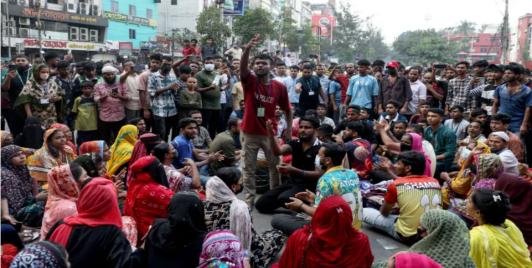
The Garment Workers' Protest in Bangladesh: A New Government But With Old Rules

The ready-made garment (RMG) industry is one of the country's major employers, employing around four million workers, of whom 60.5 percent are women. It generates nearly $40bn for Bangladesh each year and accounts for around 10% of its GDP, making Bangladesh the world's second-largest apparel exporter. 

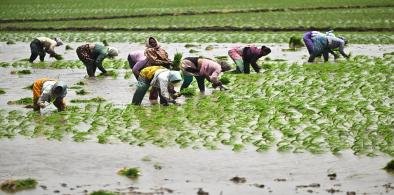
South Asia’s Crisis of Preparedness: Agricultural Future Depends on Climate Resilience, Not Markets Alone

South Asia needs stronger regional cooperation because weather shocks, food prices and agricultural trade do not stop at national borders. Governments should share seasonal forecasts, river-basin information and climate-risk data, while strengthening coordination on flood warnings and drought preparedness.    

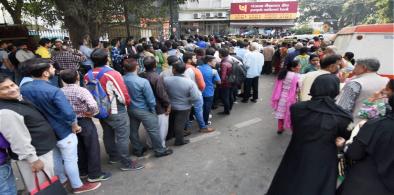
Ten Years after India's Dramatic Demonetisation: Need for Independent Review

Looking back, there is little reason for the Indian government to be proud of this episode. People’s trust was met with disruption whose full costs remain unreckoned and whose promised benefits have never received a convincing consolidated accounting. Indians rebuilt their livelihoods and moved on. Their resilience cannot absolve the government.

What Lula’s Win Mean for BRICS and 'De-Dollarization'

Lula’s re-election spared BRICS from an internal fracture at a moment when energy routes are contested and financial dependence carries higher costs. As Trump pressures countries back into Washington’s orbit, Lula’s Brazil keeps one of the few organized efforts toward currency diversification from stalling.

More on Geoeconomics, Trade and Development

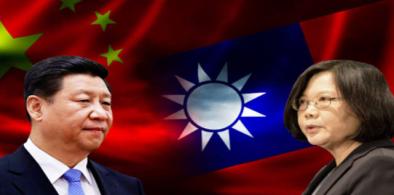
Taiwan issue no longer an internal Chinese affair

Taipei needs full regional support for its survival and in its efforts to repel a Chinese invasion;  it cannot afford to be distracted by other lingering issues with other neighbours, including Japan, which Beijing is happy to exploit to its advantage. 

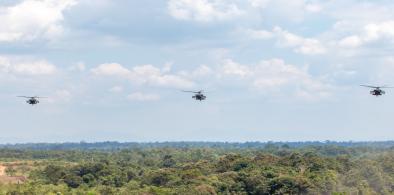
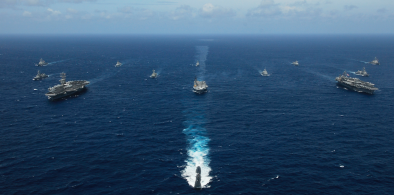
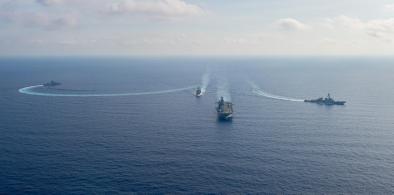
Fourteen countries, including India, in multinational exercise in Indo-Pacific: US calls it 'integrated deterrence' against China and Russia

"The National Defense Strategy is really premised on this urgent need to sustain and strengthen deterrence with the focus on the People's Republic of China," the US official said.

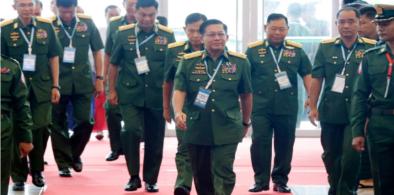
Myanmar's escalating internal conflict has regional repercussions

Myanmar's military junta is facing fierce resistance from various ethnic minorities. A shadow government, called National Unity Government (NUG), was formed to counter the military government. The shadow government has already appealed to the international community for support, to which the United States, the European Union and ASEAN member states have responded.

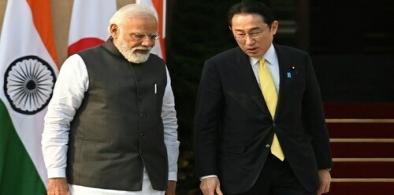
Japan's internal churnings will have geo-strategic implications for Asia, Indo Pacific

Experts have even called for Japan to deepen bilateral security cooperation with India, Britain and France, countries that have shown a new resoluteness towards Chinese actions in the Indo-Pacific.

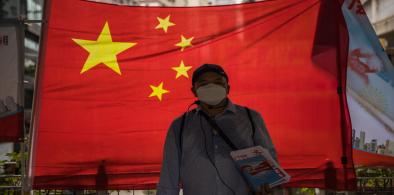
Beijing keeps tight rein on its media as its seeks global information dominance with sophisticated propaganda tools

No country comes close to China’s sophisticated influence-seeking tools and the way it leverages its soft power. The relentless pursuit by Chinese propagandists, out to stake their claim on the global information order, are challenges that the independent global information order needs to meet. 

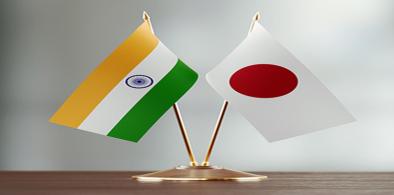
Japanese supply chain resilience to decouple from China: Is India the new bet for Japanese investors?

The launching of supply chain resilience in the Indo-Pacific region is another attribute of the rising interest in India. India’s strong leadership in the region evokes new opportunities to reap benefits from its low-cost hub, laden with high IT technology.

India, France and UAE form new trilateral grouping focused on Indo-Pacific security

Colonna tweeted in French that it was the “launch of a new trilateral format in the #Indo-Pacific zone with India and the Emirates“ with “a common ambition to move forward in 4 areas: #security and #defence, #Climate, #Technologies and people(-to-people) exchanges”.

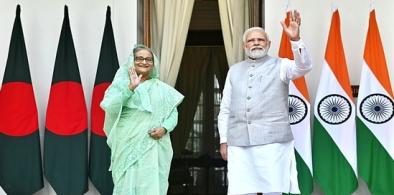
Is China worried over closer Dhaka-New Delhi ties? Unlikely

Professor Thussu says, ”Although New Delhi remains a traditional friend of Dhaka, the growing presence of China in Bangladesh and elsewhere in South Asia, makes it difficult for Hasina to prioritize India over China: the scale and depth of Chinese investment, aid etc. can’t be matched by India.” 

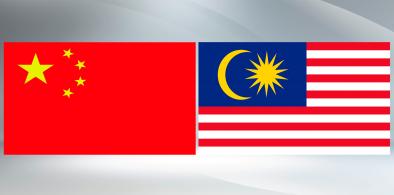
Is China's tightening grip over Malaysia and region a threat to Western security order?

In this regard, both ASEAN and Malaysia seem to have lost their appeal to the West for a deeper security foothold, with Washington realising that the current situation of the region's pandering to Beijing makes it difficult for the US to establish rooted military alliances and placement of strategic anti-missile capacities, among others

The curious case of Indian silence over damning UN human rights report on China

Not surprisingly, India has not come out with any condemnation of China for its atrocities in Xinjiang, a classic example of India in recent times trying to steer clear of global contestations

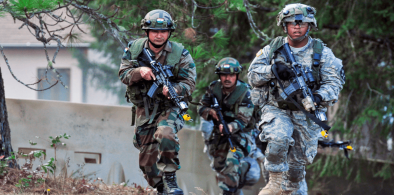
A strategic shift? Lessons for India from the Dragon's Taiwan fury

It will be for the first time that the Pentagon is getting involved in a high-altitude exercise with Indian troops, a fact that will not go unnoticed in Beijing. Is staging these combat drills so close to the disputed region indicative of a strategic shift on the part of New Delhi? 

A long tactical mind game has begun for control of Indo Pacific

A new, long and potentially ugly physical and mind games have begun, where conventional and tactical firepower alone would not guarantee long term success and acceptance

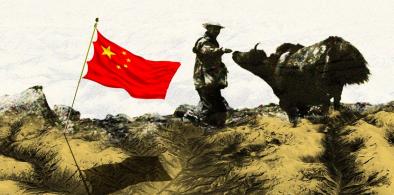
Post Taiwan crisis, China gets edgy over Tibet and Himalayan security

With no diplomatic ties with Bhutan, prevailing border tensions with India and a changing geo-strategic sphere in Nepal, China's Himalayan neighbourhood security is critically tied to safeguarding Tibet

The Chinese ‘spy’ ship that raised Indian eyebrows; and this may not be the last

Ever since Sri Lanka leased Hambantota port to China, both India and the US have flagged their concerns that this may eventually lead to it becoming a hub for the PLA Navy in the Indian Ocean

India remains a strategic bulwark in checking China’s rising power

Both Sri Lanka and Bangladesh remain crucial in the eyes of New Delhi and Washington in denying further incursions by Beijing, underscored by the scramble for reassertion of American influence and ties with both nations

Newsletter Subscription

The subscriber's email address.
Stay informed - subscribe to our newsletter.