

BRICS 2026: A Growing Global Force With Potential to Alter Economic and Geopolitical Balance
This raises an interesting question: what if Russia, India and China were to substantially deepen their strategic cooperation? Such cooperation, supported by other BRICS members and partners, could create a formidable economic and geopolitical grouping.
 Sep 02, 2026
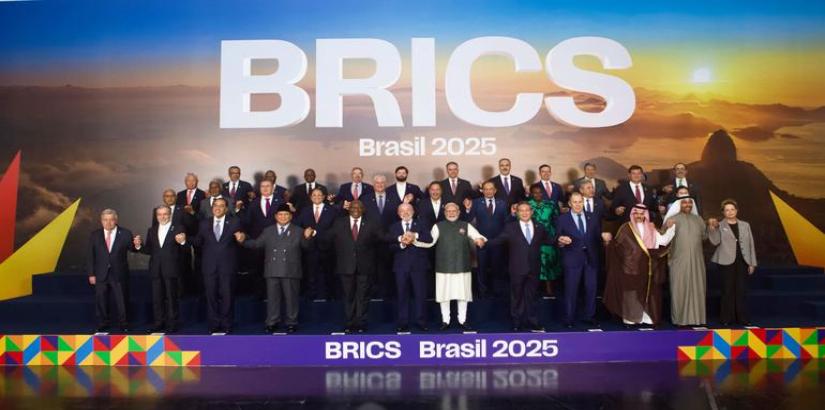
India is hosting the BRICS Summit 2026 in New Delhi September 11-13. The theme, “Building for Resilience, Innovation, Cooperation, and Sustainability,” reflects this broader approach. It seeks to promote shared growth, green development and technological cooperation while addressing common global challenges. The emphasis is on cooperation without requiring uniformity, allowing member nations with diverse political systems and strategic interests to work together in areas of common concern.
BRICS and the Changing World Order
For centuries, the global economic order has been largely shaped and dominated by Western powers. BRICS represents an attempt by a group of emerging economies to challenge that established order and push for a more multipolar global system. What began as a grouping of major emerging economies has gradually evolved into a broader platform for economic cooperation, trade, development and dialogue on global issues.
It is important, however, to recognise that BRICS is a grouping, not an alliance - at least not yet. Its members do not subscribe to a common strategic or security doctrine, nor are they bound by collective commitments or ideologies. Each member retains its strategic sovereignty and is free to pursue its own national interests and foreign policy. This diversity is both a strength and a limitation of BRICS.
The implications of this expanding grouping extend well beyond its member states. As BRICS develops initiatives covering economic, technological, social and other areas of cooperation, its growing membership could give it greater weight in shaping global economic and political priorities. With several countries seeking closer association with the bloc, its expanding economic and demographic weight could make BRICS an increasingly influential factor in determining the direction of the global order.
Demographic Weight of BRICS
The sheer scale of the original five BRICS members - Brazil, Russia, India, China and South Africa - is evident from their demographic weight. Together, they account for about 41.6% of the world's population, according to the figures in the accompanying chart. India and China alone account for more than 36%. This gives the grouping an enormous constituency and, when combined with its economic, geographic and strategic spread, makes BRICS difficult to ignore in any discussion of the emerging global order.
Strategic Weight of Russia, China and India
Among the BRICS countries, Russia, India and China stand out in terms of population, economic weight, military capability and strategic significance. The global geopolitical landscape has undergone a significant shift from the bipolar structure of the Cold War, dominated by the USA and the Soviet Union, towards a more multipolar world.
Over the past few decades, countries such as China, India and France have emerged as significant powers, asserting their influence and seeking a greater say in global affairs. Among them, China has emerged as the most significant single power capable of challenging the USA across economic, technological and strategic domains.
A China, Russia, India Strategic Triad?
This raises an interesting question: what if Russia, India and China were to substantially deepen their strategic cooperation? Such cooperation, supported by other BRICS members and partners, could create a formidable economic and geopolitical grouping. It could potentially challenge the dominance of traditional Western power centres such as the EU, UK and USA in global trade and international economic affairs.
By coordinating their positions on trade, these countries could provide a collective response to protectionist measures such as tariffs and unilateral trade sanctions, while advocating greater predictability and fairness in international trade. Their combined economic weight would also give them greater bargaining power in negotiations with major Western economies.
Joint efforts could also address challenges posed by measures such as the EU Carbon Border Adjustment Mechanism (CBAM), which developing economies have argued could place additional burdens on their exports. By advocating greater climate equity, the three countries could seek frameworks that balance environmental objectives with the economic realities of developing nations.
Their cooperation could extend beyond trade. Working together with other developing countries, particularly across Asia, Africa and Latin America, they could offer alternative models of development, infrastructure financing, technology cooperation and trade. Such partnerships could enhance their collective influence while creating new economic opportunities for participating countries.
Energy and Technology Cooperation
Energy is another major area of potential cooperation. Russia's energy resources, China's manufacturing and technological capabilities, and India's large and growing energy market could complement one another.
Cooperation could extend to nuclear energy, renewable technologies, energy infrastructure and research, potentially strengthening energy security while supporting the transition towards cleaner energy.
Similarly, greater economic integration could encourage bilateral and multilateral trade agreements among these countries and their partners. Reduced trade barriers, stronger regional supply chains and improved market access could promote investment, innovation and economic growth, while providing an alternative to Western-dominated trade arrangements.
Potential Sectoral Benefits for India
A deeper India-Russia-China economic and strategic partnership could create opportunities across several sectors.
Defence is one area, although the nature and extent of such cooperation would depend heavily on each country's strategic interests and technology-sharing policies. Indian companies such as HAL, BEL and L&T Defence could potentially benefit from greater indigenous production, joint development and expanded defence exports to friendly partner nations.
In manufacturing, Indian automobile companies such as Tata Motors and Mahindra Motors could potentially benefit from expanded markets and technology partnerships.
Electronics manufacturers such as Amber Enterprises, Dixon Technologies and Syrma SGS could gain from deeper integration into Asian supply chains and access to larger markets.
The steel and heavy engineering sectors could also benefit from greater access to raw materials, technology and markets. Companies such as SAIL and Tata Steel, along with manufacturers of heavy machinery and industrial equipment, could potentially participate in larger regional supply chains.
In oil and energy, Indian companies such as ONGC, Indian Oil and Reliance could benefit from greater and more predictable access to Russian energy resources.
Cooperation with China could also facilitate access to renewable-energy technologies and manufacturing capabilities. In nuclear energy, India's existing cooperation with Russia could potentially be expanded, while research and development in clean energy could benefit from the combined capabilities of the three countries.
Great Opportunity in Pharma Sector
The pharmaceutical sector presents another opportunity. Indian companies such as Sun Pharma and Dr. Reddy's could gain access to larger markets, while cooperation in biotechnology, pharmaceutical research and active pharmaceutical ingredients could strengthen regional supply chains. Greater collaboration could further strengthen India's already significant position in the global pharmaceutical industry.
Larger Implication of Strategic Cooperation
Deeper strategic cooperation between India, Russia and China has the potential to alter the economic and global geopolitical balance well beyond the three countries. It could strengthen cooperation in defence, manufacturing, energy, technology, pharmaceuticals and trade, while giving the wider BRICS grouping greater economic leverage.
But this remains a possibility, not an emerging alliance. The three countries have significant differences in their strategic interests, political systems and bilateral relationships. The real significance would lie not in creating a formal alliance, but in whether they can find sufficient common ground to cooperate while retaining their strategic sovereignty.
That, perhaps, is the real test of how far BRICS can evolve. Can BRICS 2026 bypass its differences and make inroads on a progressive path towards a common future?
(The author is an Indian Army veteran and a contemporary affairs commentator. The views are personal. He can be reached at kl.viswanathan@gmail.com )







Post a Comment