

China's Strategy of Persistent Tension: Advancing Without Crossing the Threshold of War
Arunachal Pradesh presents a particularly important dimension of the problem. China claims the northeast Indian state, refers to it as Zangnan, or South Tibet, and periodically challenges India's sovereignty through statements and the assignment of Chinese names to places within the state.
 Oct 25, 2026
After a brief interlude, the Line of Actual Control (LAC) - the de facto boundary between Indian and Chinese-controlled territory - is once again in focus.
During the 1970s and 1980s, China was a poor nation - far poorer than it is today. Yet even then, I can say from personal experience, it was well ahead of India in infrastructure and military deployment along the LAC. India, too, has made considerable progress since the 1980s. However, in terms of infrastructure parity, we are not there yet.
Over the past couple of decades, as China's economic and military capabilities have grown, it has increasingly sought to alter the status quo along the disputed border. How successful these attempts have been is debatable. But given China's better preparedness in certain sectors, it would not be surprising if it has secured incremental advantages.
A recognisable feature of Chinese statecraft is its ability to maintain pressure, change the status quo incrementally, and keep confrontations below the threshold of full-scale war. This pattern is visible, in different forms, along the LAC with India, around Taiwan and in the South China Sea.
The distinction is important. There is a difference between initiating a war and gradually altering the strategic environment without doing so. Concepts such as salami-slicing, grey-zone coercion and escalation management help explain this approach.
The central question is whether China can accumulate strategic advantages while making it difficult for its opponents to justify a major military response, and whether the resulting tensions can be sustained indefinitely.
Approach Towards India
China's approach has involved military deployments, infrastructure development, forward positioning and prolonged negotiations over disputed areas. The 2020 confrontation in eastern Ladakh demonstrated both the method and its limits.
India accused China of attempting to alter the status quo unilaterally. The ensuing confrontation resulted in fatalities and a prolonged military standoff. Subsequent negotiations produced disengagement arrangements, including the October 2024 agreement covering Depsang and Demchok.
The larger point is that a prolonged confrontation can alter the military and diplomatic environment even without a full-scale war. Forces remain deployed, infrastructure assumes greater importance, negotiations become protracted, and each side must continually assess the other's intentions.
China's approach, therefore, should not be understood as an avoidance of violence at all costs. Rather, it involves applying pressure while seeking to limit the risk of escalation into a wider war.
Strategic Pressure on Taiwan
China's activities around Taiwan offer another illustration of this approach.
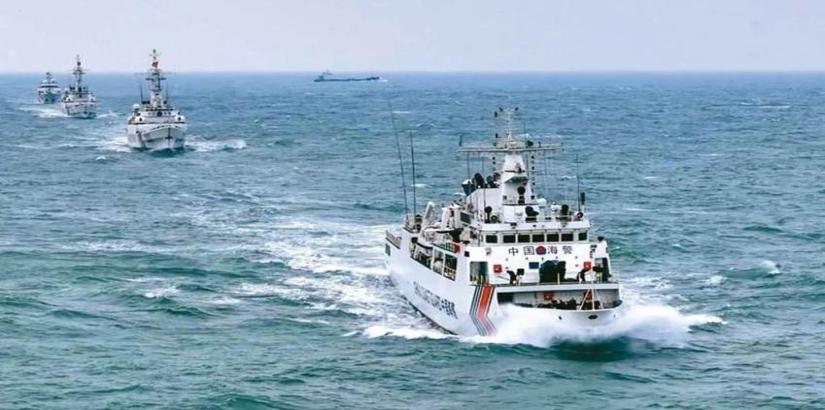
Chinese military aircraft, naval vessels and coast guard ships operate around the island with increasing regularity. Repeated patrols and incursions can gradually make exceptional activity appear routine. Taiwan must monitor and respond to these activities, while China continues to assert its claims without launching an invasion.
The objective need not be an immediate military victory. It can also be to increase pressure, consume the other side's resources, influence its calculations and gradually blur the distinction between normal conditions and coercion.
The strategic significance lies in the cumulative effect. What begins as an individual demonstration of power can become a recurring feature of the security environment.
The South China Sea Presence
The South China Sea illustrates a further dimension: the gradual creation of a physical and operational presence that becomes difficult to reverse.
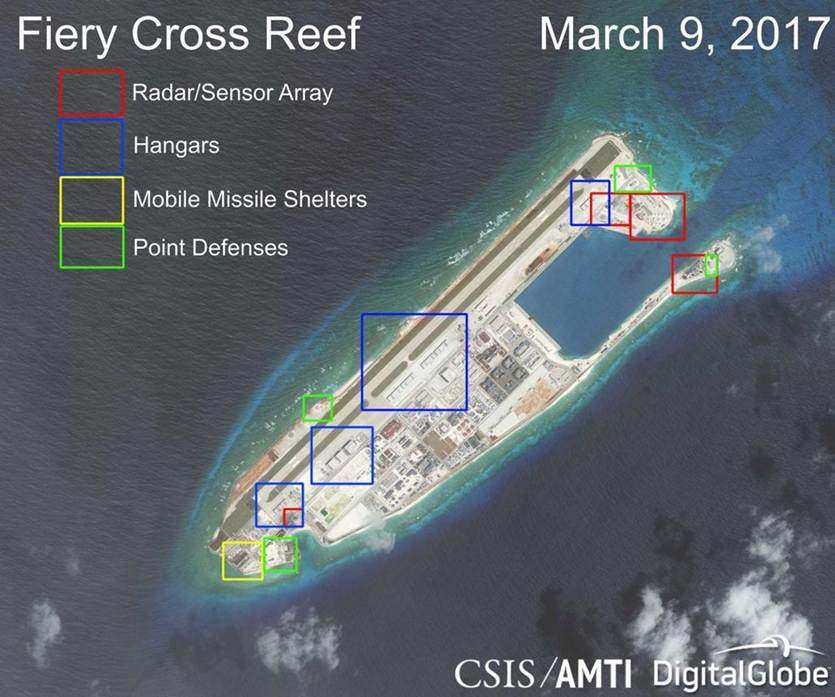
China has constructed artificial islands and facilities, maintained coast guard patrols and used maritime militia vessels to sustain its presence around disputed features.
The advantage is cumulative. Infrastructure supports a permanent presence; that presence enables surveillance and enforcement; repeated enforcement strengthens practical control. Reversing such gains can be considerably more difficult than preventing them in the first place.
The method is not necessarily to seize everything at once. It is to consolidate a position incrementally, while keeping the response of other claimants and external powers within manageable limits.
Underlying Chinese Strategy
Three concepts help explain the pattern.
Salami-slicing: Incremental actions gradually alter the status quo. Each individual move may appear too limited to warrant a major response, while the cumulative effect can be substantial.
Grey-zone coercion: Military forces, coast guards, civilian vessels, economic pressure and administrative measures are used in combinations that fall short of conventional warfare but still impose costs on opponents.
Escalation management: Pressure is calibrated to test an opponent's resolve while limiting the likelihood of a response that could lead to a wider conflict. The challenge is to operate below the opponent's effective response threshold without knowing precisely where that threshold lies.
These concepts do not prove that every Chinese action follows one centrally scripted plan. Nevertheless, they help explain a recurring pattern across China's disputed borders and maritime interests.
Are Chinese Tactics Working?
The answer depends on what China is trying to achieve.It has demonstrated an ability to maintain pressure without triggering a general war. It has strengthened its physical presence in parts of the South China Sea and made frequent military and maritime activity around Taiwan a feature of the regional security environment.
But the ultimate objectives remain unfulfilled. Taiwan remains self-governing, the India–China boundary remains disputed, and competing claims in the South China Sea persist. Chinese pressure has also encouraged greater security cooperation among some of its neighbours.
There are risks to this strategy. Repeated confrontations can produce miscalculations, casualties and escalation that neither side initially intended. A strategy designed to stay below the threshold of war cannot guarantee that the threshold will never be crossed.
Avoiding war, therefore, is not in itself proof of strategic success. The more meaningful test is whether China converts sustained pressure into durable political or territorial gains without provoking a response that outweighs those gains.
Keeping LAC Dispute Alive
China has its fingers in many places - pun intended. Wherever there is a dispute, there is an opportunity to apply pressure. On the LAC, particularly at the identified friction points, the choices ultimately come down to force or negotiation.
Negotiation involves give and take, but without the bloodshed and destruction of war. War, too, involves give and take, but only after enormous expenditure, loss of life and destruction. Even the outcome may not justify the cost. This is not an argument for negotiating from a position of weakness. On the contrary, effective negotiations require military preparedness, a clear understanding of national interests and the political will to defend them.
Arunachal Pradesh presents a particularly important dimension of the problem. China claims the northeast Indian state, refers to it as Zangnan, or South Tibet, and periodically challenges India's sovereignty through statements and the assignment of Chinese names to places within the state.
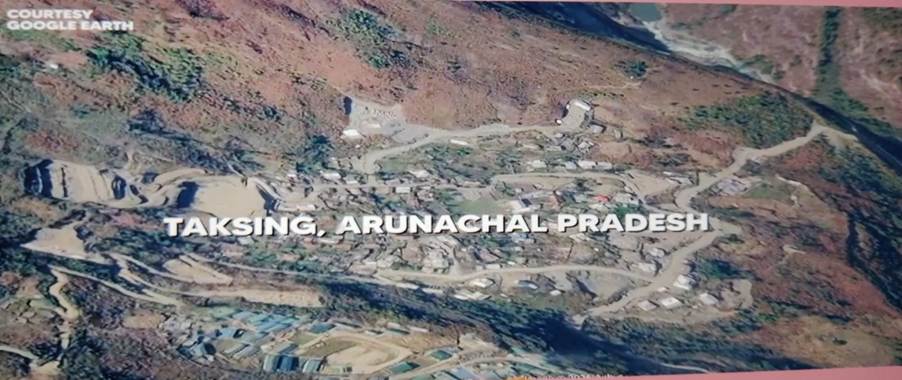
Such actions may not constitute military aggression in the conventional sense, but they serve a purpose: to keep the dispute alive, reinforce China's claims and challenge India's position without necessarily crossing the threshold into open conflict.
This is precisely the kind of situation in which a strategy of persistent tension can be employed. The pressure is continuous, the challenge is political as well as territorial, and the absence of a major military attack does not mean that nothing is happening.
India's Ministry of External Affairs has explained that the situation along the border is disturbed from time to time when Chinese forces diverge from established patrolling patterns. Both sides continue to use existing diplomatic and military mechanisms to resolve outstanding issues and avoid misunderstanding and miscalculation along the LAC.
What remains important is to understand the Chinese position and intentions in relation to each development. Whatever Beijing's stated position, India cannot afford to be complacent. Readiness is essential, and our forces must be adequately equipped, supported by infrastructure and prepared for contingencies.
Need for Long-Term Strategy
India must consider its options with clarity and without allowing immediate political pressures to dictate long-term strategy.
- War or negotiations? War must remain a contingency, not a policy objective. Negotiations should be pursued wherever possible, but not at the cost of vital national interests.
- Is India politically prepared to negotiate? Negotiations require clarity about what is negotiable, what is not, and what constitutes an acceptable outcome. They also require the political capacity to explain difficult compromises, if any become necessary.
- Is China prepared to negotiate meaningfully? Dialogue is useful only if both sides are willing to address outstanding issues rather than use negotiations merely to buy time or consolidate their positions.
- Is India prepared for war if negotiations fail? Military preparedness is essential, not because war is inevitable, but because credible deterrence strengthens the prospects for peace. Infrastructure, logistics, surveillance, equipment and the ability to sustain deployments must remain priorities.
- Does China actually want war? China may prefer to secure its objectives without a full-scale conflict, given the costs and uncertainties involved. But India cannot base its security calculations on assumptions about Chinese intentions. It must prepare for capabilities and plausible contingencies, not merely declared intentions.
- Does internal political bickering help India or China? Open debate is an essential feature of democracy. But repetitive partisan confrontation over a known strategic challenge, without regard to facts or national interests, can weaken public confidence and distract from the task at hand. The question is not whether India should debate the issue, but whether that debate strengthens India's preparedness or inadvertently serves China's interests.
- Could China be seeking to destabilise India politically? Political division and psychological pressure have long been instruments of statecraft. It is reasonable to examine whether Chinese actions are intended to influence Indian public opinion or deepen internal divisions. India should be alert to the possibility without attributing every domestic disagreement to external interference.
- Should India internationalise the dispute? There may be occasions when diplomatic engagement with other countries serves India's interests. However, turning the boundary dispute into an international campaign carries its own risks. External actors rarely offer assistance without pursuing interests of their own. India must judge carefully when international support is useful and when it could constrain its strategic autonomy. Internationalising the dispute should not be an option here.
- Can the problem be resolved once and for all? A durable settlement may be possible, but it cannot be assumed to be imminent. The issue requires sustained diplomacy, military preparedness, political patience and a realistic assessment of China's objectives. It is not going to disappear simply because attention shifts elsewhere.
These are not questions with easy answers. They require a long-term strategy rather than reactions to individual incidents.
India Must Remain Prepared
The LAC cannot be treated as a routine diplomatic problem. It is a continuing strategic challenge involving territory, military preparedness, national sovereignty and the management of relations with a powerful neighbour.
India must remain prepared, continue negotiations where they serve its interests and avoid being drawn into a pattern of confrontation dictated by the other side. Equally, it must recognise that restraint should not be mistaken for weakness, just as military preparedness should not be confused with a desire for war.
Above all, India must approach this challenge as one nation.
Democratic disagreement is inevitable, and the government must remain accountable. But political parties, Parliament, the media and the public should distinguish between legitimate scrutiny and partisan contention that obscures the strategic issue. A country facing sustained external pressure needs informed debate, institutional competence, and a shared understanding of its core national interests.
China's strategy may be to maintain tension without crossing the threshold of open war. India's response must be to remain strong enough to deter aggression, clear-headed enough to negotiate, and united enough not to allow external pressure to become internal division.
The objective is not to match every Chinese move with a confrontation of our own. It is to ensure that no incremental move, taken individually or cumulatively, leaves India strategically disadvantaged.
That calls for deft handling, as it always has. The challenge is unlikely to disappear. India must therefore be prepared to manage it patiently, firmly and consistently over the long term.
(The author is an Indian Army veteran and a contemporary affairs commentator. The views expressed are personal. He can be reached at kl.viswanathan@gmail.com )







Post a Comment