

Dhaka's Delhi Test: Firmness Without Rigidity
Bangladesh's Prime Minister need not visit India simply to keep relations cordial, but when engagement can advance its interests, refusing engagement becomes a cost of its own. The objective should be to preserve leverage through engagement, not to mistake rigidity for leverage.
 Aug 22, 2026
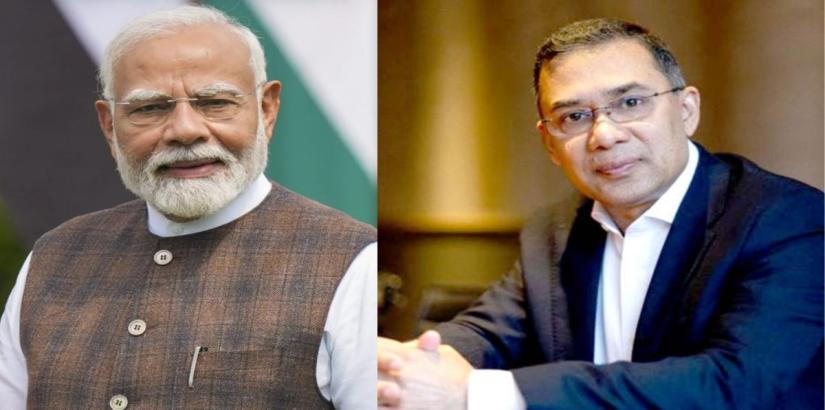
Prime Minister Tarique Rahman's possible visit to India is fast becoming a defining test of Bangladesh's foreign policy. Days after taking office in February, he received a bilateral invitation from Narendra Modi; Bangladesh has separately been invited to the outreach session of the 18th BRICS Summit in New Delhi on 12-13 September — not as a bilateral guest, but as BIMSTEC's current chair. The two carry different weight, yet public debate has entangled both with a third, far more charged question: Sheikh Hasina's extradition.
Dhaka has said a ‘‘propitious environment’’ is needed for the visit, while pressing New Delhi to expedite Hasina's extradition. India says the request is under legal review. Foreign Minister Khalilur Rahman has tried to keep the two invitations distinct, but the bilateral visit, the extradition demand, and Bangladesh's BIMSTEC role are increasingly treated as one question.
This is where the real diplomatic question emerges: should extradition be made a precondition for the visit, or should the visit itself become a diplomatic instrument for advancing that demand? The choice is not whether to travel. It is which path best serves Bangladesh's national interest.
What ‘‘Bangladesh First’’ Really Means
‘‘Bangladesh First’’ is not an analytical device invented for this debate. It is a slogan BNP chairman Tarique Rahman has repeatedly invoked as the guiding principle of his party's foreign policy, and how the government handles the India visit and the extradition question is a direct test of whether that principle can guide policy in practice.
A Bangladesh First policy should serve as a decision rule: protect Bangladesh's core interests, preserve its bargaining space, and judge diplomacy by the outcomes it delivers — neither blind allegiance to India nor reflexive opposition, but each choice weighed against Bangladesh's sovereignty, security, and long-term interests. Extradition, the bilateral visit, and the BIMSTEC role in BRICS outreach should be judged by that same standard, not treated as separate issues.
Extradition: A Firm Demand, Not a Precondition
Bangladesh and India have had an extradition treaty since 2013. Bangladesh has formally sought Hasina's extradition; India acknowledges the request is under legal review — not purely a matter of political will, since most extradition treaties, including this one, carry a political-offense exception India could invoke.
Bangladesh's case must therefore be built on the legal track as rigorously as the political one. There is no reason to retreat from this demand, which touches on judicial accountability and Bangladesh's own justice process. But holding firm to a legitimate demand, and turning it into a precondition for the entire relationship, are different things: staying firm is Bangladesh's right, while choosing the most effective method is simply good statecraft.
Treating a prime ministerial visit as a concession misreads how diplomacy works. A high-level visit is itself a negotiating instrument, not a reward: Vajpayee's 1999 trip to Lahore came with Kashmir just as unsettled, yet built a framework for dialogue that outlasted the Kargil conflict which followed. An unresolved dispute and a suspended dialogue over it are not the same thing — engagement is often most necessary precisely when a dispute remains open, to break a stalemate and place one's own demands at the centre of the table.
The logic here is linkage without lock-in. Extradition should remain explicitly linked to the broader relationship because it bears directly on political trust, but it should not lock Bangladesh into a single-issue strategy that constrains progress on water, trade, energy, connectivity, and border management. India should hear clearly that progress on extradition is important for rebuilding political trust, while parallel progress is expected on other core bilateral interests. This allows Bangladesh to remain firm on principle without sacrificing its wider negotiating space.
Bangladesh's Larger Stakes: Water, Trade, Region
Bangladesh's relationship with India rests on deep economic and strategic interdependence, not politics alone. The 1996 Ganges Water Treaty expires this December, with renewal talks already underway; the Teesta and other shared rivers remain unresolved.
Trade runs deep but badly imbalanced — bilateral merchandise trade in FY2024-25 stood near $11.4 billion, with Bangladesh's exports at only $1.76 billion against imports of $9.62 billion. The diplomatic goal should not shrink to whether India returns Hasina; it should be how to make this interdependence more reciprocal.
The BIMSTEC chairmanship adds a further dimension: the BRICS outreach invitation went to Bangladesh as chair, not to Tarique Rahman personally. Staying away would forfeit a direct opening with BRICS leaders and weaken Bangladesh's standing as chair. Bundling the visit with BIMSTEC-BRICS participation into one bargaining package is not correct; the two belong in separate diplomatic tracks.
Strategic Firmness: Turning Visit into Leverage
Firmness means holding the objective constant; rigidity means allowing the method of pursuing it to become fixed. Bangladesh should remain firm on extradition, but it need not make the bilateral visit conditional on immediate progress. ‘‘No extradition, no visit’’ would mean closing an important channel by Bangladesh's own hand; holding the demand firm while using the visit for wider negotiation is the more strategic posture.
Rigidity can create the appearance of firmness while reducing actual bargaining power. A ‘‘no extradition, no visit’’ position may look principled, but it carries real costs: limiting direct access to India's senior leadership, forgoing the chance to place multiple Bangladeshi interests on the table at once, and letting one contentious issue dominate the relationship — without necessarily gaining any additional leverage over extradition itself.
Bangladesh's Prime Minister need not visit India simply to keep relations cordial, but when engagement can advance its interests, refusing engagement becomes a cost of its own. The objective should be to preserve leverage through engagement, not to mistake rigidity for leverage.
Demonstrable Outcomes, not Disengagement
The strongest case for rigidity is domestic, and it has grown stronger. Hasina has twice addressed supporters and foreign media directly from Indian soil this year — a January broadcast to a packed press conference in New Delhi, and an address on 5 August marking two years since her ouster, in which she called for the Awami League ban to be lifted and said she plans to return. Both drew sharp protests from Dhaka; the foreign ministry called the January address ‘‘a clear affront to the people and the Government of Bangladesh.’’
India's government denies official involvement, attributing the events to private organisers, but that distinction carries little weight with a Bangladeshi public that reads the venue itself as the message. In this climate, a visit without visible movement on extradition could look like capitulation. That risk is real, but staying away merely substitutes it for the slower cost of a stalled relationship.
The answer is demonstrable outcomes, not disengagement: define success in advance through a limited set of concrete deliverables — such as meaningful progress on Ganges treaty renewal and the reversal of the 2025 land-port restrictions — that it can demonstrate at home regardless of the outcome on extradition.
If the visit goes ahead, it should not be reduced to a courtesy call, but backed by a focused negotiating package covering Hasina's extradition; a fair renewal of the Ganges treaty; progress on the Teesta and other shared rivers; an end to border killings; expanded market access and withdrawal of the 2025 land-port restrictions; measures to narrow the trade deficit; energy cooperation; and reciprocal benefits from connectivity.
The objective is to use the extradition demand as part of a wider effort to secure a more balanced relationship — that is what ‘‘Bangladesh First’’ would mean in practice.
There is no reason for Bangladesh to retreat from its extradition demand, but turning it into a rigid precondition that forecloses direct, high-level negotiation would not be wise — nor should Bangladesh adopt a posture, purely to appear firm, that narrows its own room to negotiate.
‘‘Bangladesh First’’ means the national interest is the final measure of every decision: extradition matters, but so do water, trade, energy, border security, connectivity, and regional leadership. The policy that follows is simple — firmness on the demand, pragmatism in negotiation, national interest as the outcome: attend the BRICS outreach now as BIMSTEC chair regardless of the bilateral question, and sequence any prime ministerial visit around demonstrable progress on water, trade, and the extradition review.
Let the demand stand, and let the door to diplomacy stay open — success is measured not by what Bangladesh demands, but by what it ultimately secures.
(The author is Professor and Chair of the Department of Economics, International University of Business Agriculture and Technology (IUBAT), Dhaka and a current affairs commentator. The views expressed are personal. He can be reached at golam.grasul@gmail.com)





Post a Comment