

Hasina's Return Proclamation Throws a Spanner in India-Bangladesh Ties
The Indian government is caught in a bind. Despite the BNP government’s outrage, for Delhi to hasten Hasina’s extradition is not an option.
 Aug 14, 2026
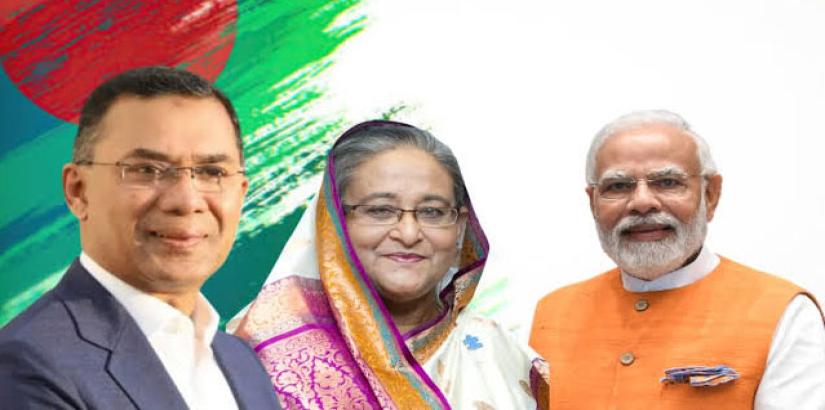
Bangladesh has seen considerable political upheaval in August. For ousted Prime Minister Sheikh Hasina, the month is particularly fraught. Her father, Sheikh Mujibur Rahman, the man instrumental in the creation of Bangladesh, and most of her immediate family were slain on August 15, 1975. Almost 50 years later, on August 5, 2024, Hasina was forced to flee from Dhaka to save her life from angry mobs.
These incidents not only hurt Bangladesh, they hit the trajectory of India-Bangladesh relations hard. Earlier this month, after a couple of years in the relative obscurity of exile in India, Hasina chose the anniversary of her forced August exile to drop a political bomb, causing an upheaval in the unsettled political climate within Bangladesh while simultaneously throwing a spanner in the already troubled bilateral relationship and threatening a serious fracture.
In an audio address to media in New Delhi’s Foreign Correspondents Club, the ousted leader announced she would return to her country in December, a month she associated with victory, to stand with the people of the country.
Hyperbole and rhetoric aside, Hasina faces a death sentence should she actually return to Bangladesh, after she was tried, in absentia, by a special International Crimes Tribunal and sentenced to death on November 17, 2025 for committing “crimes against humanity” by ordering a brutal crackdown on anti-government protesters, including students, resulting in numerous deaths.
Outrage in Dhaka
For the Tarique Rahman-led Bangladesh government, which came to power after the BNP (Bangladesh Nationalist Party) swept the peacefully conducted, Awami League-barred election in February, the announcement has thrown government functioning off gear and relations with India again on a downward trajectory, despite India asserting that it was not involved. A furious Rahman has indicated he will not visit India - either for the BRICS summit next month or for a bilateral visit for which Indian Prime Minister Narendra Modi had sent him an invitation - until New Delhi makes amends for allowing Indian soil to be used to make provocatory statements against his government.
Dhaka officially expressed outrage at the content and tenor of Hasina’s in the one-way interaction with media in Delhi, terming it “venomous vitriol” from the “absconding convicted genocider,” and urged India to hasten her extradition to Bangladesh if it is serious about repairing bilateral ties.
Seeing the gravity of the fallout, India’s High Commissioner Dinesh Trivedi, a seasoned politician sent recently to Dhaka as envoy to stop the downward spiral in bilateral ties since Hasina’s ouster from office, managed to meet Rahman to offer assurances of India’s deep commitment to the India-Bangladesh partnership.
Politics in Spin
Although Bangladesh is raising the level of its diplomatic engagement with India by sending the current foreign secretary, Asad Alam Siam, as its next envoy to New Delhi, there are indications that nothing short of Hasina’s extradition would assuage the BNP government.
Trivedi’s long meeting may have soothed some of Dhaka’s bilateral concerns, but the prospect of Hasina’s return has sent alarm bells ringing within the Bangladesh security establishment and seen a churn in the polity, particularly in the dispirited Awami League (AL) party which she leads. Hasina’s announcement could have been intended to revive her party, which appeared moribund after being banned from participation in any polls. But it has hit Delhi’s ties with Dhaka hard.
Whether her return revives the AL remains to be seen, but chances of her being assassinated are real, giving the government nightmares. The optics of such an eventuality would severely tarnish the BNP government, while locking her behind bars would provide the AL a focal point around which to rally. It would also provide opposition parties like the Jamaat-i-Islami, which played a pivotal role in Hasina’s ouster, to intensify their political activity.
Delhi's Dilemma and Options
With Rahman’s clear electoral victory, parties like the Jamaat have taken a back seat and allowed him to focus on reviving the economy. For that to happen, India remains a very central part of the equation, however outraged the Bangladesh government may be. China may have deep pockets, but its model of economic assistance has shown disastrous results, in neighbouring Sri Lanka, for example.
India is Bangladesh’s closest neighbour and, despite communal vitriol spewed around election season, mainly in Assam and Delhi, is still counted as a vital stakeholder in Bangladesh’s welfare. It needs to stop communal rhetoric and focus on people, who remain primary stakeholders at the heart of the relationship.
The Indian government is caught in a bind. Despite the BNP government’s outrage, for Delhi to hasten Hasina’s extradition is not an option. She sought and was provided asylum, for the second time in her life, after the August turmoil, the first time being after her father and entire family were killed 51 years ago.
But Delhi cannot simply hand her over to Dhaka. Instead, it needs to lay out a short-term, easily achievable package of proposals to revive real people-to-people linkages, such as border “haats’ or trading outposts across West Bengal and Northeastern states, and provide trade facilities overland, which were halted after Hasina’s ouster.
India must also provide greater access for medical care and tourism and improve ground level connectivity, such as improved power grid and rail links, reportedly close to Rahman’s vision for economic revival. Incremental measures such as concessions in river waters agreements are among options India is considering to counter some of the very negative bilateral fallout of Hasina’s August epiphany.
Whether these assuage Dhaka’s anger and revive an equable bilateral relationship remains to be seen. But the immediate effort will have to be Indian.
(The writer is a senior Indian journalist and analyst. Views expressed are personal. She can be reached at nilovarc@gmail.com)





Post a Comment