

An Ilish Fest Becomes a Test of Diplomacy in Strained India-Bangladesh Ties
Hamidullah’s tenure has been marked by promotion of Bangladesh's soft power, with the envoy going around the country underlining the deep roots of people-to-people ties.
 Oct 04, 2026
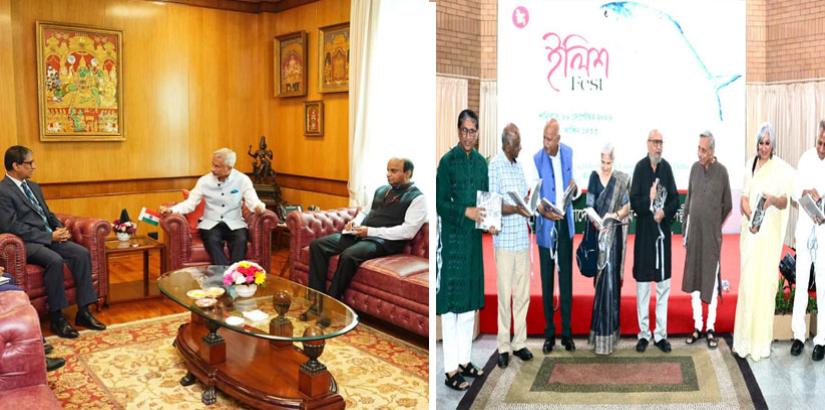
When a Bangladeshi envoy gives a farewell party and calls it an Ilish Fest, the cultural and political messaging of the event goes far beyond gastronomic celebration of the hilsa that the people of Bangladesh treasure as a "cultural icon" and a "symbol of national pride" and which is equally relished by fish lovers across the border in eastern India and beyond.
In a coffee-table book titled Ilish, The Fish, that outgoing Bangladesh High Commissioner, Riaz Hamidullah, got released on the occasion, he spoke about how the book told the migratory journey of the " Silver Harvest", from the sea, to the river, to the dinner table, and how its history, culture and culinary traditions had shaped the lives and economics of Bengalis for centuries.
Hamidullah, who in a short span of 18 months built up a large circle of friends in India across the ideological spectrum and in media and intellectual circles who he got together for the Ilish Fest, had kept harping in his public engagements on the cultural and social bond that binds the people of the two countries even as bilateral ties hit a rough patch.
On the occasion of the 56th Independence and National Day of Bangladesh on March 25, he not only promoted his country's culinary and cultural power by offering hundreds of guests an aromatic variety of rice (Chingura Rice) and a cherished winter delicacy like date palm jaggery (Khejurer Gur) but also mobilized a group of young Bangladeshi creators to conceive through a series of animation the "syncretic (Muslim and Hindu festival) tradition" of Bangladesh "to quietly underline the vitality of shared space" between the two neighbours.
Hilsa Trade Caught in Diplomatic Standoff
However, this year's Ilish Fest came at an unusual moment for the hilsa trade between Bangladesh and India, a reflection of the starched diplomatic ties between the two governments.
According to Bangladeshi media, Bangladesh had not opened its customary limited export window for hilsa export to India ahead of this year’s Durga Puja. Yet, India announced on September 15 that about 500 tonnes of hilsa had been exported to Bangladesh over two months, triumphantly describing it as a “notable reverse trade flow” for a fish traditionally associated with exports from Bangladesh to India.
However, the Indian hilsa - which was caught from the Arabian Sea and not from the eastern river estuaries where it comes to breed during the rainy season - did not find favour with the refined taste buds of Bangladeshi fish connoisseurs and Dhaka stopped buying Indian hilsa after cancelling no-objection certificates of 103 importers.
Indian traders said Bangladesh had, unlike previous years, not even announced an export quota for Durga Puja as the "Padma hilsa" is eagerly awaited by Bengalis in West Bengal and other parts of India.
The combination of reduced domestic availability and unusually high hilsa prices made the fish a sensitive consumer issue in Bangladesh this year, according to Daily Waadaa, a Dhaka-based news media platform. The September 26 Delhi festival, hosted by the Bangladesh High Commission, happened apparently only days after Dhaka cancelled hilsa import permits and while no festive export quota for India was announced.
Diplomacy Marked by Cultural Outreach
Critics on social media across the border called the fest's hosting a "poorly judged stupid act by a Bangladeshi diplomat" who was even accused of "feeding hilsa to these snakes", alluding to the presence at the lunch of some known right-wing Bangladesh baiters.
Some went to the extent of even questioning his political loyalties as Hamidullah was appointed by the interim government of Muhammad Yunus.
A career diplomat, he was appointed high commissioner in February 2025 and arrived in New Delhi in April that year. He presented his credentials to Indian President Droupadi Murmu on May 29. His posting coincided with one of the most testing periods in Bangladesh-India relations in years following the fall of the Sheikh Hasina government in August 2024.
According to Bangladeshi media, Hamidullah took a long time to secure a formal meeting with Indian External Affairs Minister S Jaishankar, about a month after the BNP government took office, as Dhaka and New Delhi began efforts to improve ties.
Days later, India’s Foreign Secretary Vikram Misri and Minister of State for External Affairs Kirti Vardhan Singh attended Bangladesh’s Independence Day reception in New Delhi, with Hamidullah saying the relationship should be based on “dignity, equality, mutual trust and respect, and shared benefits.”
Hamidullah’s tenure has been marked by promotion of Bangladesh's soft power, with the envoy going around the country underlining the deep roots of people-to-people ties.
Justifying the Ilish Fest, he said:“Ilish is a fish which makes every Bengali, whether from Bangladesh or any part of India, literally rejoice — or maybe dance.” He said he first hosted the festival on September 27 last year and chose to hold it again exactly a year later as to leave a cultural imprint on his one and a half year tenure.
“Ilish, to me, is a symbol. When you bring people together, not only do they get sparked into conversation, but you also mellow a lot of lines and apprehensions, and create a sense of togetherness,” he said in an interview to an Indian news agency.
After he made a farewell call on Jaishankar, Hamidullah once again tweeted of "shared interests" and said he had tried not to walk the conventional path, and instead sought to "touch the chords with #people" through his cultural diplomacy.
Political Faultlines and Tarique Visit
As India last week formally approved Bangladesh Foreign Secretary Asad Alam Siam as Dhaka’s next high commissioner, the political faultlines within Dhaka's ruling establishment have come out in the open. There is little doubt that hardliners in Dhaka, backed by the political resurgence of the Jamaat e Islami that is now the principal opposition to the ruling Bangladesh Nationalists Party of Prime Minister Tarique Rahman, want a tougher line towards India and criticism of High Commissioner Hamidullah for being "soft" towards India is a manifestation of the internal tug-of-war over India policy.
This was also evident in the on-again-off-again maiden visit of PM Tarique Rahman, despite New Delhi sending two invitations, one for a bilateral visit and the other for his participation in the recently held BRICS summit in New Delhi as chair of BIMSTEC.
The foreign office establishment was quoted as saying that since PM Rahman had not been invited to the BRICS summit in his official capacity but only as BIMSTEC chairperson, Dhaka could not accept that invitation. Many in Bangladesh's political circles deemed the prime ministerial absence as a "lost opportunity" for Bangladesh to engage at that level not only with key Global South leaders but also with Indian Prime Minister Narendra Modi, the host of the summit that was hailed as a success.
With talk of a PM Rahman visit to New Delhi next month once again looming, it remains to be seen whether the creases in the relationship get ironed out in time or the tricky hilsa bone becomes a proverbial sticking point with so many outstanding issues crying for political resolution.
(The writer is a veteran Indian journalist and commentator editorial director, South Asia Monitor. The views expressed are personal. He can be reached at tarunbasu.sps@gmail.com)





Post a Comment