
India Should Keep Starlink Out of Its Sky: Lessons from Ukraine
If a state allows a foreign private satellite network to handle part of its communications, it is in effect outsourcing part of its security and will eventually pay the price during a crisis, when it will be too late to negotiate. Ukraine found out that resilience does not mean ownership.
 Nov 09, 2026
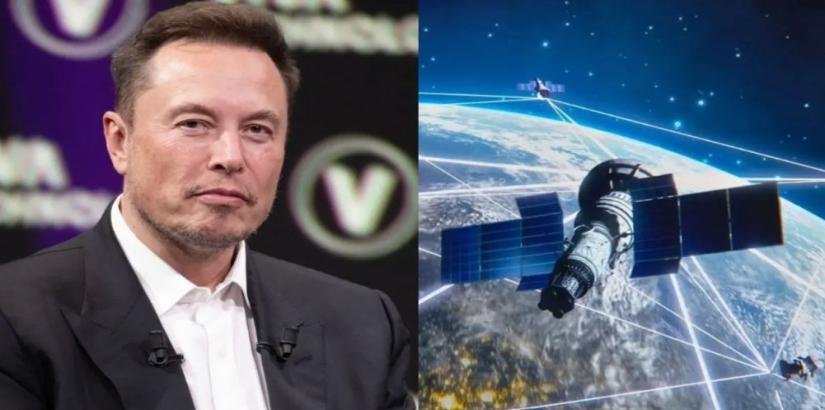
On the 7th October, a SpaceX executive announced at the India Mobile Congress that Starlink had constructed 20 gateway sites in India. A few hours later, Elon Musk stated that "certain oligarchs" were preventing his service from being available. Both of these comments regard India's long-delayed decision as a commercial matter.
Although Starlink has a communications licence and has received clearance from the space regulator, it still does not have spectrum and the final security clearance from the Home Ministry. That hesitation is the right course of action and ought to be adopted as policy. The real issue is whether a foreign, privately owned constellation, linked to another country's military and intelligence structures, should be permitted into India's communications network. It should not be.
Ukraine has demonstrated this point. Following Russia's invasion in 2022, Starlink provided Kyiv with reliable means of communication; yet it also revealed that a private company can influence the course of a war. In 2022, SpaceX refused to extend its coverage to Crimea in response to a strike by a naval drone on the grounds of sanctions law and the risk of escalation. By 2026, the situation had reversed. Russian forces had equipped long-range strike drones with black-market terminals.
After a drone struck a passenger train on January 27, Ukraine's Defence Minister Mykhailo Fedorov collaborated with SpaceX to create a 'whitelist' which, starting on February 5, switched off all unregistered terminals in Ukraine and in the occupied areas. This measure was successful, but the person who held the switch chose to turn it off, and Kyiv achieved its objective because he agreed to it. A capability which a state cannot switch on or off is one that it does not actually own.
Internal Security Issues
The safeguards introduced in India focus on the wrong aspect. It is necessary for operators to send traffic through gateways located in India and for them not to copy, decrypt or mirror Indian data outside the country. These regulations serve to ensure confidentiality and allow for lawful interception, but they do not guarantee availability. Since inter-satellite links, orbital operations and software updates are managed from outside India, a gateway situated on Indian soil cannot prevent a corporate or American sanctions decision from reducing the level of service. The extent of commercial involvement makes the situation worse.
In 2025, Starlink entered into distribution agreements with Reliance Jio and Bharti Airtel, and each enterprise, disaster-response, or remote-area user that Starlink acquires increases the cost of switching later. A vendor which becomes commercially essential gains strategic leverage, even if it has no intention of using that leverage.
The situation regarding internal security is more complex than either side acknowledges. Starlink terminals are already present in India without the necessary licence. In December 2024, security forces in Manipur seized a dish and router labelled "RPF/PLA"; a few weeks before that, a Starlink terminal was discovered on a ship carrying approximately 6,000 kg of methamphetamine off the Andaman Islands.
Although Musk claims that the satellite beams are not covering India, security sources cited by The Guardian state that Starlink does function in certain areas close to the Myanmar border. Those in favour of introducing a licensing system argue that such a legal rollout would result in registration and the implementation of geofencing. In reality, a legitimate market for the terminals would lead to a greater number of dishes being placed in border areas and would make it more difficult to distinguish illicit units from the licensed ones, while the uplink would remain outside Indian control. Licensing will not eliminate the grey market; it will only provide it with a cover.
The Military Aspects
The external aspect is even more difficult. According to Reuters, Starshield, the military version of Starlink, has been building hundreds of imaging satellites for the US National Reconnaissance Office under a $1.8 billion contract signed in 2021. Starshield shares the same manufacturer, launch vehicle and engineering base as Starlink. In 2022, Russia warned that commercial satellites used in military operations could become legitimate targets. Any Indian user who depends on Starlink therefore also suffers that risk. A government relying on a vendor linked to another country's intelligence gathering should inquire into what the vendor is seeing, not just where the data is stored.
Other countries have already addressed this issue, and in each case Starlink has not been treated as a neutral service. In China, foreign operators have been effectively excluded, and two national constellations, Guowang and Qianfan, are being set up as part of its policy of digital sovereignty. This approach is one of autarky and is not something India will be able to replicate in the near future.
South Korea allowed Starlink and OneWeb entry in May 2025, but only on the condition that foreign operators have to operate through local licence holders and with the support of domestic companies such as Hanwha Systems, a shareholder in OneWeb. The decision on who would have the leverage was made beforehand rather than after access was granted.
India is in a position to say no; the third phase of its Space-Based Surveillance programme will see 52 dedicated satellites placed in orbit at a cost of ₹26,968 crore, 21 of which are to be built by ISRO and 31 by private companies, the entire fleet being completed by the end of 2029. While SBS-3 is focused on collection rather than on the communication layer that Starlink offers, this is the gap that needs to be addressed. India has the necessary industrial capacity and already has a presence, since Bharti Global is one of OneWeb's investors.
India has a Choice
The following four measures should be taken. The first is to regard the licence as conditional rather than as a right and to hold back both the spectrum and the final clearance. The second is to ensure that all government, military and communications needed for critical infrastructure remain on sovereign or domestically controlled networks. The third consists in treating unlicensed terminals as a border-security issue, with the introduction of stricter import controls and increased radio-frequency monitoring along the border with Myanmar and along the Andaman coast. The fourth is to finance a sovereign low-Earth-orbit constellation using the SBS-3 public-private model, even if it begins on a small scale.
There are costs associated with keeping Starlink out, such as slower rural broadband, an annoyed American partner, and a wasted licence; these are real and have limits. The cost of depending on others, however, is not. If a state allows a foreign private satellite network to handle part of its communications, it is in effect outsourcing part of its security and will eventually pay the price during a crisis, when it will be too late to negotiate. Ukraine found out that resilience does not mean ownership. India has one thing that Ukraine did not: a choice, which it made during peacetime. It should decide to take ownership of its orbital communications.
(The writer is an Assistant Professor, School of Arts, Humanities, and Social Sciences, Chanakya University, Bengaluru. The views expressed are personal. He can be contacted at rakshit.k@chanakyauniversity.edu.in)







Post a Comment