

The Mecca Pact: A Mirage of Islamic Unity, A Pact on Paper?
The Mecca Pact, barely a month old, has already been discredited. Its authenticity is in question, its efficacy doubtful. The very notion of an “Islamic Nato” has been exposed as a mirage. Collective defence requires not just declarations but capabilities, coordination and political will. None of these are evident in the pact’s functioning.
 Sep 17, 2026
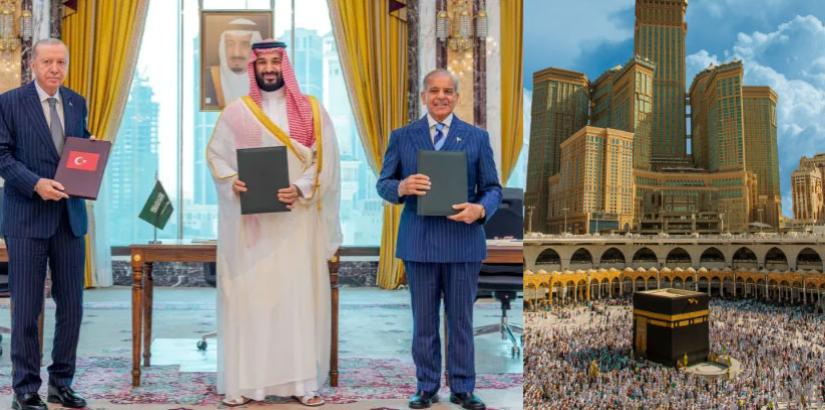
From the outset, the Mecca Pact carried the burden of scepticism. Announced with much fanfare by Saudi Arabia, Turkey and Pakistan in August 2026, it was projected as a historic defence alliance, a bulwark against aggression, and a symbol of Islamic solidarity.
But the pact’s first real test has revealed its fragility. The Houthi attacks on Saudi Arabia, particularly the alarm over Mecca itself, have exposed the gulf between rhetoric and reality.
The pact’s Nato-style clause, that an attack on one member would be treated as an attack on all, was meant to inspire confidence. Yet when Saudi Arabia’s Civil Defence issued an emergency alert warning of a possible aerial strike on Mecca, the alliance was nowhere to be seen.
The Houthis denied targeting the holy city, insisting their operations were directed at oil facilities and military bases. Whether Mecca was truly under threat or Riyadh invoked the spectre of danger to rally Muslim opinion, the fact remains that Saudi Arabia stood alone.
Outrage - and Silence
The symbolism of Mecca being placed on emergency alert was profound. For the first time in history, Islam’s holiest city was declared vulnerable. The outrage across the Muslim world was palpable, but the absence of tangible support from pact members was equally glaring.
Pakistan, touted as Riyadh’s trump card, offered only condemnation and words of solidarity. Its Prime Minister, Shehbaz Sharif, saluted Saudi vigilance but stopped short of committing troops or military aid. Turkiye, too, remained conspicuously silent.
This silence is not accidental. The pact was always more about signalling than substance. For Riyadh, it projected the possibility of Pakistani backing in its rivalry with Tehran. For Ankara, it was a message to Tel Aviv and Tehran alike. For Islamabad, it was a chance to showcase itself as a leading Muslim power and to leverage Saudi patronage. But when symbolism collides with obligations, the cracks widen.
Islamabad's Balancing Act
Pakistan’s reluctance is rooted in its own turmoil. With internal unrest across Balochistan, Khyber Pakhtunkhwa, Sindh and even Punjab, the country is in no position to embark on foreign military adventures. Its economy remains fragile, dependent on Gulf investments and energy supplies that could be disrupted by Iran or the Houthis. Islamabad’s balancing act between Riyadh and Tehran leaves little room for decisive intervention. The Mecca Pact, for Pakistan, was an exercise in image-building, not a binding commitment.
History reinforces this pattern. Since its inception, Pakistan has sought to monetise its geography and strategic relevance. From Cold War alliances to its role in the Afghan jihad and the post-9/11 “war on terrorism”, Islamabad has repeatedly positioned itself as indispensable, while practising doublespeak. The Mecca Pact fits neatly into this tradition: a bid for prestige, patronage and recognition, without the readiness to shoulder real burdens.
Riyadh's Vulnerabilities and Desperation
Saudi Arabia’s response to the Houthi threat further underscores the pact’s hollowness. Reports suggest Riyadh turned not only to Washington and London but even to Tel Aviv for intelligence assistance. That Saudi Arabia, which has not formally normalised ties with Israel, would seek such help speaks volumes about its desperation and the irrelevance of the Mecca Pact in practice. The alliance that was meant to embody Islamic unity has been sidelined in favour of pragmatic, even unlikely, partnerships.
The Houthis, meanwhile, have demonstrated the potency of asymmetric warfare. Their strikes on Saudi military and energy infrastructure, as well as commercial shipping in the Red Sea, have rattled Riyadh. By denying any intent to target Mecca, they have sought to undermine Saudi claims and portray the kingdom as manipulative. Whether or not their denial is credible, the fact remains that Saudi Arabia’s vulnerabilities have been laid bare.
The implications are stark. The Mecca Pact, barely a month old, has already been discredited. Its authenticity is in question, its efficacy doubtful. The very notion of an “Islamic Nato” has been exposed as a mirage. Collective defence requires not just declarations but capabilities, coordination and political will. None of these are evident in the pact’s functioning.
For Saudi Arabia, the lesson is sobering. Reliance on symbolic alliances cannot substitute for robust defence partnerships. For Pakistan, the episode highlights the limits of its power projection and the dangers of overpromising. For Turkey, silence may preserve flexibility, but it also erodes credibility. And for the wider Muslim world, the episode is a reminder that unity proclaimed in grand summits often evaporates when tested by real crises.
The Pact - A Cautionary Tale
The Mecca Pact was meant to reassure, but it has unsettled instead. It was meant to deter aggression, but it has emboldened scepticism. It was meant to embody solidarity, but it has revealed self-interest. In the shadow of the Houthi attacks, the pact stands exposed as a hollow construct, more paper than steel.
The question now is not whether the pact can survive, but whether it was ever meant to work. If its purpose was prestige and signalling, then it has already served its limited function. But if it was meant to provide genuine collective defence, the verdict is clear: it has failed at the first hurdle.
In the end, the Mecca Pact may be remembered not as a milestone of Islamic unity, but as a cautionary tale of alliances built on symbolism rather than substance. The Houthis have delivered more than a military challenge; they have delivered a reality check. And that reality is that the Mecca Pact, despite its lofty promises, exists only on paper.
(The writer is an editor of four-plus decades and a commentator on regional, international, social, cultural and science-related matters. The views expressed here are his own. He may be contacted at krajuster@gmail.com)





Post a Comment