

Mounting Instability in Pakistan: Consequences for Regional Security
India must also recognise that Pakistan's internal security crisis has wider regional implications. Escalating Pakistan–Afghanistan tensions could create additional uncertainty along the western frontier, while attacks on Chinese projects could affect regional connectivity and investment.
 Oct 01, 2026
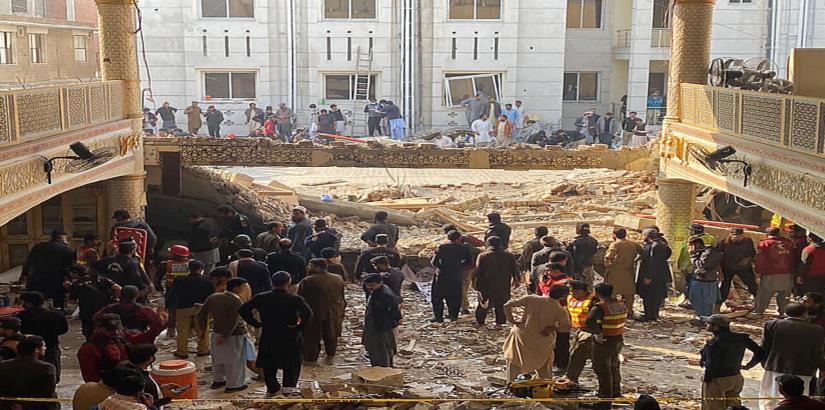
Pakistan is confronting a convergence of political instability, economic difficulties and worsening internal security. The resurgence of militant violence, deteriorating relations with Afghanistan and the continuing confrontation between the government and supporters of former Prime Minister Imran Khan have placed additional pressure on the country's political and security institutions. Although these developments do not necessarily threaten the survival of the Pakistani State, their cumulative effect could deepen instability and intensify the hardships faced by ordinary Pakistanis.
For India, the situation warrants close attention, not because conflict is inevitable, but because developments within Pakistan can have consequences for regional security.
Sharp Increase in Terrorism
The most striking aspect of Pakistan's present predicament is the deterioration of its security environment at a time when terrorism has declined globally. According to the Global Terrorism Index figures reported in September 2026, Pakistan recorded 1,139 terrorism-related deaths and 1,045 incidents in 2025, placing it first among the countries most affected by terrorism in the index. The reported number of fatalities was the highest since 2013, marking the sixth consecutive year of rising deaths.
Globally, by contrast, terrorism-related fatalities declined by nearly 28 per cent in 2025. This divergence illustrates the seriousness of Pakistan's internal security challenge.
Two distinct militant movements are contributing to this violence. The Tehrik-e-Taliban Pakistan (TTP) has intensified its campaign against the Pakistani State, particularly its military and police forces in Khyber Pakhtunkhwa and the adjoining former tribal areas. The Balochistan Liberation Army (BLA), meanwhile, continues its insurgency in Balochistan, targeting state institutions and, increasingly, Chinese-linked investments and infrastructure. Although their ideological objectives and political demands differ, both organisations challenge Islamabad's authority and impose substantial costs on its security apparatus.
The scale of the TTP threat is particularly significant. The figures cited in the latest reporting attribute 595 attacks and 637 deaths to the organisation in 2025, with military and police personnel accounting for 416 of those fatalities. Repeated attacks on security checkpoints, police vehicles and government installations demonstrate the difficulties Pakistani authorities face in containing militancy. The recent suicide bombing in Dera Ismail Khan, followed by a separate shooting that killed three traffic police officers in Tank district, further illustrates the vulnerability of law-enforcement personnel in Khyber Pakhtunkhwa. The TTP claimed responsibility for the bombing, although responsibility for the subsequent shooting remained unconfirmed in the reports available.
These attacks also raise questions about the effectiveness of Pakistan's counterterrorism strategy. Military operations can disrupt militant networks, eliminate individual commanders and recover territory, but lasting improvements in security require more than periodic offensives. The persistence of violence despite counterterrorism initiatives suggests that Pakistan must examine not only its operational response but also the conditions that allow militant organisations to retain influence and replenish their ranks.
Deteriorating Pak-Afghan Ties
The crisis is further complicated by Pakistan's deteriorating relationship with Afghanistan. Islamabad has repeatedly accused the Afghan Taliban government of providing sanctuary to TTP militants operating against Pakistan. Kabul has denied the allegations. The return of the Afghan Taliban to power in 2021 has not resolved this longstanding dispute; instead, disagreements over militant activity, border security and responsibility for attacks have become major sources of bilateral friction.
Pakistani airstrikes inside Afghanistan and subsequent border clashes have raised the risk of further escalation. Such actions may be intended to disrupt militant infrastructure, but they can also generate retaliation, deepen mutual distrust and complicate diplomatic efforts. Pakistan consequently faces a difficult strategic dilemma: it must address the TTP threat while avoiding a prolonged confrontation with a neighbour with whom it shares an extensive and difficult-to-manage border.
The distinction between the Afghan Taliban and the TTP is important here. They are separate organisations, notwithstanding their close relationship, and responsibility for individual attacks must be established rather than assumed.
The BLA insurgency presents a different but equally consequential challenge. Balochistan's strategic location, natural resources and importance to regional connectivity make its security particularly significant. Attacks against Chinese personnel and projects associated with the China–Pakistan Economic Corridor (CPEC) threaten infrastructure development, raise security costs and complicate China's economic engagement with Pakistan. Persistent insecurity could undermine Islamabad's efforts to attract investment at a time when economic recovery is already difficult. It could also create additional strains in Pakistan's relationship with Beijing, particularly if security guarantees fail to prevent repeated attacks on Chinese interests.
Pakistan's domestic political crisis adds another layer of uncertainty. The confrontation between the federal government and Imran Khan's Pakistan Tehreek-e-Insaf (PTI) has remained unresolved since the former prime minister's imprisonment in 2023. The party's planned march to Islamabad, initially scheduled for 27 September and reportedly postponed to 4 October, reflects continuing political mobilisation despite extensive government security preparations. Road blockades, restrictions on businesses and the deployment of security personnel indicate the authorities' concern about the potential scale of the demonstration.
The postponement may indicate organisational constraints within PTI or the immediate impact of government pressure. However, it would be premature to interpret it as a decisive weakening of the party. The larger issue is the persistence of political polarisation. If the government continues to rely primarily on restrictive measures while the opposition refuses to accept the existing political arrangements, the space for dialogue may narrow further. Prolonged confrontation could divert political attention and administrative resources from economic recovery and counterterrorism at a time when both require sustained attention.
Economic pressures compound these difficulties. Higher energy prices associated with the West Asia conflict, together with Pakistan's existing economic vulnerabilities, could intensify the hardships experienced by ordinary citizens. Rising living costs, insecurity and political uncertainty can reinforce public dissatisfaction. Although these factors do not automatically produce State instability, they can make governance more difficult and reduce the resources available for development and security. The principal concern, therefore, is not necessarily the collapse of the Pakistani State but the cumulative weakening of its capacity to respond effectively to multiple challenges.
Keeping Close Eye on Neighbour
For India, these developments require a measured and comprehensive assessment. Pakistan's internal difficulties should not be interpreted as evidence that it intends to initiate a confrontation with India. The proposition that political or military leaders might use external tensions to divert domestic attention has historical relevance as an analytical concern, but it cannot substitute for evidence of present intentions. India's security planning should distinguish between demonstrated threats, emerging risks and speculation.
The immediate priority should be effective intelligence gathering, vigilance against cross-border terrorism, and appropriate defence preparedness. India needs to monitor developments along the Line of Control and the international border, assess changes in militant activity and remain alert to any credible indications of preparations for hostile action.
At the same time, its assessment should account for Pakistan's internal political dynamics, the evolving conflict with Afghanistan and the possible consequences of additional demands on Pakistan's military resources. Preparedness should rest on verified information rather than assumptions that domestic instability will inevitably lead to external aggression.
Wider Regional Implications
India must also recognise that Pakistan's internal security crisis has wider regional implications. Escalating Pakistan–Afghanistan tensions could create additional uncertainty along the western frontier, while attacks on Chinese projects could affect regional connectivity and investment. Diplomatic efforts by countries such as China, Türkiye and Qatar to reduce tensions between Islamabad and Kabul therefore deserve attention. A reduction in cross-border hostilities would help create conditions for addressing militancy through more sustainable arrangements.
Ultimately, Pakistan's present predicament is the result of several pressures converging rather than a single crisis. The TTP insurgency, the Baloch separatist movement, tensions with Afghanistan, political confrontation over Imran Khan, and economic vulnerability each present distinct challenges. Their interaction makes the situation more difficult to manage, even if none individually threatens the State's immediate survival.
The consequences will be felt most directly by Pakistan's citizens, who must contend with violence, economic hardship and prolonged political uncertainty.
India Must Remain Prepared
For India, the appropriate response is neither complacency nor alarmism. It is to maintain strong intelligence and defence capabilities, carefully assess developments inside Pakistan, and avoid allowing speculation to dictate policy.
However, India must remain prepared for the uncertainties that its neighbour's internal crisis may generate. The essential lesson is that vigilance, strategic restraint, and credible preparedness must proceed together.
(The author is an Associate Fellow, Manohar Parrikar Institute for Defence Studies and Analyses (MP-IDSA), New Delhi. The views expressed are personal. He can be contacted at anand_rai@hotmail.com )





Post a Comment