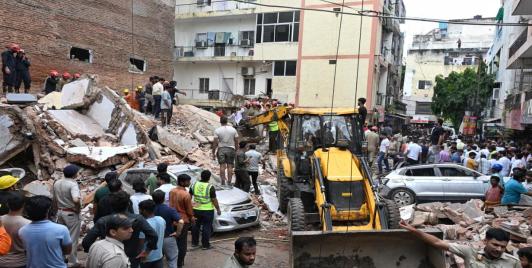

Building collapse in Delhi’s Satya Niketan

India’s Housing Challenge: Bridging the Gap Between Macro Development and Basic Needs

Aggressive migration of youth and workers to metro cities in search of better opportunities is common across the region. And so is the response deficit by local and central governments in providing them with basic, dignified lifestyles. The time has come for the elected representatives to think differently and narrow the gap between government schemes and results on the ground. 

Digital Public Infrastructure in South Asia: A Bridge or a New Divide?

These achievements have positioned India as a digital governance exporter. Singapore, Nepal, Bhutan, France, Mauritius, Sri Lanka, and the United Arab Emirates have already established UPI connectivity, and more than 50 countries have expressed interest in replicating aspects of India Stack’s open digital infrastructure. 

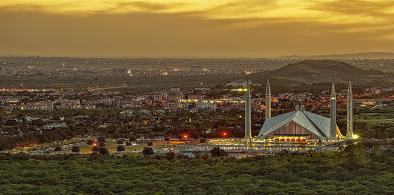
Who Governs Islamabad? A Capital Without its Governance

This raises the issue not whether Islamabad has surpassed its outmoded and fragmented administrative structure but whether governance would keep pace with its growth. Islamabad has to evolve from being administered as a capital city into being governed as a metropolis.
 

Whither Constitutional Equality and Laws Against Discrimination? A Manipuri Musician's Murder Raises Governance Questions Anew

The inhabitants of Manipur have had long-standing experiences of living insecurely in their own homeland, even as migrants from the Northeast have encountered prejudice in metropolitan India....India has produced a paradox where communities that belong formally to India can also face exclusion from the social mainstream.

More on Governance, Public Policy and Law

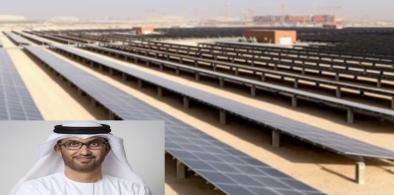
Oil magnet to lead the global conference to phase out oil? UAE has a unique opportunity to show the way: An Indian perspective

Dr Al Jaber has been awarded the Champion of the Earth award from UNEP.  Indian Prime Minister Narendra Modi conferred on him a lifetime achievement award for his contributions to energy security, building bridges to emerging Asian economies, and reshaping traditional energy business models.


Lessons from the Adani stock crash: Indian regulator must restore faith in the market

No doubt that the Adani Group will do its utmost to bounce back, but regulators and policymakers must ensure that investors’ trust in the markets is not dented. India’s stock markets are world leaders in terms of technology and surveillance systems. The regulators and exchanges must match that in terms of excellent governance and strengthening the foundation of trust.

India adds its first tactical ballistic missile to its military arsenal

The newly developed missile, fired from a canister, can make precise manoeuvres before impacting a target.

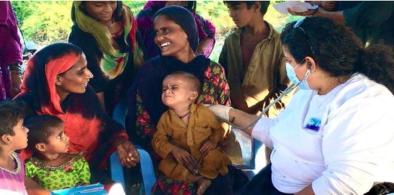
Healing hands in a disaster: Poignant notes from flood-ravaged Sindh

Flash floods destroyed 70 per cent of the region’s standing summer crop. The stagnant flood water has derailed the planting of the next crop. For a population already tethering on the brink, this spells doom. I’m petrified of the famine looming on the horizon – something my friends at the #FixSindhDrainage Twitter Space have been communicating for the past three months.

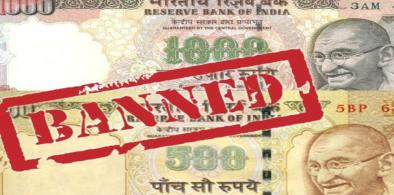
Who gained from India's ill-conceived demonetisation policy?

The net impact of the overall  Rs.32.12 lakh crore currency in circulation at present is that the benefit of demonetisation stands undone, resulting in a disturbing level of growth of a parallel economy and corruption in the country.

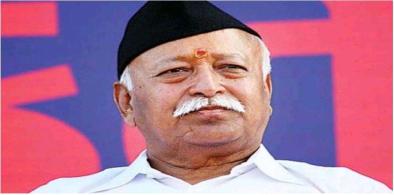
Has the RSS reshaped its agenda for the upcoming elections?

Why has the language of the RSS chief seemingly changed from his 2018 speeches at Vigyan Bhavan? There may be many reasons for Bhagwat to be more forthright than sugarcoating his agenda earlier. Many state elections are due in 2023 and general elections are due in 2024. The polarization around identity issues seems to be the main instrument in its hands.

Why has India's national census been delayed

The present delay in conducting the national census, when even some of our South Asian neighbours have conducted theirs, despite covid difficulties, is cause for concern.

Wildlife at risk in Bangladesh as infrastructure development disrupts protected forests

Bangladesh has two laws on forest protection, only one of which, the 2019 revision of the 1927 Forest Act, makes even a glancing mention of infrastructure projects inside forests. It prohibits making any changes to a restricted forest, and threatens violators with up to five years in prison and up to 50,000 taka ($490) in fines. That hasn’t stopped the state from building multiple-lane roads through protected forests.

‘Third World’ or ‘Global South’? Its time to redefine

‘Third World’ and ‘Developed Nation’  are terms that are derogatory and ethnocentric in concept. The terns 'Global North' and the 'Global South' can offer researchers, columnists, as well as development partners a politically balanced perspective. 

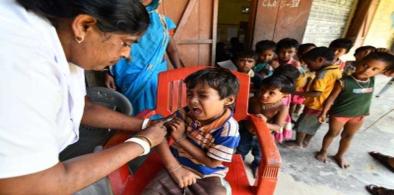
In Covid wake, India caught off-guard over measles outbreak; exposes fragility of health system

Interestingly, strategies employed during the Covid pandemic are being replicated. Much like the Cowin app was used to track and monitor Covid vaccinations, the Indian government plans an app to monitor every eligible child to ensure that they are up to date with their vaccination schedules

Bangladesh's Matarbari Deep Sea Port offers new prospects for maritime connectivity in South Asia

The port can grow to be one of the key hubs of trade and business in South Asia as a result of its geographic advantages and deep-sea port capabilities.

Bangladesh is integral to the development of India's Northeast

If India focuses on improving bilateral economic and connectivity initiatives with Bangladesh, the economic development of this region is inevitable.

The bulldozing of the 'idea of India'

The manner in which bulldozers as tools of retaliatory State violence and punishment are being normalised now is akin to illegal 'encounter' (extra-judicial) killings which have now been normalised by police forces across the country.

Why I'm boycotting the World Cup in Qatar: FIFA stadiums built on the blood, sweat, and lives of migrant workers

I learned, too, that on average, the Gulf countries send half a dozen coffins a week to Nepal with the remains of somebody’s beloved family member. This didn’t just apply to Nepal — workers from India, Bangladesh, Pakistan, and African countries faced a similar fate. 

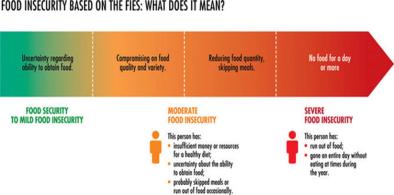
Sri Lanka's dire food insecurity: Need for a well-planned policy framework

The root causes behind the food insecurity status of Sri Lanka are two-fold. Short-sighted policies such as the chemical fertilizer ban imposed by the Rajapaksa government generated a domino effect on agricultural production. Additionally, foreign exchange constraints severely limited food imports.