Shireen Huq, chair of the reform commission and founder of Naripokkho, said, “We had an uprising, a regime change, but the culture of misogyny, the brutalisation of women, and the public assertion of male dominance, all remain intact and hegemonic.”


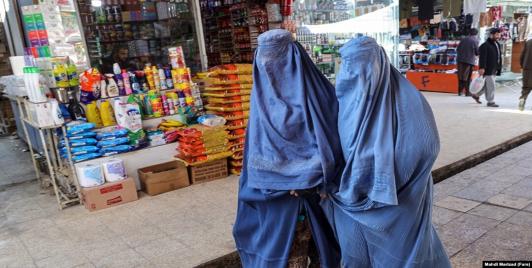
The Taliban, therefore, is not challenging whether Islam should shape women’s rights. Both the OIC and the Taliban begin from that premise. The disagreement is over what Islamic rights mean and, more importantly, who has the authority to define them.
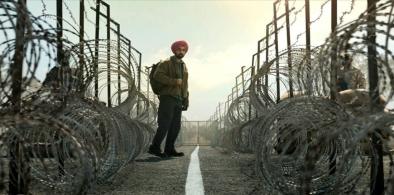
As of January this year, at least 296 Bangladeshis have died in border areas over the past decade, as India’s Border Security Forces (BSF) pushes “illegal Bangladeshis” across the border in the dead of night.
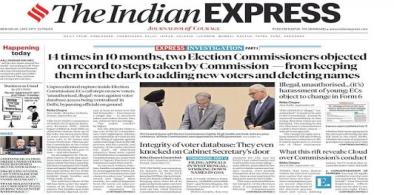
It is true that only a handful of newspapers have the resources and persistence to pursue big stories of the kind that came alive in the EC exposé. Nevertheless, to the extent that it inspires others to pursue even smaller news stories with steadfastness this could potentially redeem the otherwise sordid state of affairs in the Indian media.
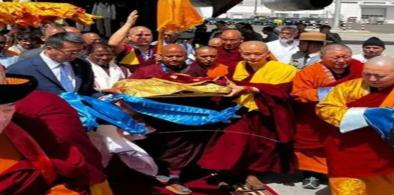
The profound emotional connection was vividly evident in 2022 when, as the Indian delegation accompanying the relics entered the Gandan monastery, members of the crowd reached out to touch them, expressing their reverence for those who had come "from the land of the Buddha".

Shireen Huq, chair of the reform commission and founder of Naripokkho, said, “We had an uprising, a regime change, but the culture of misogyny, the brutalisation of women, and the public assertion of male dominance, all remain intact and hegemonic.”

The cceans, comprising 70 percent of the surface of planet earth, are a medium of connecting peoples across the world, rather than at times mistakenly being viewed as great natural barriers. Nothing proves this more emphatically than the tiny Tystie's passage across the Indo-Pacific which is aptly relevant to this year's theme for the International Day of Yoga - 'Yoga for One Earth One Health'.

To remain relevant, the IMF must undertake comprehensive reforms—revising its governance structure, enhancing decision-making transparency, and moderating its loan conditionalities. By expanding representation and reducing the dominance of a handful of powerful nations, the IMF can empower borrowing countries to shape policies that better reflect their unique economic challenges.

All seekers of truth, no matter in which field, also tried to understand what makes our world and universe tick. That gave them a feeling of awe and also showed that probably what they thought was an original idea and thought was nothing else but existing knowledge in the knowledge space that was channeled through them.
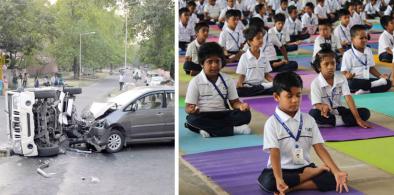
The distribution of free food, freebies and subsidies by political parties has created massive idle energy across the country which breeds indiscipline. People abhor physical work, sell agricultural land and migrate to cities. They prefer to do menial jobs, live on rental income or bank interest than creating their own economic assets.
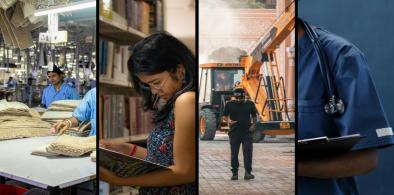
Who does the conflict benefit? This is a question many are asking. The latest conflict has only solidified support for those in power, distracting from the real issues of poverty, unemployment, inequality, and other government incompetencies and failures.
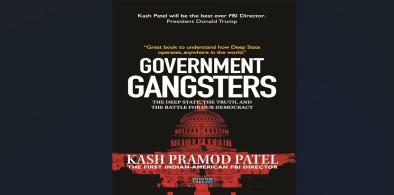
Yet as I walked in, the president turned to me and shouted, “Kash, have you met my friend Narendra?” He urged me to come over, and soon I was speaking to “India’s Trump” in our native dialect, with the prime minister asking all about my family and background

With the deviousness associated with a feudal culture, the highest standards are being set for a system that employs blatant untruths, hypocrisy, double standards, and fake news through large sections of the communication media influenced by the party to form the basis of a totalitarian political system characterised by the extreme Hindu fanaticism of northern India and north-western India, with the rest of India utterly disregarded.

In a world plagued by deepening social, spiritual, and ecological crises—and amid an escalating environmental breakdown marked by climate collapse, deforestation, biodiversity loss, pollution, and the reckless overconsumption of finite resources—the Earth still holds a profound, forgiving strength that sustains life.

To appreciate Mushtaq and her work is to celebrate the diversity of South Asian languages, culture and many minorities. Over a century ago, the iconic poet Rabindranath Tagore won the Nobel for translating his own work from Bengali to English. However, seldom do we take time to explore works in other regional languages, for example, Tamil, Telugu, Assamese or Balochi. Kannada is estimated to be spoken by 65 million in a region of nearly two billion people.

The fear of the police and trolls makes our hearts beat faster each time there is a phone call from an unknown number. What will it be -- a First Information Report? Lock up? Or some other horrible punishment for what we believe is the right and the only way for human beings to live with each other -- in peace, with love, harmony and unity. No amount of trolls or state repression can change our minds.
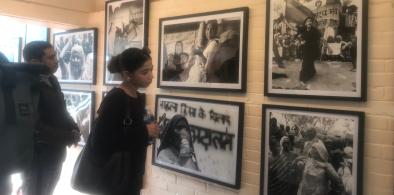
Through this powerful convergence of artistic voices and institutional support, "Feminist Futures" not only documents the present state of feminist discourse in South Asia but actively participates in shaping its future. It stands as testament to art's capacity to challenge, transform, and reimagine social realities, creating spaces for dialogue and change in a region grappling with questions of gender justice and equality.

The arduous voyage of the Tystie across the Pacific and Indian oceans to Visakhapatnam will instil a sense of pride for Andhra Pradesh, home state for the two intrepid sailors. The Andhra coast has a hoary tradition of maritime connectivity with South-East Asia since the BC period during the reign of the Satavahana dynasty
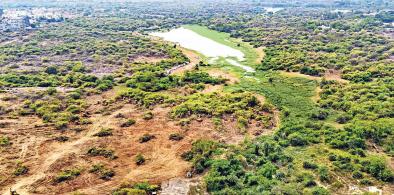
Hyderabad will be lifeless without its tree cover. The city needs its green cover, oxygen, and natural look to sustain economic activities. According to the World Economic Forum's recent Nature Risk Rising Report, more than half of the world’s GDP ($44 trillion) is highly or moderately dependent on nature.

There is significant pressure to implement AI solutions fast in response to market demand, but there are also hazards associated with using the incorrect technology or doing so carelessly. Due diligence on AI is a strategic precaution, not a delay tactic.