

Pakistan’s Mediation Mirage: Strategic Posturing in a Fractured West Asia
Pakistan’s attempt to position itself as a peace broker in the Middle East may generate headlines, but it does little to advance the cause of stability. If anything, it underscores a larger truth: in high-stakes geopolitics, perceived neutrality without proven credibility is not an asset—it is a liability.
 Apr 02, 2026
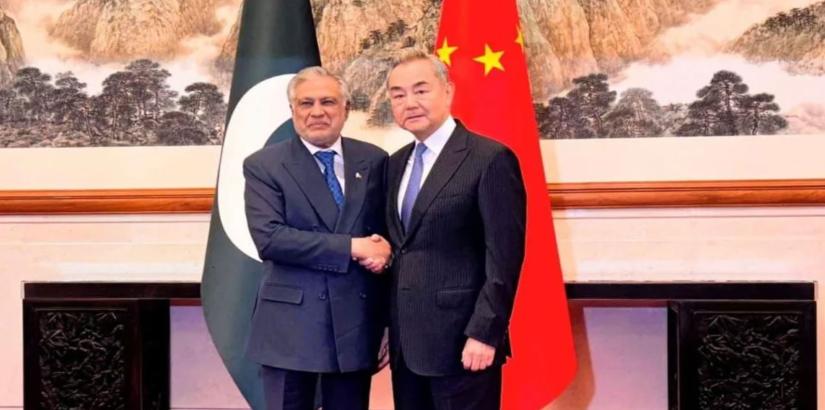
As West Asia navigates one of its most volatile phases in recent years, the emergence of new or self-appointed mediators warrants careful scrutiny. Pakistan’s bid to position itself at the center of potential ceasefire diplomacy between the United States, Israel, and Iran is less a reflection of diplomatic credibility and more an exercise in strategic signaling—one that exposes deeper contradictions in Islamabad’s regional posture.
For decades, Pakistan has been known to the world for its support of radical Islamist groups, while consistently promoting and patronizing anti-Semitism—including deep-rooted hostility toward Israel. Much like Tehran’s rogue mullah regime, policymakers in Islamabad—and a significant segment of its population—continue to indulge in fantasies of the “elimination of Israel” and the “establishment of Palestine with East Jerusalem as its capital”.
Peace Broker or Diplomatic Duplicity?
Only months ago, Islamabad signed a military agreement with Riyadh, pledging to protect the Kingdom from external threats—including Iran. Yet both Prime Minister Shehbaz Sharif and Army Chief Asim Munir were fully aware that such a scenario would never materialize. Pakistan would never be placed in a position where it would have to confront Iran militarily. Instead, Islamabad has once again reverted to its familiar duplicity—now attempting to shield Tehran from potential strategic defeat by projecting itself as a “peace broker”.
Even more astonishing is that segments of the Arab media appear willing to entertain this narrative, applauding Pakistan’s self-styled diplomatic initiative despite its evident contradictions and its quiet betrayal of commitments to Saudi Arabia.
Not all observers, however, are convinced. As noted by The Wall Street Journal, “Pakistan, once isolated by Washington for harboring Osama bin Laden, is assuming a surprisingly prominent position in the multinational effort to push the US and Iran toward the negotiating table”.
Ideological Contradictions
The more fundamental question is this: why do many Muslim-majority nations—particularly in the Arab and Gulf regions—continue to rally behind the so-called Palestinian cause, even when historical statements such as that of PLO official Zoheir Mohsen in 1977 openly framed Palestinian statehood as a political instrument rather than a distinct national reality?
Zoheir Mohsen stated, “The Palestinian people does not exist. The creation of a Palestinian state is only a means for continuing our struggle against the state of Israel for our Arab unity. In reality, today there is no difference between Jordanians, Palestinians, Syrians and Lebanese. Only for political and tactical reasons do we speak today about the existence of a Palestinian people, since Arab national interests demand that we posit the existence of a distinct Palestinian people to oppose Zionism”.
More importantly, policymakers in Islamabad and across the Muslim world are fully aware that the Iranian regime has no genuine interest in peace. Its ideological doctrine remains rooted in confrontation—openly calling for the destruction of the United States and the elimination of Israel. Yet there persists a desire to halt ongoing military pressure on Tehran.
Militarisation over Economics
Because, in reality, segments of the Muslim world have long viewed Iran as a useful irritant—a strategic nuisance directed against Israel and the West. But this dangerous calculus is now backfiring. The same “Frankenstein” is increasingly turning its hostility toward Arab states themselves. If the Iranian regime is not decisively weakened and Iran returned to a democratic trajectory, it will continue to export instability through proxies and aligned jihadist networks.
Inside Iran, the situation is rapidly deteriorating. Despite outward threats and intensified propaganda, many within the leadership of the Islamic Revolutionary Guard Corps, the Basij, and the clerical establishment are acutely aware of their growing vulnerability. Even in the event of a ceasefire, they fear a domestic uprising driven by millions of frustrated citizens grappling with poverty and systemic mismanagement.
Reports indicate that over 40 percent of Iran’s population lives below the poverty line, with figures exceeding 50 percent in Tehran—and possibly rising above 60 percent in reality. The economic collapse is staggering. In 1979, under Ayatollah Ruhollah Khomeini, the exchange rate stood at 70 rials to the dollar. Today, it has plunged to approximately 1.3 million rials to the dollar—one of the most dramatic currency collapses in modern history.
The regime’s response to dissent has been brutal. Protests driven largely by economic hardship have been met with extreme force, exposing the leadership’s deep insecurity and fear of losing control.
At the same time, Iran’s rulers have squandered vast national resources. More than $500 billion has been funneled into nuclear ambitions and ballistic missile programs, including the construction of extensive underground “missile cities”. While ordinary Iranians struggle to afford basic necessities, the regime continues to prioritize militarization over economic survival.
Food prices have soared, the currency continues to depreciate, and living conditions are worsening by the day. Yet Tehran persists in funding its military infrastructure and regional interventions, including operations targeting Israel and multiple Arab states.
A Geopolitical Manoeuvre?
Analysts suggest that unless Iran agrees to a comprehensive set of concessions, the conflict could escalate further, drawing in additional regional actors. In such a scenario, Gulf nations may begin exerting serious pressure on non-Arab Muslim states—including Pakistan—to normalize relations with Israel. Those who refuse could face significant economic consequences, including labor and residency restrictions for their nationals in Gulf countries.
Against this backdrop, Pakistan’s proposed mediation appears less like a genuine diplomatic initiative and more like a geopolitical maneuver aimed at preserving an embattled ally. It is a posture that aligns neither with the realities on the ground nor with the requirements of credible statecraft.
Peace in the Middle East will not be achieved through symbolic gestures or compromised intermediaries. It requires credible actors, strategic clarity, and a willingness to confront—not cushion—destabilizing forces. Pakistan, with its entrenched ideological biases and inconsistent regional posture, fails that test. Allowing Islamabad to shape the terms of de-escalation would not advance peace—it would merely prolong the very conflict it claims to resolve.
In the final analysis, mediation is not merely about access—it is about trust. Without that foundation, even the most visible diplomatic overtures remain performative. Pakistan’s attempt to position itself as a peace broker in the Middle East may generate headlines, but it does little to advance the cause of stability. If anything, it underscores a larger truth: in high-stakes geopolitics, perceived neutrality without proven credibility is not an asset—it is a liability.
(The author is a journalist, writer, and editor-publisher of the Weekly Blitz. He specializes in counterterrorism and regional geopolitics. He can be contacted at salahuddinshoaibchoudhury@yahoo.com, follow him on X: @Salah_Shoaib )




Post a Comment