

West Bengal Elections, Dhaka’s Dilemma: Will the Rise of Hardline Nationalist Politics Increase Diplomatic Uncertainty in Bangladesh-India Ties?
Even with a strong central government in India, West Bengal is likely to retain strategic importance for Bangladesh due to its geographic proximity, shared cultural identity, and direct influence over key bilateral issues such as river water sharing and border management. While Dhaka must formally prioritise engagement with New Delhi for any binding agreements, the practical success of many policies often depends on West Bengal’s political stance and cooperation.
 May 08, 2026
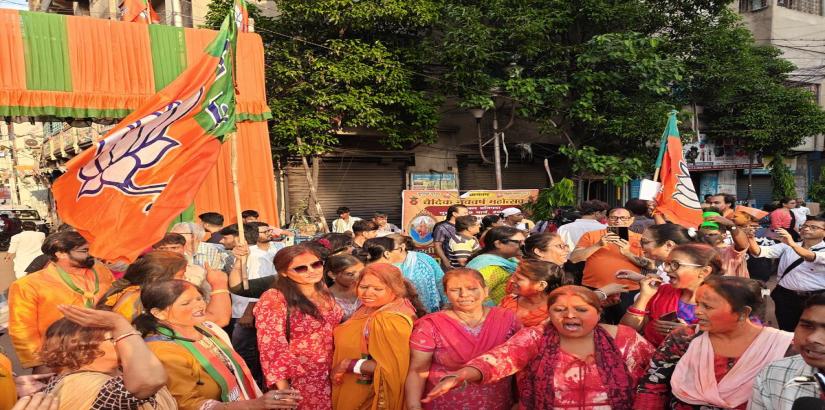
Mamata Banerjee, the long-serving chief minister of West Bengal, lost her 15-year reign on May 4, 2026. There was a delicate balance between Bangladesh and West Bengal during Mamata’s regime. Her strong stance against communalism particularly acted as a bridge of mutual respect between the two sides, despite her intervention against the nearly finalised Teesta water-sharing treaty in 2011. Bangladesh cannot ignore its largest boundary-sharing counterpart despite the change in regime in West Bengal. However, Bangladesh’s foreign policy now needs to be addressed more dynamically to suit this changing political environment.
Bangladesh’s Past Approach
In the past, Bangladesh’s foreign policy toward West Bengal was shaped less by formal state-to-state diplomacy and more by a mix of central government engagement with India and informal subnational interactions. Since West Bengal is a state within India, Dhaka primarily dealt with New Delhi on major bilateral issues such as water sharing, border management, and trade. However, West Bengal played a crucial role in influencing these matters, especially on sensitive issues like the Teesta water-sharing agreement.
Bangladesh often pursued a careful and balanced approach—maintaining strong diplomatic ties with the Indian central government while also engaging in “para-diplomacy” with West Bengal through cultural exchanges, economic cooperation, and political goodwill. This included fostering people-to-people connections, easing cross-border trade, and leveraging shared linguistic and cultural heritage to build mutual trust. Overall, the strategy was pragmatic: cooperate with India at the federal level while informally accommodating West Bengal’s political sensitivities to avoid friction and maintain regional stability.
Strengthening Ties Through Para-Diplomacy
In the past, Bangladesh took several strategic and diplomatic steps to strengthen its relationship with West Bengal, recognising the state’s cultural, economic, and political importance in bilateral dynamics with India. One key approach was enhancing people-to-people connectivity through easier visa processes, cross-border travel, and cultural exchanges rooted in shared Bengali heritage. Bangladesh also promoted subnational or “para-diplomacy” by engaging directly with West Bengal’s political leadership, especially on sensitive issues like water sharing and border management, to build mutual understanding and reduce resistance at the state level.
Economically, Dhaka facilitated cross-border trade by improving land ports, transit routes, and regional connectivity initiatives, which benefited both sides. Additionally, cooperation in sectors such as energy, transportation, and education helped deepen trust. Overall, Bangladesh adopted a pragmatic and relationship-driven approach—balancing formal diplomacy with India’s central government while informally strengthening ties with West Bengal to ensure smoother bilateral cooperation.
At present, Bangladesh can adopt a forward-looking approach to strengthen ties with West Bengal by deepening subnational or “para-diplomacy” while aligning it with broader India-Bangladesh relations. Key policy options include accelerating cross-border connectivity projects (rail, road, and river routes), expanding energy cooperation and regional power trade, and promoting joint economic zones to boost investment and trade.
Bangladesh can also prioritise early and flexible negotiations on water-sharing issues, particularly the Teesta, by building consensus with West Bengal’s leadership alongside New Delhi. These policies can be implemented through regular bilateral forums, high-level political engagement with state authorities, and public-private partnerships to finance infrastructure. Additionally, increasing cultural diplomacy, academic exchanges, and tourism initiatives can strengthen people-to-people trust, making policy execution smoother and more sustainable.
Why West Bengal Still Matters
Even with a strong central government in India, West Bengal is likely to retain strategic importance for Bangladesh due to its geographic proximity, shared cultural identity, and direct influence over key bilateral issues such as river water sharing and border management. While Dhaka must formally prioritise engagement with New Delhi for any binding agreements, the practical success of many policies often depends on West Bengal’s political stance and cooperation.
Therefore, Bangladesh cannot afford to overlook the state and its politics. Instead, it needs a dual-track approach—maintaining robust central-level diplomacy while informally engaging West Bengal to ensure smoother implementation of agreements and minimise regional friction.
Concerns over Communal Polarisation
Overall, the weakening political position of Mamata Banerjee has arguably placed Bangladesh in a somewhat uncomfortable strategic situation. Despite disagreements over issues like the Teesta water-sharing deal, her administration was often viewed in Bangladesh as a relatively moderate political force that helped maintain cultural and political understanding between the two Bengals.
A decline in her influence, alongside the rise of more hardline nationalist politics in West Bengal, could increase diplomatic uncertainty, intensify border tensions, and deepen concerns over communal polarisation and regional stability.
(The author is a foreign policy and security analyst and educator who holds a postgraduate degree from the Department of International Relations, Rajshahi University, Bangladesh. Views expressed are personal. He can be contacted at alaminislamshuvo16@gmail.com.)





Post a Comment