Not much has been done by lawmakers to reduce black money in elections. ONOE is not likely to make a dent to that effect, though that is its ostensible purpose.


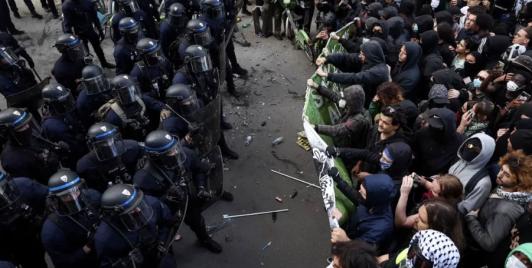
Southern Europe shows that mobilisation can reshape political agendas while leaving difficult economic questions unresolved. South Asia shows that a narrow grievance can become a challenge to the legitimacy of a governing system when trust has already been eroded. The real test of governance is whether institutions learn between storms—before the next generation concludes that the street is the only place where its voice can be heard.
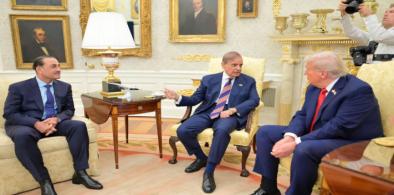
At independence, Pakistan's economy was competitive with India's. Today India's is more than ten times larger, and Pakistan is on roughly its 25th IMF program. Investors rarely abandon a country simply because it is poor. They leave when they cannot tell who actually decides.
The young need not become another opposition. They could become an independent democratic force that questions every government but belongs to none; that protests when necessary but constructs continuously; that demands accountability from institutions while practising accountability itself.
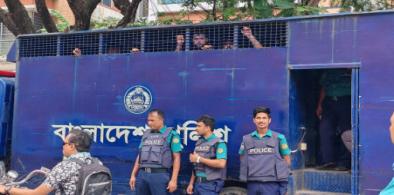
To what extent has the current BNP government been able to realise the vision that drove the 2024 mass uprising in Bangladesh? Will the BNP government, too, manipulate state mechanisms and law enforcement agencies to serve its own interests, much like the previous Sheikh Hasina regime, to suppress the opposition and silence critics? The government must therefore take serious steps to amend police laws and prevent deaths in police custody. This is one of the crucial reforms facing the administration.

Not much has been done by lawmakers to reduce black money in elections. ONOE is not likely to make a dent to that effect, though that is its ostensible purpose.

Why did it take five months of violence to appoint Col Sanjebam who lives in the heart of Imphal even while projecting the worst is over? Why was this done without Manipur Police asking for such an appointment? Why was he posted to the police department, not as a military advisor to the Chief Minister?
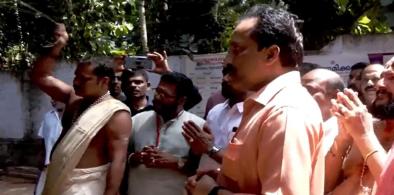
No one in ISRO said ‘I’ did it. The ISRO leadership gave full credit to leaders, past and present. They showcased the team spirit that is so crucial for the mission. In the words of the ISRO chief: “This is not our work alone. It is the work of a generation of ISRO leadership and ISRO scientists … This is incremental progress.”
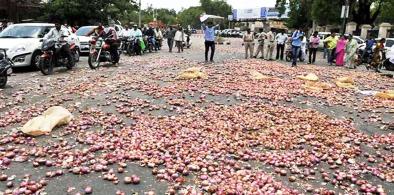
The webs we weave in agricultural policy have entangled us from which unshackling has become very difficult. India needs massive reforms to make markets function better, much less intrusion of the State and more freedom for the farmer to participate in the market process and profit from it.

One of the reasons that Pakistan is making an effort to deal more appropriately with such cases is that it “wants to show itself in a better light than India,” comments Zohra Yusuf. That is not a bad competition to be in.
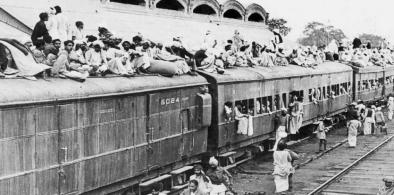
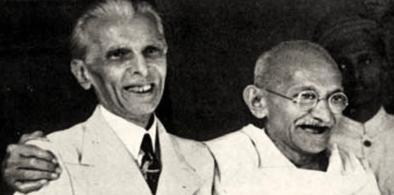
The Partition Horrors Remembrance Day selectively wants to project the killings and mayhem that Hindus faced. The truth is the Hindus and Sikhs coming from Pakistan (west and east) and Muslims migrating from India to Pakistan, both suffered immensely. As such if we see the whole process of two-nation theory, communal violence was equally promoted by the politics of communal streams, Hindu and Muslim.
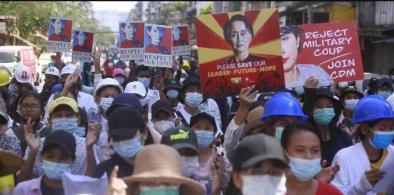
The junta must understand that forcible occupation of a land has its pitfalls. The international community is not as politically invested in Myanmar as it ought to be, but the civil society is closely monitoring the Myanmarese atrocities, the killing of innocent children and the vulnerable.
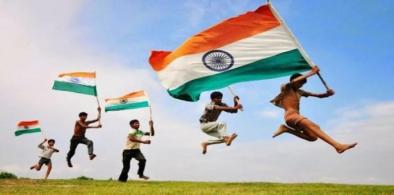
By doing our jobs properly and ethically the country will progress and become great. The paradigm of development should be based on the maxim of Spirituality + Technology = Happiness. It will help us all become ethical human beings.
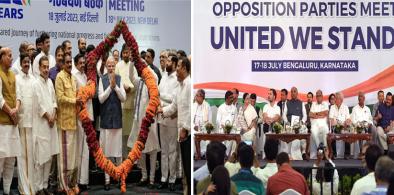
The opposition to the INDIA alliance is also rooted in the thesis which sees a ‘clash of civilizations’ (Samuel Huntington), in contrast to what the UN report emphasizes on Alliance of Civilizations, well articulated in Nehru’s belief system.
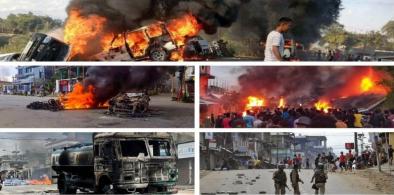
But wild, in-your-face violence of the kind seen in some of the crimes that continue to happen, particularly against women, indicates that the nation isn’t really progressing, never mind what the GDP numbers may say.
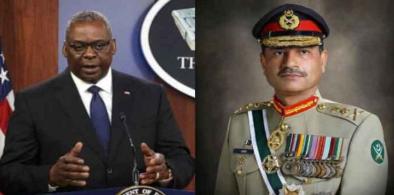
The Pakistan-US-UK ties remain strong. Pakistan’s removal from the FATF’s ‘grey list’ and recent $3 billion IMF loan to Pakistan had an obvious nod from the US.

Myanmar, Bangladesh, and India need mutual friendship in their national interest. Bangladesh's improved road and rail connectivity with India will open up new doors of trade and commerce.

The politics being pursued by the BJP and its related organizations have a multipronged strategy to win over indigenous communituies electorally by emotive symbolic actions, to Hinduise them on the one hand, and to maintain the upper-caste hegemony on the other.

Modi's singular aversion to media engagement starkly contrasts with the active media engagement of leaders like Australian Prime Minister Anthony Albanese's one year in office. A notable analysis of his public relations strategy (Sydney Morning Herald, 20 June) reveals his tireless efforts to engage the public.

Gita Press is the intellectual and cultural base on which conservative Hindu values, mainly Brahmanical values, are promoted, and it provides the base for Hindu nationalist politics by promoting and propagating a narrow, exclusive version of Hinduism. Gandhi’s Hinduism was, on the other hand, humane and inclusive and he evolved with time to live the humanistic aspects of religion.