The simplest solution will be to change working hours by advancing it to 0700 hours and ending the workday at 1530 hours, so that the entire working hours are during daylight hours, writes Amb Sarvajit Chakravarti (retd) for South Asia Monitor


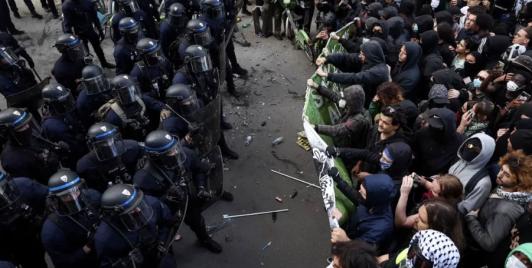
Southern Europe shows that mobilisation can reshape political agendas while leaving difficult economic questions unresolved. South Asia shows that a narrow grievance can become a challenge to the legitimacy of a governing system when trust has already been eroded. The real test of governance is whether institutions learn between storms—before the next generation concludes that the street is the only place where its voice can be heard.
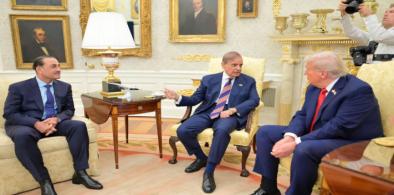
At independence, Pakistan's economy was competitive with India's. Today India's is more than ten times larger, and Pakistan is on roughly its 25th IMF program. Investors rarely abandon a country simply because it is poor. They leave when they cannot tell who actually decides.
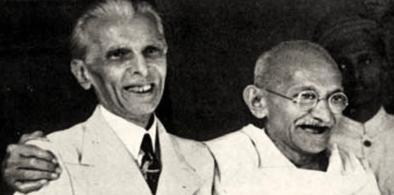
The young need not become another opposition. They could become an independent democratic force that questions every government but belongs to none; that protests when necessary but constructs continuously; that demands accountability from institutions while practising accountability itself.
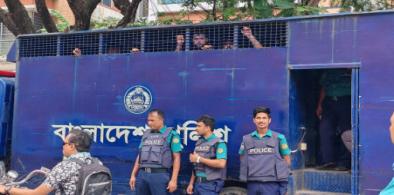
To what extent has the current BNP government been able to realise the vision that drove the 2024 mass uprising in Bangladesh? Will the BNP government, too, manipulate state mechanisms and law enforcement agencies to serve its own interests, much like the previous Sheikh Hasina regime, to suppress the opposition and silence critics? The government must therefore take serious steps to amend police laws and prevent deaths in police custody. This is one of the crucial reforms facing the administration.

The simplest solution will be to change working hours by advancing it to 0700 hours and ending the workday at 1530 hours, so that the entire working hours are during daylight hours, writes Amb Sarvajit Chakravarti (retd) for South Asia Monitor
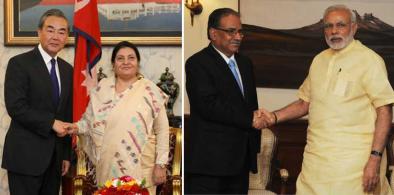
Under no circumstances would New Delhi like to see a break in the recent momentum in bilateral relations generated through increased economic and developmental cooperation, even if there is a change of the government in Kathmandu later this year, writes Shraddha Nand Bhatnagar for South Asia Monitor
For Pakistan's political elites, it has become a cycle of securing loans from allies to fund its ever-ballooning deficit and again approaching the IMF when funds dry up, writes Shraddha Nand Bhatnagar for South Asia Monitor
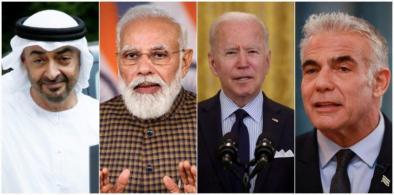
The I2U2 will work in six areas – water, energy, transport, space, health, and food security – combining the expertise and the resources of the four nations, Modi said

A short video, which went viral on social media, showed people searching for leftover food in the kitchen.
Perspective

The bodies recovered by the residents showed evidence of torture and brutal executions, including some with missing limbs and ropes around their necks. Others had their head beheaded or slit throats, according to the report

Nepal, which shares a long open border with India to its north, west and east, enjoys cultural, historical, and civilizational bonds with India for centuries. People across the border in both countries have been inter-marrying for ages, which led to the “Roti and Beti ka Rishta” (cultural and marital bond) tag to the relationship between the two neighbours.

Other countries in the region, such as Sri Lanka, Pakistan, and Nepal, are also struggling to arrest the depletion of their foreign exchange reserves as a result of high fuel prices. However, Bangladesh is still better placed and has enough time to work out a deal with the IMF.
Experts have pointed out Pakistan’s need to undergo deep structural reforms to avoid recurring cycles of loans and knocking at the IMF's doors

For Sri Lanka, which is in dire need of foreign exchange reserves, tea is among a few commodities offering an assured income in dollars. The industry faced immense hardship during the last year’s ban on chemical fertilisers
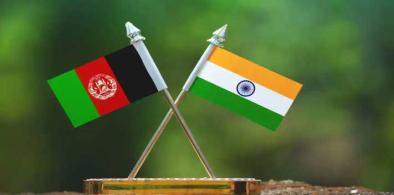
The move isn’t a recognition of the Taliban regime which remains internationally isolated. The emphasis on people-people and civilizational connections underscores New Delhi’s attempt to retain its soft power in the country
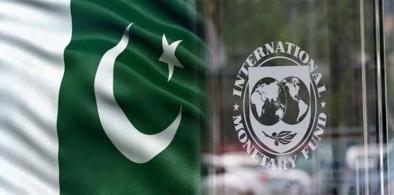
From withdrawing the fuel subsidies, hiking electricity tariffs and reducing expenditure to increasing tax rates, Prime Minister Shehbaz Sharif’s government has gone all out at the expense of its own political capital to get the IMF programme running
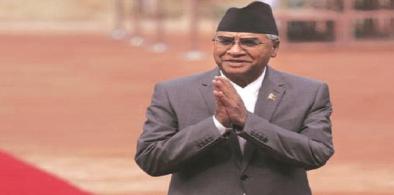
Notwithstanding the Deuba’s government push to strengthen ties with the US, Nepal is still far from signing any security pact with it. Further, China, despite suffering a relative pushback in Nepal, is unlikely to take such a deal kindly
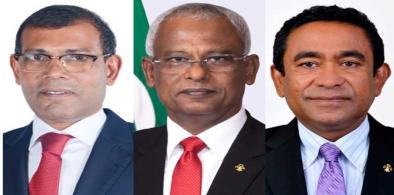
If Yameen returns to power in the Maldives, it would have repercussions on the present close strategic ties with India

India needs strong and friendly relations, be they diplomatic, economic, social or cultural, with the countries of GCC. And some of these arguments carry over for relations with members of the OIC too