Representational Photo

India's Electoral Roll Controversy Leaves a Nation Divided and Questions Unanswered

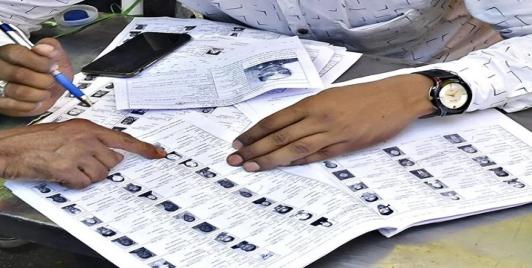
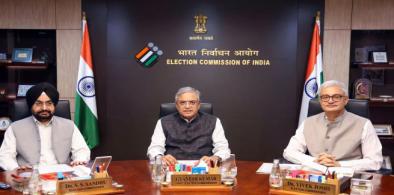
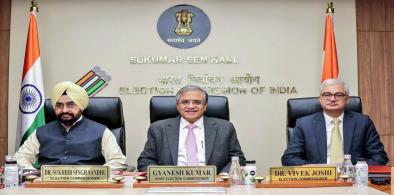
If the government and EC are confident, the answer is not a counter-letter but transparent data: a district-wise, gender-wise audit of deletions, restorations, reasons – all details to be placed on affidavit, as Lokur panel demands.

The Bigger Picture Behind the Electoral Roll Controversy in India

The ongoing SIR is not merely about helping a particular party win an election; it points to a much deeper design - to create a customised electorate in the country. It is intended to turn India into a Republic in which only some sections of the population remain politically relevant.

Can India's Election Commission Pass the Gandhian Test of Public Integrity?

The Election Commission belongs neither to the government of the day nor to the Opposition. It belongs to the people of India. Its first duty is to protect the citizens' vote. That is the standard by which the CEC, the two ECs should be examined. 

Manipur’s Displaced Still Waiting for Home: Crisis Resolution Needs to Move From Relief to Restoration

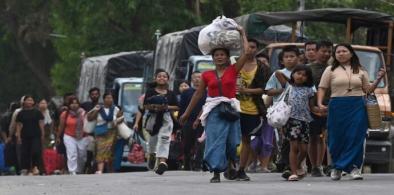
Manipur therefore needs to move beyond the language of relief and towards the language of restoration. The ultimate measure of recovery will not be how many camps have closed. It will be how many families can safely return, rebuild their livelihoods, educate their children, access justice and live without fear.

More on Governance, Public Policy and Law

Bangladesh victim of its faultlines; will the revolution's children make the same mistake?

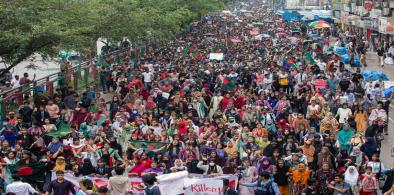
There is a saying revolution devours its children. Like the ousted regime who were the self-proclaimed legacy bearers of the revolution of 1971, the July revolution of 2024 could create a similar thermidorian reaction in the future if the torchbearers of this revolution play a similar political game of ‘Us’ and ‘Them’

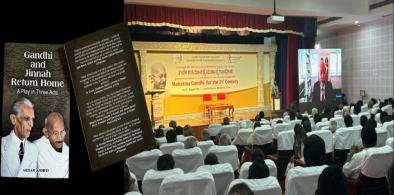
On Gandhi’s birth anniversary, a reminder of the Gandhian values South Asia - and the world - needs

If a true aristocrat is to be defined by courtesy and good manners, then the Mahatma was no less than the most refined princes and maharajas of India. His interactions were marked by legendary grace, respect and courtesy even in times of acrimony and division. He even addressed Mr. Jinnah, a political opponent, as the Quaid-I-Azam, the title given to Mr Jinnah by his supporters.

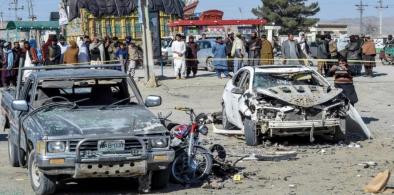
Volatile Balochistan has a long history of exploitation

Balochistan remains a Pakistani faultline and it must be understood that it is a ‘political problem' even though the Pakistani state has been trying to deal with it all through as 'security problem'. The clear dissatisfaction of the people during accession to Pakistan is yet to be resolved. Forced disappearances and extrajudicial killings are now the trademark policy impulses of the oppressive Pakistani regime. 

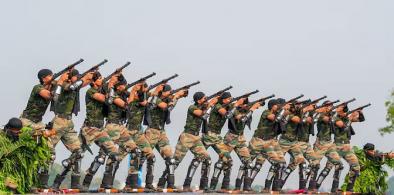
Agnipath: An ill-conceived scheme that will impact civil-military relations and neighbourhood bonds

The recruitment of Nepali Gorkhas into the Indian Army being stopped after 77 years post-Independence is not only going to be a major loss to the Indian Army but also a serious and avoidable blow to cordial India-Nepal relations.

Is green hydrogen really the panacea for global warming?

While there are uncertainties with regard to the  possibilities and prospects of generating green hydrogen in a cost-effective manner it is surprising that green hydrogen is being hailed as the ultimate solution to overcome the emission issue and prevent climate disaster.

Social media's war on civility and compassion: Feeds on the psychological vulnerability of individuals

Many of us spend hours on social media doom scrolling, which then ceases to be just a source of recreation; it becomes an alternative world where algorithms and trends decode and shape individuals.

Can IMF’s good-governance conditionalities bring Pakistan economic stability?

Peace and progress go hand in hand. To stabilize the economy, Pakistan needs a conducive political environment to focus on investment, education and health care. Whatever the economic challenges, the solutions would have to come from within. External funds, loans, debts are only temporary solutions

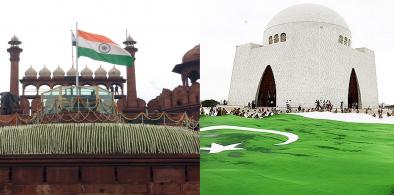
Twin nations that chose different trajectories: A Pakistani perspective

The very idea of Pakistan was based on the Two-Nation Theory which emphasized Muslims’ different way of life from that of the Hindus in the subcontinent. However, the mere religious identity of a nation without reconciling Pakistan’s diverse ethnic, linguistic, and cultural groups was not enough to hold it together. 

To rebuild Bangladesh interim government needs to reconcile rival ideological camps

Bangladesh is home to people of different religions and cultures, both in the hills and plains. The extreme polarization of thought and ideology between opposing ideological groups is impacting Bangladesh's social fabric. 

Policy reversals and lessons for the Modi government

The BJP is not really taking on the immense political challenge of explaining and then persuading the people to go with the right-wing turns in policies it seeks to implement; it is sneaking it in, and in that it is being met with defeat after defeat.

How the world failed Afghanistan: Three years since the Taliban's return to power

When the world descended on Afghanistan in 2001, Afghans believed it was about them, about a better life for them. It never was. It never is, writes senior reporter Kathy Gannon, who has covered Afghanistan since the 1980s. Looking back at the second Taliban takeover in 2021 she looks at why the ironically named ‘Operation Enduring Freedom’ of 2001 failed and how the aspirations of Afghans have been ignored.

Is Sri Lanka’s state sector inefficient? Facts point to the contrary

Sri Lanka’s current HDI score stands at 0.78 and is the highest in South Asia.

India's healthcare institutions need more women at the helm

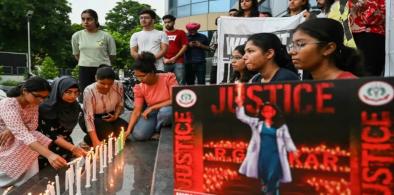
A message from the Kolkata case is to rebuild our healthcare workplaces with the intent of making them safe and gender inclusive.
 

India's discredited coaching centres: Can they redeem themselves in the eyes of students and aspirants?

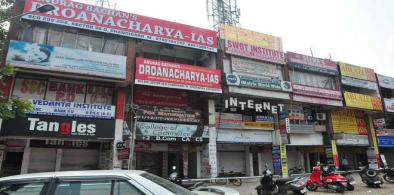
The exams for IITs, IIMs, Civil Services, in particular, are strong pointers on how traditional pedagogy and mindset of our educational institutions towards learning is found severely inadequate and deficient, and call for a paradigm shift towards critical thinking and building wider perspectives.

Hasina destroyed Bangladesh’s economy; caretaker government needs to handle it well to restore people's confidence

Many of the oligarchic business syndicates that formed around the deposed Sheikh Hasina are now on the run. But their vast industrial establishments remain. It is essential to sustain these industries. Millions of people are working in these establishments that are playing a critical role in the production sector of the country. These industries cannot be shut down because of the crimes of their leaders.