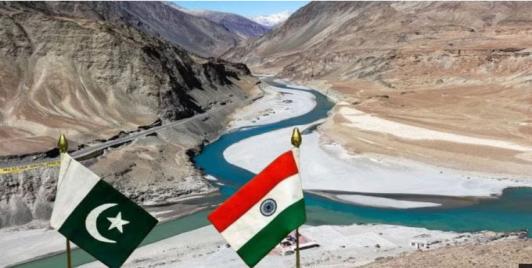
The Indus Waters Treaty: What Comes After The Hague Ruling?
Pakistan, for its part, will have to recognise that the old assumption of an immutable treaty operating independently of the broader India-Pakistan relationship has become untenable. Islamabad cannot expect the water relationship to remain insulated indefinitely from terrorism
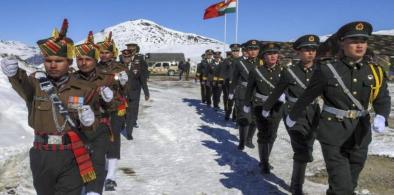
India-China Eight-Point Agreement: A Tactical Thaw, but Trust Remains Elusive
Hopes for Sino-Indian relations centre on a cautious diplomatic thaw, institutionalised border stability and renewed high-level engagement. Indian negotiators and defence planners are well aware that “trust must be verified”. While the activation of these eight points provides valuable channels to prevent an accidental kinetic clash on the ground, the real test of China’s sincerity will not be the joint statements signed in Beijing, but whether it ceases infrastructure build-ups and respects the historical patrolling rights of Indian troops along the LAC.
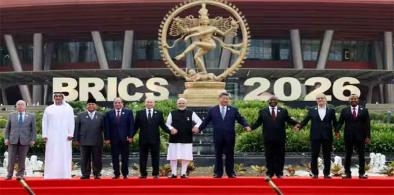
What's in a Name? Nomenclature Diplomacy Says Much About Changing Geopolitics
By removing the ‘Indo’ prefix from Indo-Pacific the US implicitly acknowledges that it no longer unilaterally defines the eastern strategic landscape. Regional organisations like BRICS continue to redefine the lexicon of ‘rules-based order’ to insulate themselves from western domination.
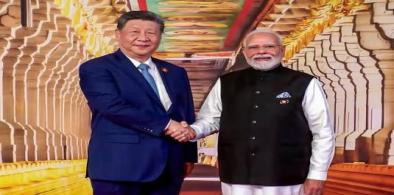
India-China Ties: Modi-Xi Meeting Signals Limited Thaw
The bilateral discussion between Prime Minister Narendra Modi and Chinese President Xi Jinping on the sidelines of the 18th BRICS Summit indicates surge in mutual ties, particularly by way of trade. However, little can be expected by way of full settlement of the boundary dispute.
More on Geopolitics, Security and Strategic Affairs
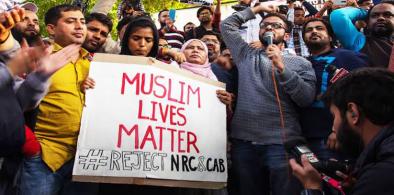
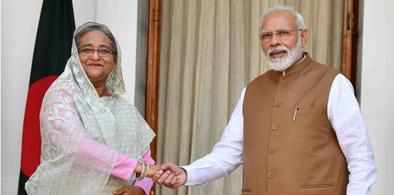
On CAA, India has scored a self-goal with friendly neighbours
Can India challenge the sovereignty of other nations and think of living peacefully with them, asks Mahendra Ved for South Asia Monitor
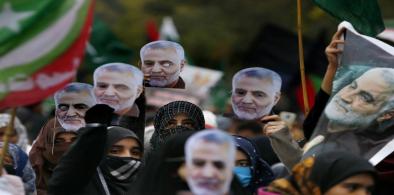
Soleimani’s killing and regional implications: Will the winners be China, Pakistan?
US Secretary of State Michael Pompeo spoke to Pakistani army chief Qamar J Bajwa on January 3, immediately after Soleimani’s killing, seeking Pakistani support, writes Lt Gen Prakash Katoch (retd) for South Asia Monitor

Assam: Betrayed by politicians, united strongly in anti-CAA protest
The issue of illegal immigrants, from Bangladesh to be precise, is, therefore, an old wound for the Assamese people. For someone familiar with the geography of the state, the changing demography is hard to miss, writes Azera Parveen Rahman for South Asia Monitor
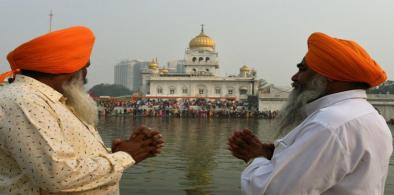
Attack on Sikh shrine exposes Pakistan’s disdain for minorities
The 'deep state' and the Imran Khan government should care about the pitiable condition of minorities in their own country instead of worrying about Muslim and Sikh minorities in India, writes Jai Kumar Verma for South Asia Monitor
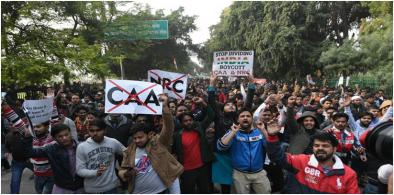
CAA has hurt India’s foreign policy and global image
The lack of homework by the Modi government on the adverse implications of the CAA is now clearly visible both domestically and internationally, writes Alakh Ranjan for South Asia Monitor
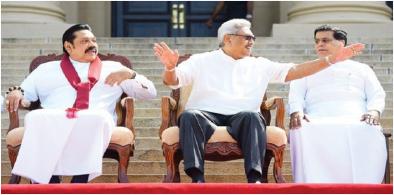
The Rajapaksas return in Sri Lanka: Should India be worried?
Sri Lanka is at the centre of the IOR and the country which will have greater stakes and leverage over this island nation will have an edge in the Indian Ocean, writes Alakh Ranjan for South Asia Monitor
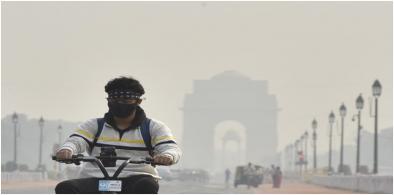
Needed political will to solve Delhi's pollution crisis
There are enough existing solutions to alleviate air pollution which is a result of a waste-disposal problem. However, there is a need to have political and administrative will to implement them, writes Anil Rajvanshi for South Asia Monitor
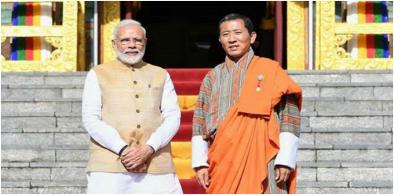
India and Bhutan explore new areas of engagement
India understands the needs of Bhutan and is equally willing to diversify the relationship beyond hydropower. During his last visit, Modi showed India’s intent towards the diversification of bilateral relations, writes Alakh Ranjan for South Asia Monitor

Policy lessons from Mahatma Gandhi: Decentralised development and sustainable living
Gandhi was an engineer at heart. He improvised and built equipment like better snake-catching tools, small cotton-spinning wheel (takli) and chappals (sandals) from used tires. In 1929, he even instituted an INR one lakh prize (INR 20 crores in today’s value; 2.6 times bigger than the Nobel Prize) for the design of a modern charkha (spinning wheel), writes Anil K Rajvanshi for South Asia Monitor
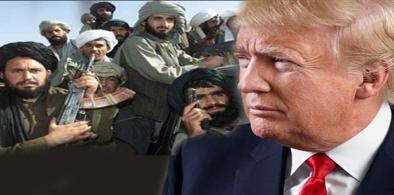
The Afghan deadlock: Was it a Trump subterfuge or a secret understanding?
Trump realized that the draft deal, if signed, would be labeled a surrender to the Taliban, which would be politically damaging for him. Another reason could be that he never really wanted to meet the Taliban, but wanted to showcase the peace efforts made, and place indirect pressure on them through the subterfuge writes Lt Gen PC Katoch (retd) for South Asia Monitor

Quietly, India crafts a new strategic partnership with Africa
With India's growing political and strategic interest in the continent, and inclination to leverage its diaspora as an instrument of soft power, it’s natural for New Delhi to establish a beachhead in Somalia, that straddles the Horn of Africa, the source of the Nile and a gate to the Red Sea and the Gulf of Aden, through which tens of thousands of vessels pass through Somali waters every year in what is one of the world’s busiest sea-trading lanes, writes Tarun Basu for South Asia Monitor
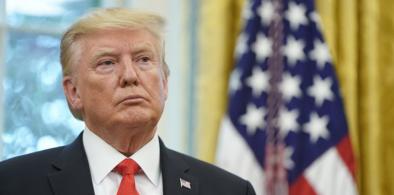
Trump cancelling Taliban pact brings relief to world capitals, including Delhi
Delhi has not yet made an official statement, but legitimizing the Taliban at a Camp David ceremony would have had an adverse impact on India’s strategic interests in the region, writes C Uday Bhaskar for South Asia Monitor

Putting NRC in perspective: Assam is not communal, has never been
For an outsider, the NRC process has come to be perceived as anti-Muslim. This is drawing the line along religious identity—a factor to which the indigenous Assamese Muslim community does not agree, but whose voice has been largely ignored in this massive debate, writes Azera Parveen Rahman for South Asia Monitor
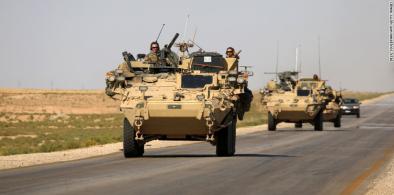
Af-Pak region can become another Syria after US withdrawal
Trump ordering withdrawal of some troops is very much on the cards. The situation in Afghanistan over the next few months is unpredictable, with the internal turmoil and economic situation in Pakistan also deteriorating, writes Lt Gen Prakash Chand Katoch (retd) for South Asia Monitor