

Pakistan Mosque Blast: ISIS' Growing Shadow In The Subcontinent
The threat from ISIS-K is real and growing. A resurgence in Pakistan would have serious implications for the broader region, including India. The danger is compounded if Pakistan once again attempts to clandestinely redirect ISIS-K towards Kashmir. What may appear as an isolated terror incident is, in fact, part of a wider pattern that demands sustained vigilance. Pakistan’s internal security instability risks creating openings for cross-border terror movements, potentially hardening new militant modules aimed at India and beyond.
 Feb 10, 2026
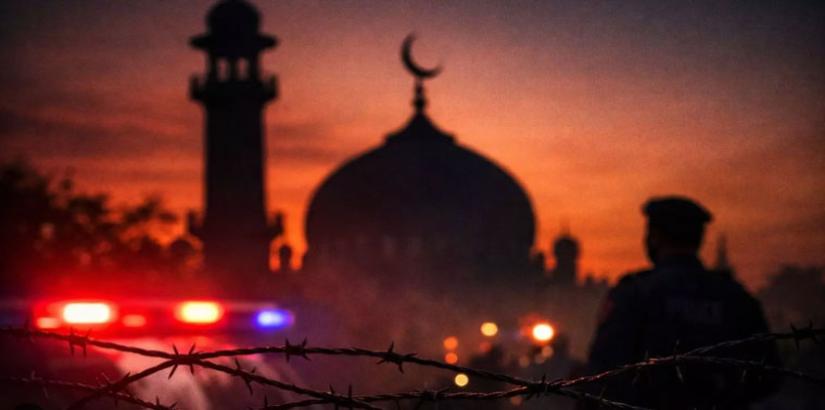
After nearly five years, the Islamic State (ISIS) has carried out a high-intensity terror attack in the subcontinent, targeting a Shia mosque in Pakistan and killing more than 30 people while injuring around 170. The last comparable attacks include the 2023 Khar bombings, the deadly Peshawar mosque bombing in 2022 that killed over 60 people, and the Abbey Gate bombing during the US withdrawal from Afghanistan in 2021, which claimed more than 170 lives.
After a relative lull, ISIS–Khorasan (ISIS-K) once again demonstrated its capacity for mass-casualty violence—this time through a suicide bombing carried out during the visit of the Uzbek president to Pakistan. While the incident may appear episodic, dismissing it as such would be a serious misreading. A closer look at the Khorasanis’ evolving strategy and their struggle to establish a durable foothold in South Asia raises alarming implications for regional security.
The Khorasani Struggle
Following the US withdrawal from Afghanistan, ISIS-K gained a limited opening to expand its influence across the subcontinent. Its campaign began months earlier with attacks such as the Kabul school bombings and continued through the withdrawal period, culminating in the Abbey Gate bombing in August 2021.
Data from 2021 reveals a sharp escalation in ISIS-K activity: the group carried out 334 attacks in Afghanistan—up from 83 in 2020—including five suicide bombings. However, between 2022 and 2023, ISIS-K was significantly weakened by sustained Taliban counter-offensives that eliminated key leaders. In early 2023, the Taliban killed Qari Fateh, ISIS-K’s military chief, and Abu Saad Muhammad Khurasani, a senior ideologue and interim leader.
As Taliban pressure intensified, ISIS-K shifted into a more clandestine mode of operation, focusing on building deep cells capable of sustaining low-intensity attacks while remaining below the radar. Even this strategy proved difficult to sustain. Taliban intelligence penetration and continuous raids in traditional ISIS-K strongholds such as Nangarhar and Kunar, along with operations in urban areas, fragmented the group further. As a result, ISIS-K activity in Afghanistan has largely been reduced to sporadic targeted killings of ideological and political figures.
Shift Towards Pakistan
From 2022 onwards, ISIS-K gradually redirected its operational focus from Kabul to Pakistan. Initially, the group carried out low-intensity attacks, but within months escalated to mass-casualty violence, most notably the Peshawar mosque bombing that killed over 60 people and injured more than 100. Throughout 2022, ISIS-K maintained a high tempo of attacks inside Pakistan.
By the end of that year, however, the group’s activities began to decline. The next major strike occurred nearly a year later, when ISIS-K carried out a suicide bombing in Khar, Khyber Pakhtunkhwa, during a rally of the Jamiat Ulema-e-Islam (F), killing more than 60 people and injuring over 200.
In 2024, ISIS-K began expanding externally into Central Asia while sustaining low-intensity, targeted killings in Pakistan. This pattern suggests a calculated strategy: exploiting weakened security environments, waiting for moments of distraction, and striking selectively to signal continued relevance and capability.
Strategic Objectives In The AfPak Theatre
ISIS-K has consistently sought to demonstrate its presence through clandestine recruitment and targeted assassinations, punctuated by high-impact attacks designed to maximise shock value. This gap-driven strategy prioritises lethality over frequency, a hallmark of ISIS-style operations aimed at reasserting relevance.
During 2022 and 2023, ISIS-K attacks in Pakistan became significantly more lethal, capitalising on a deteriorating security environment marked by the resurgence of Baloch insurgent groups and the collapse of the ceasefire with the Tehreek-e-Taliban Pakistan (TTP). In July 2023 alone, when TTP and Baloch Liberation Army (BLA) attacks peaked, ISIS-K carried out the Khar bombings, exploiting the overstretch and distraction of Pakistan’s security apparatus.
A similar dynamic unfolded in 2025. As the BLA intensified operations—beginning with the Jafar Express train hijacking in March—and the TTP escalated its campaign to more than 300 monthly operations, ISIS-K struck again. The Darul Uloom mosque bombing in Khyber Pakhtunkhwa assassinated Hamid-ul-Haq Haqqani, a prominent cleric and Taliban supporter. The attack was widely interpreted as a deliberate attempt to challenge Taliban legitimacy by targeting one of its influential backers in Pakistan.
ISIS-K’s core objective in the contested Af-Pak border region is to ensure sustained operational capability in both Afghanistan and Pakistan. This includes challenging Taliban authority, destabilising Islamabad, and building long-term organisational strength aimed at eventually overthrowing the Taliban. Beyond South Asia, ISIS-K seeks to retain a transnational strike capability extending into Central and Southeast Asia.
Islamabad Mosque Bombing
The recent Islamabad mosque bombing fits squarely within this pattern of exploiting security vacuums. At the time of the attack, the BLA had launched Operation Herof 2.0 (31 January–8 February), targeting 12 Pakistani cities and reportedly killing more than 100 security personnel. Just two days before the operation concluded, ISIS-K carried out a suicide bombing at a Shia mosque in Islamabad, killing over 30 people and injuring around 170.
This attack also carried a broader strategic message. In January 2026, the United States resumed air strikes against ISIS strongholds in Syria and Africa, dealing significant blows to ISIS affiliates, particularly in the Sahel. Under pressure, ISIS appeared eager to demonstrate continued vitality. The Islamabad attack followed closely on a suicide bombing at a Chinese restaurant in Kabul targeting Afghan and Chinese nationals, an effort to undermine Taliban outreach to China while signalling that ISIS retains the capacity to strike despite sustained military pressure.
Pakistan’s Failed Gamble
According to some reports, Pakistan’s intelligence agency, the ISI, entered into a clandestine understanding with ISIS-K in 2017, under which the group would refrain from attacking Pakistan while limiting its activities to Afghanistan. This arrangement quickly unravelled, with ISIS-K carrying out attacks such as the bombing of a Baloch Awami Party rally in Mustang, Balochistan.
It has been argued that Pakistan sought to cultivate ISIS-K as a proxy against the Taliban and Baloch insurgents, deriving dual benefits: proxy pressure against adversaries and diplomatic leverage through arrests and extraditions, such as the March 2025 handover of ISIS-K commander Mohammad Sharifullah to the United States.
This strategy has clearly backfired. Attempts to broker alliances between Lashkar groups and ISIS-K to moderate its behaviour have failed. Survival and ideological rigidity have taken precedence over tactical cooperation. Sections of ISIS-K remain committed to the vision of a regional caliphate, placing them in direct conflict with other militant actors. The recent killing of senior Lashkar commander Najibullah by ISIS-K, alongside the Islamabad mosque blast, underscores the collapse of any such nexus.
Implications for Regional Security
The threat from ISIS-K is real and growing. A resurgence in Pakistan would have serious implications for the broader region, including India. The danger is compounded if Pakistan once again attempts to clandestinely redirect ISIS-K towards Kashmir. What may appear as an isolated terror incident is, in fact, part of a wider pattern that demands sustained vigilance. Pakistan’s internal security instability risks creating openings for cross-border terror movements, potentially hardening new militant modules aimed at India and beyond.
(The author is a national security analyst specialising in intelligence and security analysis. Views expressed are personal. He can be contacted at srijansharma12@gmail.com.)







Post a Comment