Fast Fashion Exploits

Price Tag of Deception: How Fast Fashion Exploits South Asia’s Supply Chain

It is high time South Asian countries not only pass stricter environmental regulations but also strictly enforce them, making sure that there is no factory releasing waste water without adequate treatment. Besides, upholding legally binding labour standards must also be a priority together with ensuring safety of the workplace environment.

How Korean Noodle Brands Captured the Indian Market

The Korean noodle story is not really about noodles. It is about what happens when cultural influence travels faster than commercial infrastructure and faster than regulatory awareness. India's Gen Z - and possibly that of other South Asian countries - did not wait for brands to tell them what to eat. They watched K-dramas, did spice challenges, and built market demand that brands, regulators, and consumer education campaigns have simply not kept up with.

Security for Whom? Needed a Human-Centred Approach to ‘National Security’

If “security” is to have real meaning, it must be grounded in the lived experiences of those it is intended to protect. This requires a shift from state‑centred metrics to civilian‑centred measures of stability; where continuity of daily life, equitable protection, and psychological well‑being are integral to how we define security.

Cinema Is Not Policy, But Films Like Dhurandhar Culturally Reflect India’s Place in the World


The progression from Purab Aur Pachhim to Dilwale Dulhania Le Jayenge to Dangal is not a neat policy timeline. It is something subtler: a cultural echo of India’s journey from caution to engagement to assertion. The shift is not just in policy documents or diplomatic speeches; it is embedded in how stories are told, how characters behave, and how audiences respond.

More on Open Forum

Whither Commitment to Truth? How AI, Media, and Visuals Shape Our Sense of Threat

The social media takes advantage of the reward systems in the brain, especially the dopamine circuits within the basal ganglia and the prefrontal cortex. Using signals of micro-engagement, including the duration of time a user hovers over a video or the number of times a user rewatches a clip, algorithms develop a feedback loop that over time redirects the feed of a user to more intense or provocative content.

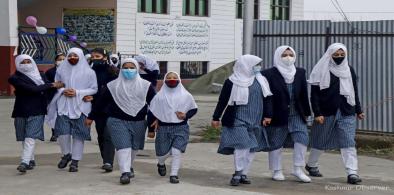
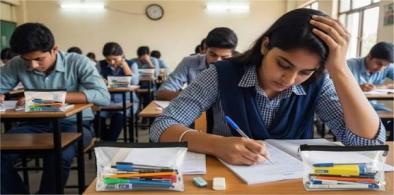
Mental Health in Schools and Colleges: An Ignored Chapter in Bangladesh's Education System

The loss of 403 young lives is a stark wake-up call for Bangladesh. Schools and colleges are meant to nurture dreams, not silently witness the suffering of students. A collaborative effort involving the government, educational institutions, and families is urgently needed. With empathy, awareness, and institutional support, many of these young lives can still be saved.

The Hormuz Lifeline: Why India’s Energy Security Still Runs Through A 33-Km Strait

India’s diversification strategy, often cited as a mitigating factor, provides only partial relief. The country now sources crude from over 40 countries, and in recent years has increased imports from Russia, the United States, and West Africa. In fact, about 70% of crude imports are now routed outside Hormuz, reflecting a conscious shift in sourcing strategy.

South Asia’s Cities Are Growing - But May Not Remain Livable

What is unfolding across South Asia’s cities is not just an urban crisis, it is a reflection of deeper tensions within development itself. Growth is happening, but it is not translating into stability. Opportunities exist, but they are unevenly distributed. Systems are expanding, but not fast enough to keep up with demand. Cities, which have long been seen as places where people come to improve their lives, are increasingly becoming spaces where people struggle to sustain them. 

Reevaluating Shakti: Transforming Divine Energy into Powerful Social Capital in South Asia

In modern South Asia, Shakti has been reborn in a different way through social reforms, feminist movement and gender equality policies. Rather than being rooted mainly in the kinship systems, feminine power now becomes more manifest in legal rights, schooling, political involvement and social movements. South Asian feminist movements have been inspired by world notions about gender justice and local cultural practices. In most situations, activists rebrand the concept of Shakti to mean the power of women, their independence and their struggle against patriarchy. 

India’s Strategic Autonomy And Lessons For World Politics

India’s experience shows that strategic autonomy, strong institutions, and long-term thinking remain the most effective tools for safeguarding national interest in an unequal global system, where power is concentrated in the hands of a few states and pressure on independent countries is a constant reality.

Witch-Hunting Persists in South Asia Targeting Vulnerable Women: Needed Stronger Protection Mechanisms

Social scientists argue that witch-hunting is a complex social phenomenon rooted not merely in superstition but in structural inequalities. Scholars studying rural India, including Surinder Jodhka, note that accusations of witchcraft often intersect with caste conflict, gender discrimination, and disputes over property or land. Elderly women, widows, and socially marginalized individuals frequently become easy targets because they lack protection within local power structures.

Gorkhas are Not Nepalese: Ending the Migrant Myth and the Indian Gorkha Identity Crisis

The valour of Gorkha regiments in the Indian Army is often used by the community as the ultimate proof of their Indianness. Since 1947, Gorkha soldiers have participated in every major conflict, be it Indo- Pakistan wars of 1947,1971,1999 or the Indo-China war of 1962. However, this valor is frequently undermined by the very state they defend, as civil and administrative bodies often treat them as "foreigners" even as they receive gallantry awards. 

Greenland, Great Power Politics, And India’s Strategic Imperative: A Realist Geopolitical Analysis

Greenland’s geopolitical prominence illustrates how a distant region can reflect deeper shifts in global power, economics, and security. For countries like India, Greenland is not about territorial ambition; it is a reminder that structural shifts in global power dynamics transcend geography. In a realist world, engagement is not optional; it is necessary for safeguarding long-term interests in a system where power continually redistributes itself. 

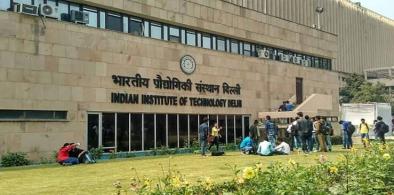
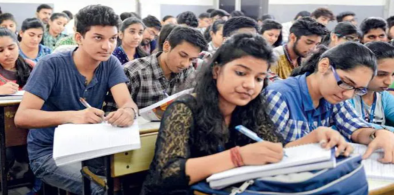
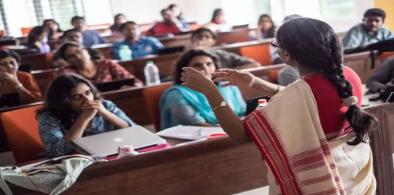
Rethinking Affirmative Action in India’s Universities: Needed Structural Reform, Not Symbolic Arithmetic

Reservation in education has achieved moral legitimacy and expanded access, but it has also created new inequalities and stagnation. Its future lies not in expansion or abolition, but in redefinition. Affirmative action must evolve from symbolic arithmetic to structural reform, grounded in data and fairness.

Podcast featuring Ashok Sawhny "Sahil"

In this exclusive conversation, Mehran Shah sits down with Ashok Sawhny Sahil, a renowned businessman and celebrated poet.

Tanhayi

Jagaiyo Na Mujhe Yaan̈
Bohot Andhera Hai

Let’s Think Again

Let’s Think Again Impatience they say,
now holds sway Impatience will bring forth gains,

What Good Is Imprecation?

What good is imprecation?
Why would you harm invoke?

Eyes

Eyes Never look at me and lie,
Cos eyes are windows to the soul,