UNICEF Maldives, on Wednesday, extended a grant of US 750,000 through the United States to aid the Maldivian government's COVID-19 response, centred around providing assistance for schools and community spaces to reopen safely


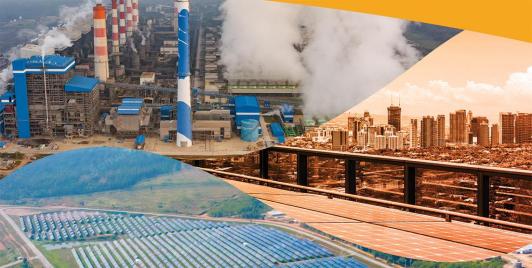
The larger economic choice for South Asia is therefore broader than whether to participate in carbon trading. The region can remain primarily a supplier of relatively inexpensive mitigation outcomes, or it can also develop the technology, professional capacity, financial products and verification systems that determine what those outcomes are worth.
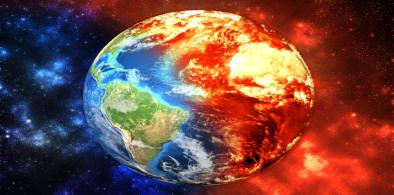
On top of that is our own unsustainable living that is creating large-scale havoc on the planet. They include construction of large dams, roads, and tunnels in the fragile Himalayan region. These activities together with the melting of glaciers due to global warming are bound to create worse natural disasters in the coming years.
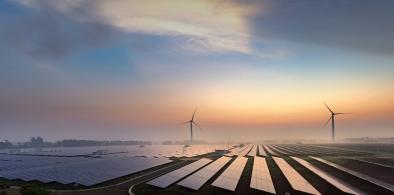
The regional opportunity is particularly significant in electricity. Nepal and Bhutan can potentially export hydropower; India can provide the scale of demand and investment required to create a regional electricity market; Bangladesh can become an important electricity consumer; and Sri Lanka and Pakistan can expand solar and wind. Greater cross-border electricity trade could allow countries to exploit complementary renewable resources and reduce the need for expensive domestic backup capacity.
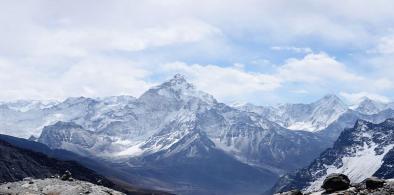
A genuinely regional approach could eventually include - besides Nepal, China and India - Bhutan and, where relevant, downstream institutions in Bangladesh. Organisations with established Himalayan expertise, particularly the International Centre for Integrated Mountain Development in Kathmandu, could offer scientific and institutional support.
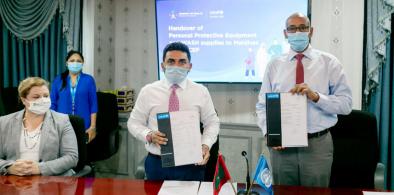
UNICEF Maldives, on Wednesday, extended a grant of US 750,000 through the United States to aid the Maldivian government's COVID-19 response, centred around providing assistance for schools and community spaces to reopen safely
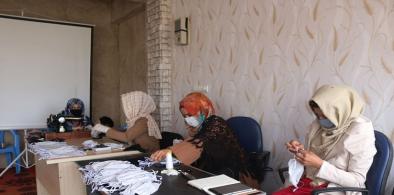
The full participation of women is essential for an effective response to the COVID-19 pandemic and also in the advancement of peace processes, said a UN policy brief released
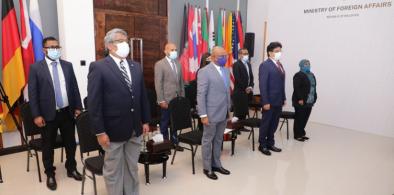
Tijjani Muhammad-Bande, the President of the United Nations General Assembly, on Tuesday hailed Maldives' support for the UN to implement its Sustainable Development Goals (SDGs) and build resilient communities
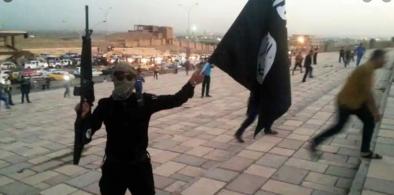
The United Nations Security Council has confirmed that the Islamic State of Iraq and the Levant (ISIL) operates with a "network of supporters" in Maldives

An Indian is among seven young climate leaders, between the age of 18-28 years, who will advise UN Secretary-General Antonio Guterres regularly on accelerating global action and ambition to tackle the worsening climate crisis
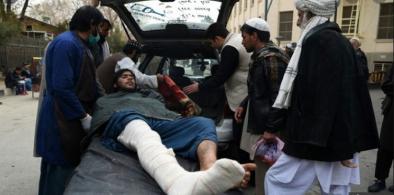
Afghan civilian casualties have decreased 13 percent in the first six months of the year in comparison with the same period in 2019, the UN mission in the country said on Monday

United Nations General Assembly (UNGA) President-elect Volkan Bozkir has postponed his visit to Pakistan because of "technical flight problems”

A report submitted to the United Nations Security Council indicates that the total number of “Pakistani foreign terrorist fighters” in Afghanistan is estimated at "between 6,000 and 6,500, most of them with Tehrik-e-Taliban Pakistan (TTP)

Nearly 6.53 crore (65.3 million) poor people in Bangladesh should receive time-bound temporary cash payments to cope with the worst impacts of COVID-19 pandemic, according to the United Nations

More than 2.4 million people are estimated to be affected by flooding, including around 1.3 million children in Bangladesh, Unicef said
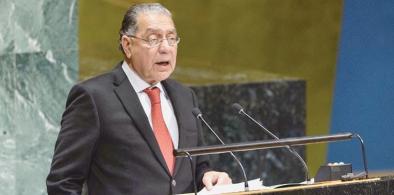
Pakistan’s Permanent Representative to the United Nations Munir Akram was on Thursday unanimously elected as the president of the United Nations Economic and Social Council (ECOSOC) for the year 2020-21

The COVID-19 pandemic has made the crisis in early childhood development worse, with more than 40 million children worldwide missing education in critical pre-school years, said a UN Children's Fund (UNICEF) report

UN agencies launched a database of laws that countries had implemented in response to the COVID-19 pandemic to help protect the health and well-being of individuals and communities

The United Nations has offered to help India and Nepal deal with their flood disaster if required

Sri Lanka's Ministry of Health, Nutrition and Indigenous Medicine (MOH), UNOPS and the Embassy of Japan in Sri Lanka announced their collaboration to address the Ccoronavirus outbreak during a handover ceremony held recently in Colombo