


Representational Photo

Delhi Needs A Blue Sky Accord With Beijing: India And China Must Lead Through Environmental Diplomacy

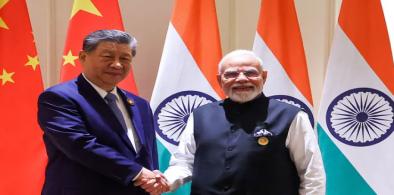
The 75th anniversary of India–China relations offers a rare diplomatic opening. In a world of strategic rivalry, climate change and air pollution represent a shared threat where national interests converge. Environmental cooperation provides a low-politics entry point for rebuilding trust—through joint work on crop-residue management, high-density air-monitoring networks, and clean-energy transitions. Moreover, the Himalayan region—the planet’s “Third Pole”—is acutely vulnerable to black carbon and atmospheric pollutants from both sides of the border. Cooperation on air quality is therefore an act of Himalayan stewardship, protecting the water security of over a billion people.

Riyadh’s High-Stakes Power Game: Balancing US and Chinese Interests

At the same time, MBS has skilfully leveraged China as a strategic counterweight, signalling that any American hesitation could push Riyadh towards deeper military and technological cooperation with Beijing—an outcome the United States would prefer to avoid. China has already become Saudi Arabia’s largest trading partner, while the United States remains its primary arms supplier and security guarantor.

Japan Shaping New Asian Security Narrative With Taiwan Stance

If Taiwan were to fall, Japan’s security architecture would be fundamentally compromised. The First Island Chain would fracture, opening a northern pathway for Beijing toward Okinawa and Kyushu. Takaichi recognised this reality and voiced what many regional strategists have long acknowledged: Japan has little choice but to act, even at the cost of Beijing’s displeasure.

Choosing The Dalai Lama: Tibet’s Unequivocal Rejection of the Golden Urn System

Reincarnation in Tibetan Buddhism is a profound spiritual process determined by the enlightened intentions of the deceased master and recognized through visions, prophecies, dreams, and unmistakable signs - not through the drawing of lots. The historical record is unequivocal: Tibet consistently regarded the Golden Urn as an external political imposition and avoided it whenever authentic spiritual evidence was present.

More on Indo Pacific - China Watch

As Beijing Reshapes Regional Dynamics, India Needs to Recalibrate China Strategy

While Wang Yi’s India visit and PM Modi’s upcoming China visit may signal a degree of creeping normalcy at the bilateral level, Beijing’s expanding footprint in South Asia is set to intensify regional competition, requiring careful assessment of its implications for the overall India-China relationship

Asia's Balance of Power Depends on India's Ability to Face China’s Strategic Challenge

Over the past decade, India’s strategic landscape has grown increasingly complex. Beijing has not diluted its consistent strategy of constraining India. Whether through deepening ties with Pakistan, or expanding influence in India’s periphery, China’s approach remains adversarial. Beijing’s assertive regional posture underscores the urgency for India to rethink both its economic and security policies. 

Myanmar's Collapse Will Have Consequences Far Beyond Asia

What began with a coup in 2021 has devolved into a theater for China’s energy security, India’s border anxieties, Russia’s arms sales, and America’s China strategy. Each external actor pursues its narrow interests; none has the incentive to restore genuine stability. The losers, inevitably, are Myanmar’s people.

The Tibetan Buddhist Reincarnation System and China's Political Weaponization

Chinese emperors, especially those of the Manchu-led Qing Dynasty, recognized that control over Tibetan Buddhism offered a powerful form of soft power. By leveraging religious authority, they could exert indirect political influence over Buddhist populations beyond China's borders.

India’s Indian Ocean Strategy Harnesses Civilisational Depth With Blue Economy Cooperation

Development diplomacy remains India’s strongest soft-power tool in the Indian Ocean. The contrast between India’s low-interest, grant-based infrastructure projects and China’s debt-heavy Belt and Road Initiative (BRI) has not gone unnoticed. The Maldivian pivot back to India is partly driven by this contras

China’s 'Project of the Century' and its Implications for South Asian Ecological and Geopolitical Stability

It risks turning a bilateral infrastructure issue into a trilateral diplomatic flashpoint, where India would have to thereafter balance its upstream anxieties with downstream responsibilities. In this context, Beijing’s growing hydrological footprint is not only being viewed as a strategic challenge in New Delhi, but also as a potential disruptor of its regional diplomacy in South Asia.

India–UK Free Trade Agreement: A Blueprint for Forward-Thinking Global Commerce

The broader strategic ramifications of the India–UK FTA are profound. It strengthens bilateral cooperation in areas such as defence, technology, renewable energy, and education, reinforcing both countries’ strategic footprints in the Indo-Pacific region.

South Asian Nations Recalibrating Role, Balancing Trade Ties with US and China

China’s presence in South Asia has expanded considerably since the launch of the BRI in 2013. Beyond trade and infrastructure, it has emerged as a provider of military hardware and a key influencer in education, media, and policy discourse. China's outreach in smaller South Asian countries is multifaceted, ranging from party-to-party diplomacy to soft power tools like Buddhist cultural ties and influence operations.

Is India Upping The Ante on Tibet?

In a media interview, Khandu strongly refuted Beijing’s territorial claims and emphasized Arunachal’s historical relationship with Tibet, a nation forcibly occupied by China in the 1950s. He pointed out that Arunachal Pradesh shares roughly 1,200 km of border with Tibet, around 100 km with Bhutan, and 550 km with Myanmar. His remarks were a pointed rebuttal to China’s repeated claims over Arunachal Pradesh, including renaming it as “Zangnan” or “South Tibet.”

Dalai Lama's Declaration A Turning Point For Tibetans

The Tibetan diaspora must now take the lead in mobilizing global opinion. The Dalai Lama has issued a clarion call — not only to uphold Tibet’s spiritual and cultural values, but to defend the right of a people to decide their own destiny.

Why is India equivocating on the Dalai Lama's succession?

There are multiple reasons why the MEA doesn’t dare to say “no one except Dalai Lama can decide his successor”, some of which could include External Affairs Minister S Jaishankar fears getting snubbed during his coming visit to Beijing

China’s Deepening Strategic Engagement In Central Asia Has Global Implications

China’s strategy for building a regional order in Central Asia converges with its playbook in sub-regions across the Global South, like Latin America, Africa and South Asia. The substance and optics of its Latin America Summit and Xi Jinping’s tour of Southeast Asia in the last few months reflect this strategy.

Dalai Lama's much-anticipated announcement throws a challenge to China

Contrary to the longstanding popular expectation that the Dalai Lama could announce an interim successor until a reincarnation is determined after his death, he has chosen the option that sets the stage for a long-term conflict between Beijing and the institution of the Dalai Lama. It is clear now that the next Dalai Lama will be from outside China and Tibet.

A Fragile Thaw: India-China Relations in Competitive Coexistence

While SCO saw ministers invoke "mutual trust" and “overall development” in public, Chinese actions reveal a twin-track approach toward India—maintaining diplomatic channels and economic engagement in public, while simultaneously tightening its grip on sectors where India remains dependent.

ASEAN Unprepared For Geopolitical Crises: Region's Future Lies Not in China, but in US

China's geographic proximity and growing power remain the core reasons ASEAN clings to its long-standing hedging and neutrality strategy. Fear of retaliation—whether economic or military—has deterred ASEAN from adopting a firm position against Beijing, which could compromise the region’s economic survival.