Von Wellx, a well-known German shoe brand that was earlier operating from China, has opened up two shoe-making units in Agra


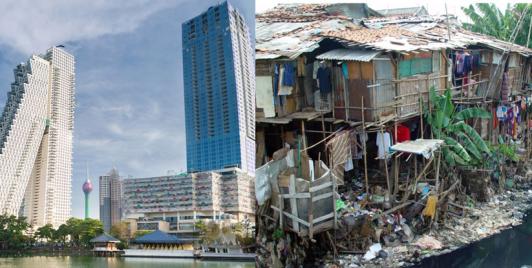
In 2025, Sri Lanka was ranked as the second most expensive housing market in the world based on rentals compared to average income. It is possible that market distortions caused by black economy and corruption have contributed to this.
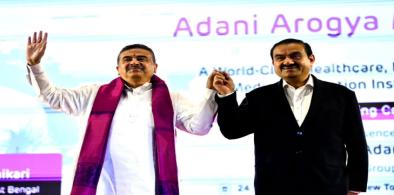
The larger opportunity before West Bengal is therefore not another round of infrastructure creation in isolation. It is the creation of an ecosystem in which infrastructure, private capital, local enterprise and skilled labour reinforce one another.
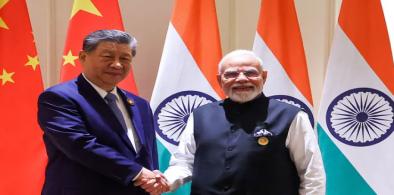
Why not begin by reopening serious discussions with Chinese conglomerate BYD about an Indian factory? BYD is now one of the world’s dominant EV manufacturers. Its Indian ambitions were caught in the post-Galwan investment freeze. Invite it back to the table—but on Indian terms
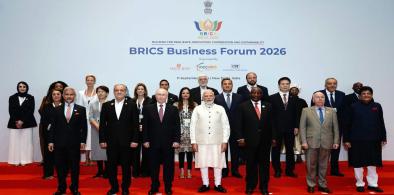
But the choice test applies to India as much as to the countries it hopes will follow its lead. If BRICS genuinely widens India's menu of markets, technology partners and financing sources without deepening its dependence on any one of them, it becomes a credible model for the rest of the Global South.

Von Wellx, a well-known German shoe brand that was earlier operating from China, has opened up two shoe-making units in Agra

In a pointed message to China and its muscle-flexing in the South China Sea and the Indo-Pacific, the Quad countries -- an informal security forum comprising India, the US, Japan and Australia -- are all set for annual naval drill Malabar Exercise in the Indian Ocean Region beginning Tuesday
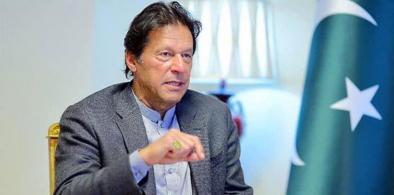
Pakistan Prime Minister Imran Khan will launch work on a mega-development project under the China-Pakistan Economic Corridor (CPEC) in Khyber Pakhtunkhwa on November 18
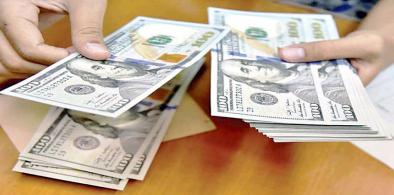
Pakistan has decided to seek rollover of a $3 billion Chinese trade finance facility that it has actually used to repay maturing debt and is not in a financial position to return the money when the facility expires after six months
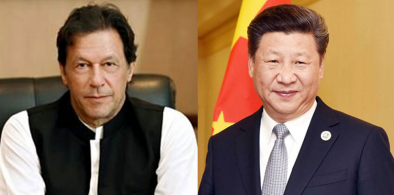
Prime Minister Imran Khan says he wants to replicate the Chinese model in Pakistan that lifted 700 million people out of poverty within a short period of 40 years
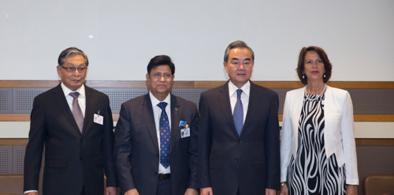
Bangladeshi State Minister for Foreign Affairs Shahriar Alam said that he looks forward to establishing direct road and rail links with China via Myanmar, according to a report published by China's state-run Xinhua News Agency
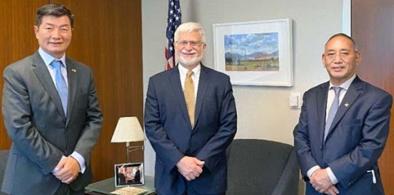
The US has the right to have whatever meetings it wants and his office is committed to advocate the autonomy of Tibet within China, US Special Coordinator for Tibetan Issues, Robert A. Destro, has said
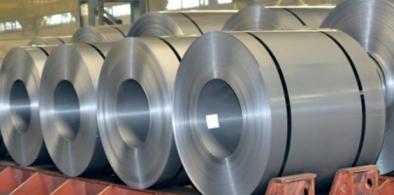
Indian aluminium manufacturers have exports to thank for offsetting a sharp decline in domestic offtake this fiscal, a Crisil Research report has said

This month's meeting between the democratically elected Central Tibetan Administration (CTA) and the US State Department was historic and recognition to the Tibetan government-in-exile that is headquartered in this northern Indian hill station
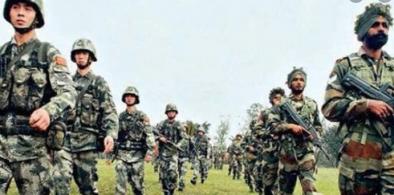
Military delegates from India and China will hold talks for the eighth time next week to resolve the border dispute in Eastern Ladakh
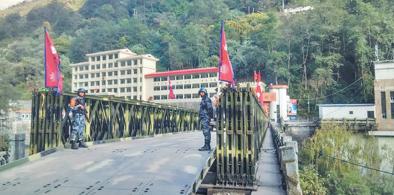
Tatopani border point, a major customs point along the Nepal-China border, has come into operation from Wednesday. An isolation area has also been established in the border area amid fear of COVID-19 pandemic
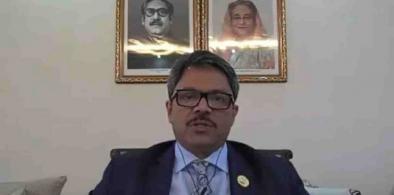
Bangladesh has emphasised on trade and investment cooperation with China amid growing interest among Chinese financiers to invest in Bangladesh
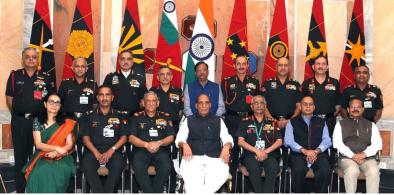
India's Defence Minister Rajnath Singh on Wednesday cautioned Army commanders to be wary of Chinese actions at disputed borders and their intent during military talks
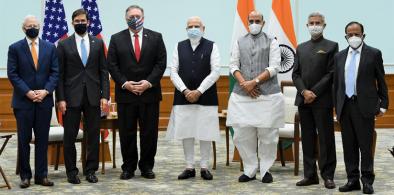
India and the US reiterated their commitment to maintain a free and open Indo-Pacific region in a direct challenge to China's "aggressive" and "expansionist" moves in the South China Sea
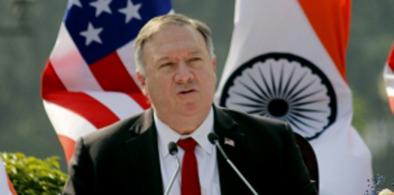
In an unequivocal message to Beijing, US Secretary of State Mike Pompeo said on Tuesday that Washington will provide any support to India as "deterrence" against China