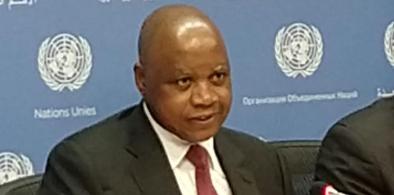

India contributes 200 personnel and Nepal 415 to UNDOF, which is headed by Major General Nirmal Kumar Thapa of Nepal.
India's Gen Z seeks opportunity, purpose and impact. The cockroach's greatest lesson is not survival but service—quietly sustaining ecosystems through recycling, resilience and adaptation. As young people lead the journey towards sustainability and Net Zero, the question is not whether they are cockroaches, but whether they will learn from them.
India maintains a separation between civilian and military nuclear programmes and remains outside the Nuclear Non-Proliferation Treaty (NPT). Consequently, the PFBR is not under International Atomic Energy Agency (IAEA) safeguards.
The reactor that has now gone critical at Kalpakkam, on the Bay of Bengal coastline in Tamil Nadu, is not the end of that journey. It is, more precisely, the end of the beginning. The real test is whether India can now scale fast breeder capacity rapidly enough to make a material difference to its energy-mix building on the Kalpakkam template, the industrial supply chains it has validated, and the engineering confidence it has earned.
If India and China choose collaboration by setting aside strategic suspicion in the climate domain, they could fundamentally reshape the trajectory of the 21st century, as they have already demonstrated individually through their pursuit of clean energy over the past decade. More importantly, such a coalition could revive the COP28 fossil-fuel phase-down pledge, which stalled at COP29 in Baku and appears to be drifting further at COP30 in Belém.
India contributes 200 personnel and Nepal 415 to UNDOF, which is headed by Major General Nirmal Kumar Thapa of Nepal.
China pays almost 120 million to the annual budget of WHO the second highest contributor and has the third-largest voting power at the World Bank based on its shareholding. Beijing has made a concerted effort to have its nationals head international organisations, and the West later organised a pushback.
The report noted that the Dae’sh - or ISIS - has threatened to attack India’s diplomatic mission in Afghanistan. It said that the Dae’sh “remained a significant terrorist threat in Central and South Asia, and the group retained ambitions to conduct external operations” and that “it had positioned itself as the primary rival to the Taliban and was reportedly set to portray the Taliban as incapable of providing security in the country”.
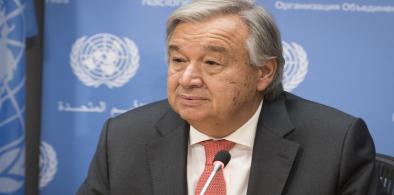
Focusing on the Abrahamic faiths, Guterres said, “antisemitism, anti-Muslim bigotry, the persecution of Christians, racism and white supremacist ideology are on the march”, but left out the attacks on and threats faced by minorities belonging to religions like Hinduism, Sikhism and Bahaism.
For South Asia as a whole, the report said the region’s “economic outlook has significantly deteriorated due to high food and energy prices, monetary tightening and fiscal vulnerabilities” and it forecast a 4.8 per cent growth year and 5.9 per cent next year.
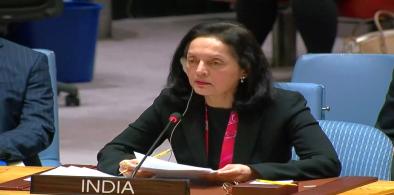
“The application of rule of law at the international level should protect the sovereignty and territorial integrity of States from aggression, including terrorism, and including cross border terrorism”, Kamboj said. The remarks were directed at Pakistan, but without mentioning it by name.
Guterres also brought up the issue of the international debt burden faced by some countries, notably Pakistan, which he called “a victim of the manmade disaster of a morally bankrupt global financial system”.
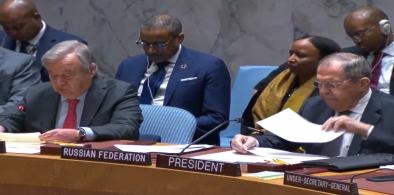
This month External Affairs Minister presided over two high-level meetings of the Council covered by India on reforming multinational organisations including the Council and on fighting terrorism, both of which have proved popular.
The complex situation in Myanmar requires “quiet and patient diplomacy”, Kamboj said. The welfare of the people of Myanmar is of “utmost priority” and at “the core of our efforts” there, she said.
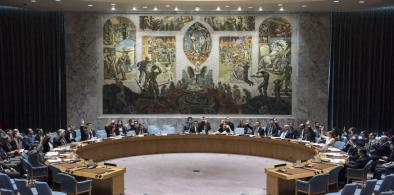
India is pressing for Council reforms, which have stalled for decades, and lobbying for a permanent seat. As its president this month, India convened a ministerial-level meeting of the Council on reforming the UN which put a spotlight on the Council’s basic architecture of permanent membership mired in post-World War II geopolitics which has changed dramatically in 75 years.
Known as the Convention on Biodiversity, the agreement was announced after hectic negotiations early Monday towards the end of 15th UN conference on biodiversity in Montreal.
She said, “We the victims of 26/11 Mumbai attacks continue to wait for justice. As the sponsors of these dastardly attacks remain free even after 14 years. “Too many lives have been lost. Too many children have been orphaned”.
It is because about a decade ago when Sanaulah was a minister, Hillary Clinton who was visiting Pakistan warned him about terrorism and said that if you have snakes in your backyard, you can't expect them to bite only your neighbours because eventually, they will bite the people who keep them, Jaishankar said.
Before Jaishankar spoke, Anjali Vijay Kulthe, a nurse from Cama and Albless Hospital in Mumbai, told the Council about her face-to-face encounter with Pakistan-based terrorists on 26/11 and how she worked to save mothers, mothers-to-be and newborns at the medical centre.
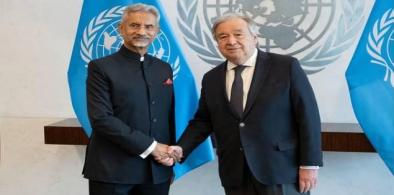
“Recognizing that diversity is one of India’s greatest assets, he strove for harmonious relations between religions, cultures and communities”, Guterres added.