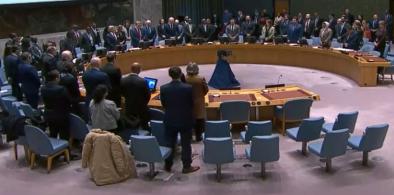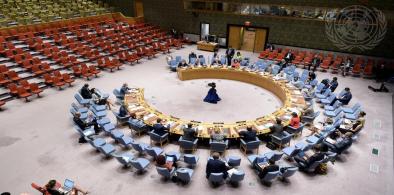

The barrier to UN reforms is a group of 13 countries led by Italy and which included Pakistan that has blocked the adoption of a negotiating text on which to base the discussion.
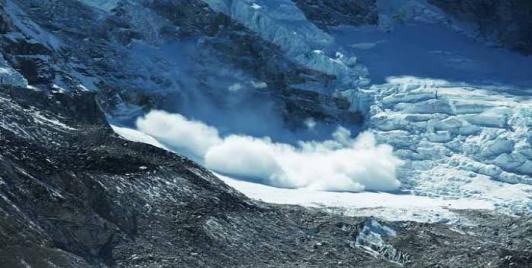
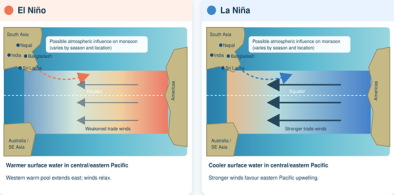
Climate change is reshaping national security in South Asia. Military preparedness, though important, cannot make up for decaying infrastructure, failing water systems, or recurrent economic disruptions brought on by extreme weather. Governments must expand the definition of security to incorporate climate resilience as a central strategic goal.
Even full development of India’s permitted hydropower and storage rights under the Indus Waters Treaty expands utilisation, but does not translate into control over downstream flows into Pakistan. The debate, therefore, is not about the ability to stop water. It is about how effectively each side uses what geography and law already permit.
A just transition in India therefore requires targeted, context-specific strategies—supporting coal-dependent regions, strengthening reskilling and social protection (especially for informal workers), and aligning sectoral decarbonisation with employment generation. Ultimately, the transition’s success will depend not only on reducing emissions, but on its ability to protect livelihoods and enable inclusive, equitable growth.
While the rising sea level and warming oceans are undeniably a part of the crisis in the Sundarbans, other factors are also in play. It's a tale of criminal enterprise, regulatory failure and violent dispossession of some of the world's most vulnerable people.
The barrier to UN reforms is a group of 13 countries led by Italy and which included Pakistan that has blocked the adoption of a negotiating text on which to base the discussion.
This was at least the 11th time India had abstained on a substantive resolution at the Security Council and the General Assembly involving Ukraine.
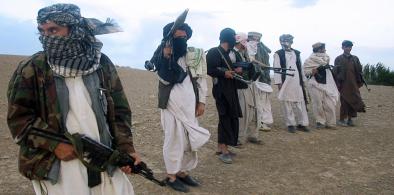
An Amnesty International investigation found that “up to 99 Hindu women, men, and children” had been massacred by ARSA fighters, who also abducted Hindu villagers in August 2017 in Myanmar’s Rakhine State.
A small group of countries - which includes Pakistan - have so far blocked the reform process by preventing the adoption of a negotiating text which has meant that the IGN functions without a proper agenda or a record of the negotiations.
US and India have asked the Security Council committee dealing with sanctions on the Islamic State and al-Qaeda along with affiliated groups like the L-e-T to impose sanctions on Mahmood, who runs its international operations.
At the Ekta Nagar in Gujarat's Kevadia, Gutteres is to join Modi to launch the Mission LiFE (Lifestyle for Environment), the MEA said. Gujarat is Modi’s home state.
The Assembly session also witnessed a sideshow by Pakistan, which stuck to its gimmick of bringing up Kashmir regardless of the topic on the agenda. Kamboj dismissed it as an attempt to misuse the UN forum with “frivolous and pointless remarks”.
India joining the West against Russia on procedural matters is not necessarily a precursor to a change in New Delhi’s neutrality in voting on substantive matters involving Russia’s invasion of Ukraine.
Holding the meeting in India is a special effort by New Delhi to draw world attention to the terrorist attacks and the threats it faces and to prepare the international community to deal with the emerging technologies that could be force multipliers for terrorists.
Over 431 peacekeepers have died in the operations in the DRC, of them 31 were Pakistanis.
A lifesize, speaking, gesticulating presence on the stage, the Gandhi avatar provoked, prodded and challenged a panel made up of an activist, a diplomat, a youth and an economist to delve into the meaning of education for humanity.
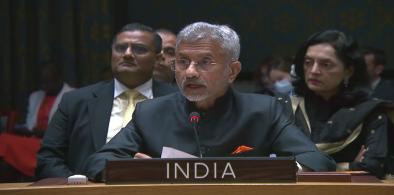
Kamboj said, “India’s position has been clear and consistent from the very beginning of this conflict: The global order is anchored on the principles of the UN Charter, international law and respect for sovereignty and the territorial integrity of all states”.
India’s “age-old outlook”, he said, “sees the world as one family. We believe that national good and global good can be entirely in harmony”.
A small group of countries led by Italy and which includes Pakistan has blocked the adoption of a negotiating text which would be the bases of discussions and move the reform process.
“The desire for peace, security and progress in the Indian subcontinent is real. It is also widely shared and it can be realized”, he said. “That will surely happen when cross-border terrorism ceases, when governments come clean with the international community and with their own people, when minorities are not persecuted, and not least when we recognize these realities before this Assembly”, the Indian diplomat said.