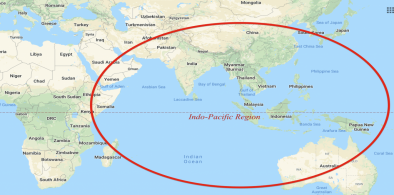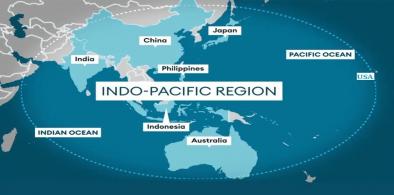

Quad does create an overarching arc of stability in the region, checking the expansion capacity of Beijing, which will in turn boost India’s regional ambitions that are mutually aligned with the Quad’s objectives.
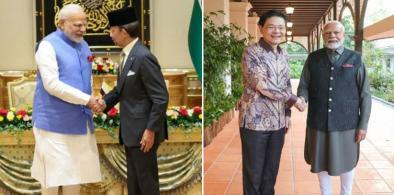
Modi marked a new chapter in his strategic geopolitical moves over the past few months since the start of his third term with visits to the region and to Ukraine. All these marked a new frontier for India’s power projection while sending a clear message to allies and adversaries that New Delhi has its own bargaining chips in pursuance of its…
New power tools being used by China to expand regional dominance have heightened regional security dilemmas and sparked arms races. They have also caused systemic wariness among nations of the Indo-Pacific who will long for the status quo of a stable rules-based order.
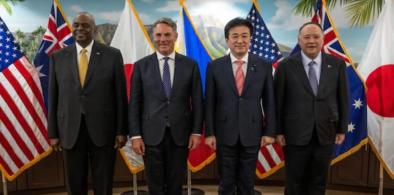
This new bloc is vital for both the US and regional players, especially the Philippines which is not part of the original Quad. For Australia and Japan, this new partnership represents a more focused security arrangement with greater on-the-ground ease of conducting military activities as compared to the more bureaucratic Quad.
India’s inevitable regional and global leadership provides a welcome new opening for the country and the region in their security calculations. It remains the region’s most important Asian partner in providing the economic and security fallback that is based on values, trust and proven expectations.
Australia has succeeded in sending a strong message to both ASEAN and China. To ASEAN, Canberra has communicated its commitment both in economic and security terms. The keyword will be a free and open Indo-Pacific, which is in line with the overall security vision of the West.
The US meanwhile, remains resilient in its future demographic and economic growth projection and stability, alongside the prospects of India. The so-called rise of China is now reversing, and the perceived decline of the US and the West is not happening.
Beijing might still use this election victory for President Tsai as a pretext to increase aggression and to justify that peaceful reunification is a lost cause, portraying the DPP as the cause of increasing cross-Strait tensions.
Melaka is also seen as a possible counterbalancing base against potential power presence in the Nicobar Island chain in the Andaman Sea and as a fallback in complementing China's existing forward bases and port capacities in Gwadar in Pakistan and in linking up with the other routes in accessing the Indian Ocean.
India is increasingly being courted by the US-led West as a bulwark to Beijing, and China will want to send a two-pronged message to Delhi and Washington as well as regional neighbours that Beijing still holds the economic and security upper hand, although its economic credentials have taken a serious hit.