Dr. Golam Rasul

Dr. Golam Rasul

About Dr. Golam Rasul

Golam Rasul is Professor and Chair of the Department of Economics at IUBAT—International University of Business Agriculture and Technology, Bangladesh. He is a scholar and policy commentator specializing in sustainability, political economy, globalization, and development transitions in Asia. His research and writing focus on the intersection of economic transformation, environmental governance, resource security, and geopolitical change. He regularly contributes commentary and analysis to regional and international platforms, including South Asia Monitor and East Asia Forum as well as leading South Asian newspapers. His recent work examines Asia’s growth model, fragmented globalization, climate and resource governance, and systemic sustainability challenges in the Global South. He has also written extensively on water-energy-food nexus governance, regional cooperation, and sustainable development policy.


More From Dr. Golam Rasul

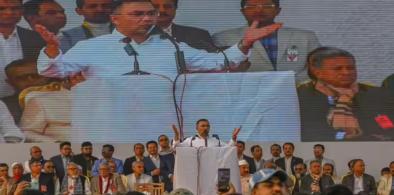
Tarique Rahman’s Return: A Narrow Window for Dhaka–Delhi Re-Engagement

For now, Rahman’s return is a consequential fact: it reshapes domestic dynamics and reframes the bilateral conversation at a critical moment in Bangladesh’s political calendar. If New Delhi reciprocates with measured outreach, this moment can be converted into durable, institutionalized cooperation.

Bangladesh–India Relations at a Crossroads: Needed Recalibration, Not Rupture

The current strains in Bangladesh–India relations should therefore be seen not as an inevitable deterioration, but as a test of diplomatic maturity. Bangladesh and India share more than geography and history; they share a responsibility to ensure that temporary political frictions do not harden into structural mistrust. In a time of regional…

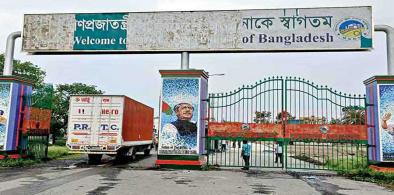
Dhaka–Delhi Trade Frictions: Call For Urgent Reset And Regional Cohesion

If trade tensions intensify, they could unravel years of progress in regional connectivity and energy integration. The same border that once symbolized shared progress could become a faultline of friction. Safeguarding these gains requires renewed dialogue, predictability, and partnership. Trade must be the foundation, not the faultline, of the…