

A Gulf Truce with Global Consequences: Will it Bring Durable Peace?
A military confrontation in the Gulf can raise food prices in South Asia, accelerate inflation in Africa, disrupt supply chains in Europe, and unsettle financial markets across the globe. The reopening of the Strait of Hormuz is therefore more than a maritime development; it is a reminder of the profound interdependence that defines the contemporary international order.
 Jun 25, 2026
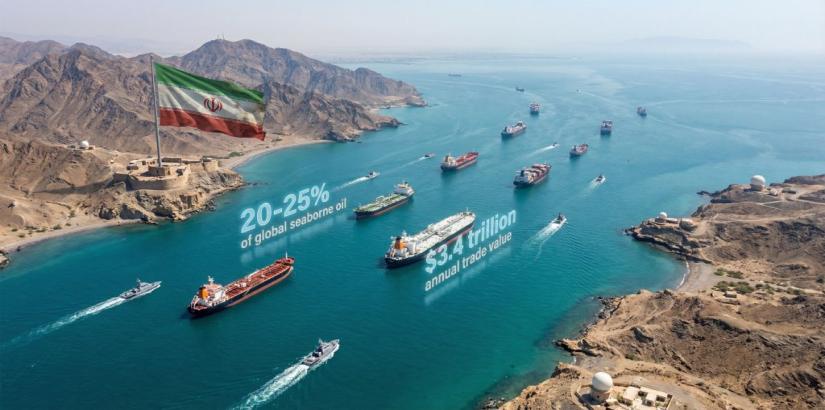
The world's most vital energy artery has reopened. The Strait of Hormuz—through which nearly one-fifth of global oil and gas supplies pass—has become the clearest sign that Washington and Tehran have stepped back from the brink. After three months of war that threatened to ignite a wider Middle Eastern conflict and destabilize the global economy, the United States and Iran formally signed a memorandum of understanding (MOU) in Switzerland on June 19. The agreement halts hostilities, restores freedom of navigation, and creates a diplomatic pathway toward addressing one of the most dangerous rivalries in international politics.
Even in a world accustomed to geopolitical surprises, the agreement is remarkable. Only weeks ago, West Asia appeared to be sliding toward a broader regional conflagration that threatened global energy security, international trade, and economic stability. Today, there is cautious optimism that diplomacy has prevailed.
Yet the agreement is not a peace treaty. It is better understood as a framework for peace—a pause in a dangerous conflict and a pathway toward more difficult negotiations ahead.
Military Confrontation to Diplomacy
The significance of the accord extends far beyond ending a regional war. It highlights a defining reality of the twenty-first century: regional conflicts can rapidly become global economic crises. The agreement also bears the imprint of quiet diplomacy by regional intermediaries, particularly Pakistan, alongside Qatar and Türkiye, underscoring the growing role of middle powers in facilitating dialogue when direct engagement becomes politically difficult.
The memorandum combines immediate de-escalation measures with a structured diplomatic process aimed at addressing the underlying sources of conflict. It provides for the cessation of military operations, the restoration of freedom of navigation in the Gulf, and a commitment by both sides to avoid actions that could reignite hostilities during the implementation period.
More importantly, it establishes a sixty-day negotiating framework during which Washington and Tehran will seek to address the issues that have poisoned their relationship for decades: Iran's nuclear programme, sanctions relief, verification arrangements, regional security concerns, and the future of Tehran's enriched uranium stockpiles.
In this sense, the agreement seeks to transform a military confrontation into a diplomatic process. Whether that process ultimately succeeds remains uncertain, but it has created the political space within which a more durable settlement might emerge.
Fragility of Global Economy
The immediate impact has already been felt in global markets. The closure of the Strait of Hormuz had triggered fears of a prolonged energy shock, driving up oil prices and unsettling investors worldwide. Even before the formal signing of the agreement, expectations of de-escalation pushed oil prices downward and improved market sentiment across Asia and Europe.
For energy-importing countries, particularly in the developing world, this development offers welcome relief. Economies such as Bangladesh, Pakistan, Sri Lanka, and many African countries have struggled with imported inflation, balance-of-payments pressures, and currency depreciation in the wake of successive global disruptions. A sustained reduction in energy prices could ease some of these pressures and create additional policy space for governments already facing difficult economic choices.
Yet the implications extend well beyond energy markets. The Hormuz crisis once again exposed the extraordinary fragility of the global economy. A narrow maritime corridor between Iran and Oman was able to disrupt supply chains, unsettle financial markets, and undermine investor confidence across continents. The episode illustrates how geopolitical crises increasingly translate into economic disruptions.
Energy shocks do not stop at the petrol pump. Higher oil prices increase shipping costs, raise fertilizer prices, and push up the cost of food production and transportation. For many developing countries, the closure of Hormuz was not merely an energy crisis; it was a potential food-security crisis. The affordability of basic necessities in Dhaka, Nairobi or Cairo can be influenced by events unfolding in a narrow waterway thousands of kilometres away. The lesson is clear: in an era of geoeconomic fragmentation, energy security, food security, and economic security have become inseparable.
A Difficult Phase of Negotiation
Yet it would be premature to celebrate. The agreement leaves unresolved the very issues that produced the conflict in the first place. The future of Iran's nuclear programme remains uncertain. Washington continues to seek strict limitations and verifiable guarantees, while Tehran demands sanctions relief and recognition of its sovereign rights. Questions also remain regarding Iran's missile capabilities, regional alliances, and long-term security arrangements.
Here, history offers both encouragement and caution. The Camp David Accords of 1978 demonstrated that framework agreements can create the political conditions necessary for durable peace. By contrast, the Joint Comprehensive Plan of Action (JCPOA) of 2015 revealed the fragility of diplomatic achievements when political support erodes. Like the JCPOA, the current agreement rests on a delicate balance of verification, trust-building, and phased concessions.
The collapse of the nuclear deal demonstrated that technical solutions alone cannot overcome deep political distrust. Diplomacy may design agreements, but politics ultimately determines whether they endure.
The risks are therefore considerable. Trust between Washington and Tehran remains brittle, and the same political forces that undermined earlier agreements have not disappeared. Israel remains outside the framework and continues to harbour concerns about any arrangement that leaves Iran with residual nuclear capabilities. Military actions by third parties could quickly derail diplomacy. Domestic opposition within both the United States and Iran may also complicate implementation.
The memorandum may therefore represent not the end of the crisis but the beginning of a more difficult phase of negotiation. Peace frameworks often succeed not because they resolve disputes immediately but because they create mechanisms through which disagreements can be managed without resorting to violence. Whether this agreement can perform that function remains to be seen.
Peace Remains Provisional
Nevertheless, the accord matters. It reduces the immediate risk of a wider regional war. It eases pressure on global energy markets. It provides breathing space for vulnerable economies. And it demonstrates that diplomacy, even between bitter adversaries, remains possible.
More fundamentally, it reminds us that in an interconnected world, regional conflicts are never truly regional. A military confrontation in the Gulf can raise food prices in South Asia, accelerate inflation in Africa, disrupt supply chains in Europe, and unsettle financial markets across the globe. The reopening of the Strait of Hormuz is therefore more than a maritime development; it is a reminder of the profound interdependence that defines the contemporary international order.
Whether the U.S.–Iran agreement evolves into a durable peace or joins the long list of failed diplomatic experiments remains uncertain. The lessons of Camp David and the JCPOA point in opposite directions: one became a cornerstone of regional stability; the other unraveled under political pressure. The coming weeks will reveal which path this agreement follows. For now, the Gulf has stepped back from the precipice. But peace remains provisional, and the world's economic fortunes remain tied to the success—or failure—of diplomacy.
(The author is Professor and Chair of the Department of Economics, International University of Business Agriculture and Technology (IUBAT), Dhaka. His research focuses on regional trade, sustainable development, and South Asian economic cooperation. Views expressed are personal. He can be reached at golam.grasul@gmail.com)





Post a Comment