If contract farming is an idea whose time has come, it is necessary to ask why did it take off from 2002-03 and then sharply decline by 2011-12 in this vanguard agrarian state, writes N Chandra Mohan for South Asia Monitor


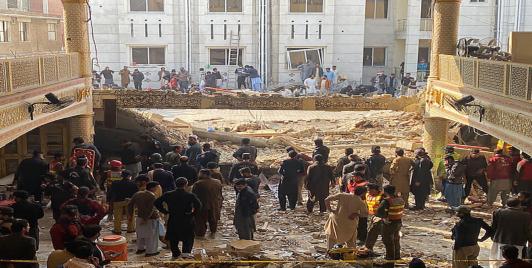
India must also recognise that Pakistan's internal security crisis has wider regional implications. Escalating Pakistan–Afghanistan tensions could create additional uncertainty along the western frontier, while attacks on Chinese projects could affect regional connectivity and investment.
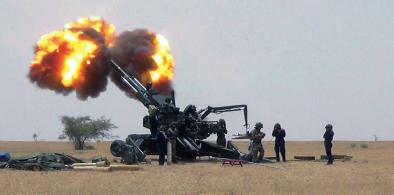
India has demonstrated that it can develop and manufacture modern artillery systems. What needs reassessment is how quickly we acquire, integrate and field them, and how effectively we ensure that new technologies communicate and operate together.

If India says the security of its Northeast, border management, trade and connectivity matter, Bangladesh can equally say that water sharing, deaths at the border, market access, energy security, river management and sovereign equality matter to it.
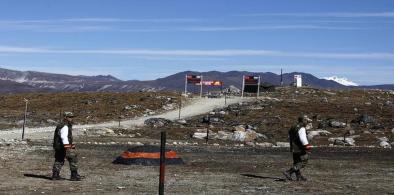
The Indian military views no disengagement in Arunachal Pradesh as part of a wider strategic recalibration, prompting India to match Chinese force rebalancing by shifting strike corps and resources equally across both northern and eastern fronts.
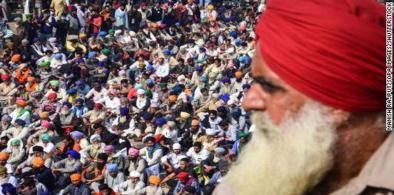
If contract farming is an idea whose time has come, it is necessary to ask why did it take off from 2002-03 and then sharply decline by 2011-12 in this vanguard agrarian state, writes N Chandra Mohan for South Asia Monitor

More importantly, the South Asia region needs to realise that workers and farmers have a key role to play in promoting sustainable consumption as they are both the end consumers as well as the producers at the start of the supply chain, writes George Cheriyan & Simi T.B. for South Asia Monitor

But it is interesting to note that 49 years hence, there seems to be no change in how the nation views the civil war and a bloody separation of its eastern province, writes Mahendra Ved for South Asia Monitor

The ‘uncultured’ state of Pakistan has not apologized yet for the 1971 genocide. It should be compelled, writes Farabi Bin Zahir for South Asia Monitor

New Delhi also needs to recognize that the rules of diplomacy are changing and that country, especially the US under Biden, would not hesitate to make remarks about human rights violations or on communal tensions and certainly, the changes in the status of Jammu and Kashmir. None of these would qualify, for Biden’s Administration, as being ‘internal matters,’ writes Amb Amit Dasgupta (retd) for South Asia Monitor

On this International Migrants Day, it is worth noting that not every migrant succeeds in an adopted land. For evidence, one need not go beyond the Indian American community. While the community’s many successes and accomplishments have been well-documented, a less-publicized fact is the plight of hundreds of thousands of Indian nationals in the United States, writes Frank Islam for South Asia Monitor
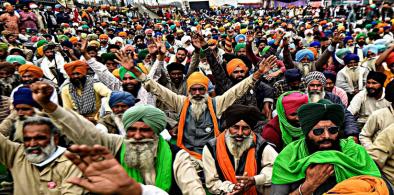
What the BJP may have realized, therefore, from these sporadic eruptions of protests is that electoral success is not the be-all and end-all of politics, writes Amulya Ganguli for South Asia Monitor
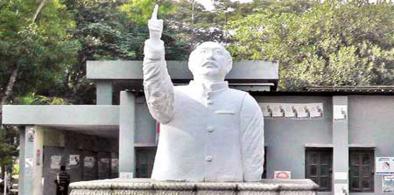
Many people want to know why the ruling Awami League is perpetuating this "sculpture politics". Why is this issue being given so much importance so as to forget the numerous other challenges Bangladesh is facing? writes Akmal Hossain for South Asia Monitor

India for the time being has chosen to call for an adjournment on the multidimensional chessboard of multilateral trade/strategic agreements which can be seen as a wise move, writes Kumardeep Banerjee for South Asia Monitor
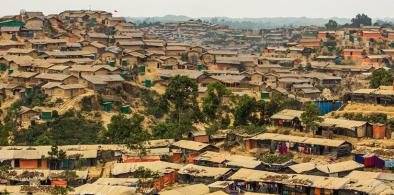
Little help has been extended to Bangladesh to resolve the Rohingya problem. Even in international forums like the UN, no one voted for Bangladesh when it brought a resolution condemning human rights violations in Myanmar, particularly against Rohingya Muslims, writes Swadesh Roy for South Asia Monitor
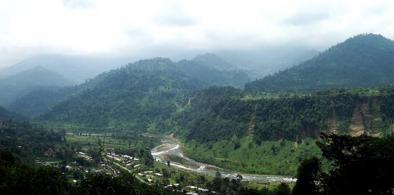
China’s aim of building these new villages along the LAC with India is multiple. These helped populate Han Chinese closer to the border areas, overwhelming the Tibetan population demographically since the invasion and occupation of Tibet in 1959-51, writes Lt Gen Prakash Katoch (retd) for South Asia Monitor

India is forecast to be the biggest contributor to the ‘new normal’ doubling its renewable additions in 2021. Wind and solar additions are expected to jump by 30 percent in both the US and China, writes Rajendra Shende for South Asia Monitor

In the course of his advisory duties, Yeager had made good friends in the higher echelons of the Pakistan Air Force (PAF), and within a short period, he fell prey to an affliction, known, amongst diplomats, as ‘localitis,’ i.e, a deep sympathy, verging on identification, with the host country and its people, writes Admiral Arun Prakash (retd) for South Asia Monitor

Would it be appropriate to suggest that the Modi government defer the construction of a new parliament building in Delhi, and use the funds (approximately Rs. 971 crores) to create a corpus for post-COVID South Asian rebuilding? writes Cmde C Uday Bhaskar (retd) for South Asia Monitor

The COVID-19 pandemic has brought in additional challenges to tackle amidst the technological disparities within Asia. There is a digital divide witnessed in the economies of South Asia, writes Partha Pratim Mitra for South Asia Monitor