
Photo: Twitter

Bangladesh's 'Red Telephone' Breach: More to it Than Meets the Eye?

More importantly, the alleged sabotage occurred during a period of political transition following the developments of August 2024. Institutional loyalties, political rivalries, and competing networks of influence continue to shape Bangladesh's political landscape. In such a context, any breach involving the Prime Minister's secure communications infrastructure deserves careful examination.

Between the Melody Moment and the Hard Work Ahead: Modi's Europe Tour Outcome Will Depend on Delivery in Coming Years

India's MSME sector, the backbone of its export economy, remains largely unequipped to navigate European standards and certification requirements. As ABC Live noted, the next stage will be tougher than negotiation: India must now prove that its exporters, MSMEs, regulators, ports, testing labs, and state governments can actually use the agreement. A framework signed in Gothenburg means nothing to a textile exporter in Tiruppur who cannot get a product certified to EU standards.

Why India and Pakistan Must Move From Rivalry to Responsibility: In Fragmenting Global Order, South Asia Cannot Afford Internal Paralysis

The central lesson is simple: unresolved India-Pakistan hostility weakens South Asia from within. It prevents trade, blocks institutions, raises nuclear risk, politicizes water, militarizes borders, and diverts attention from human development. Both countries will continue to disagree on major issues. But disagreement does not require permanent hostility. Strategic maturity means building rules to manage conflict before conflict manages the region.

The Race for Strategic Minerals: South Asia's Geopolitical Moment

The Quad's Critical Minerals Initiative provides an important platform for achieving these objectives. Through coordinated investments, technology sharing and supply-chain diversification, the initiative seeks to create resilient and transparent mineral supply networks. Australia contributes abundant mineral reserves, Japan offers advanced processing technologies, the United States brings investment and innovation capabilities, while India provides a rapidly expanding market and growing manufacturing base.

More on Geopolitics and Strategic Affairs

The COVID-19 fight is the test of Modi’s leadership

India is poised for an all-out war and, like in any war, this is not the time for partisanship. It’s in this scenario that Modi will find himself at a fork in the road, writes E.D. Mathew for South Asia Monitor

Myanmar needs to recognise and accept 'Rohingya identity'; integration with Bangladesh is wishful thinking

Indeed, if anyone is serious about the plight of the Rohingyas and is looking for sustainable solutions to the crisis, then the person ought to put her gaze not on Bangladesh but on Myanmar, writes Imtiaz Ahmed for South Asia Monitor

Need for India to have a sound policy regime: Role of advisers is crucial

When the first COVID-19 case came to public notice in India in January this year, questions in concerned quarters have been raised as to why did it take almost two months to prepare for lockdown and that too with a notice of a few hours to leave many citizens unprepared and more so the migrant and the poor, writes Partha Pratim Mitra for South Asia Monitor

Post-COVID-19: RSS sees an ascendant India in changed world order

RSS remains quite optimistic about the way the new world order is going to pan out post-COVID-19. It feels that it is the beginning of a new golden era for India, writes Arun Anand for South Asia Monitor

India must relax lockdown in phases; economic activity must resume gradually

The consequence of continuing the lockdown, even under present conditions, could be grave, as the self-employed people like vendors, plumbers, auto drivers, small automobile workshops etc.  as well as  poor senior citizens, visually impaired/differently-abled people, who are millions in number all over the country, would be badly hit, writes N S Venkataraman for South Asia Monitor

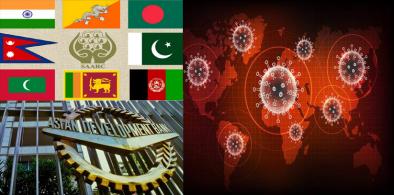
Need for collective strategic action by SAARC to survive pandemic

The legitimacy of a regional organization like SAARC and others alike will be uncertain if strategic measures and procedures to control COVID-19 do not work in South Asia, writes   Maj. Gen Binoj Basnyat (retd)  for South Asia Monitor

Hindu-Muslim ties in the time of a pandemic

No one can predict what the trajectory of communal relations will be when it is clear that so much will change in the post-corona period not only with regard to Hindu-Muslim ties, but in every other field that the scene in India will be quite different from what it is today writes Amulya Ganguli for the South Asia Monitor

Right time to usher in reforms in India's Armed Forces

The armed forces, after decades of clamouring, have been accorded a historic opportunity to usher in change and reforms. It is imperative that this opening is utilized with sagacity and deliberate forethought writes  Admiral  Arun Prakash (retd) for the South Asia Monitor

US -Taliban peace deal: Peace for whom?

How much the talk of sharing power with the Taliban is realistic - that raises doubts, as it is impossible for the Taliban to be diverted from their ideology, writes Monira Nazmi Jahan for the South Asia Monitor

Nepal needs to show social solidarity in coronavirus lockdown

We, the people of Nepal should understand that if an unfortunate incident can befall one, it can befall others too. That’s why we all need to stand together, writes Jivesh Jha for the South Asia Monitor

India needs to brace for another lockdown

While the South Korean model of aggressive and maximum testing has proved successful; the world is also studying and appreciating the Indian model wherein a densely and an overpopulated nation with limited resources and a not very advanced health infrastructure has been able to control the exponential spread of the pandemic, writes Brig Anil Gupta for the South Asia Monitor

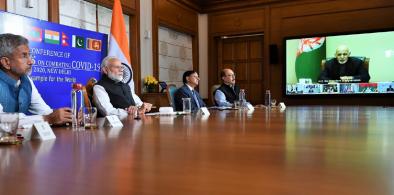
SAARC is back, but only to fight COVID-19

The question whether India’s initiative will develop into a SAARC minus Pakistan or lead to a revival of SAARC itself remains open,  writes Amb T P Sreenivasan (retd) for South Asia Monitor

Only a Biden presidency can strengthen Indo-US ties

This inability to get any meaningful trade agreement in place speaks volumes about India’s potential future relations with the US with Trump as president, writes Frank F Islam for South Asia Monitor

Time to review lockdown to stop economic shutdown

Lockdown cannot be an option to exercise indefinitely. We need to progressively lift it so that the economic costs will not overwhelm us, writes Mohan Guruswamy for the South Asia Monitor

55 years later, India returns favour to US, emerges as humanitarian force

It wasn't only a favour to the US, Brazil or Israel. India also decided to send HCQ  “to all our neighbouring countries who are dependent on our capabilities” and “some nations who have been particularly badly affected" by the pandemic, writes Arul Louis for South Asia Monitor