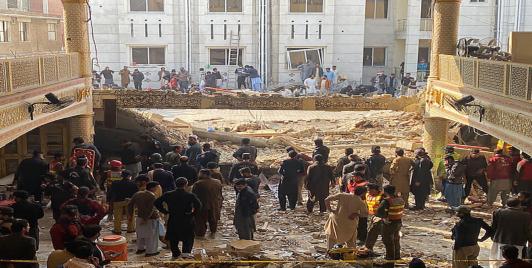
Terrorist violence in Pakistan mosque

Mounting Instability in Pakistan: Consequences for Regional Security

India must also recognise that Pakistan's internal security crisis has wider regional implications. Escalating Pakistan–Afghanistan tensions could create additional uncertainty along the western frontier, while attacks on Chinese projects could affect regional connectivity and investment.

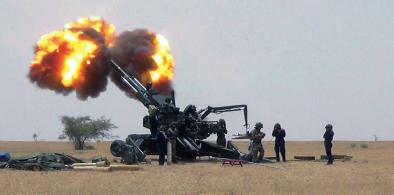
Indian Artillery: Speed of Acquisition Is as Important for Readiness as Technology

India has demonstrated that it can develop and manufacture modern artillery systems. What needs reassessment is how quickly we acquire, integrate and field them, and how effectively we ensure that new technologies communicate and operate together.

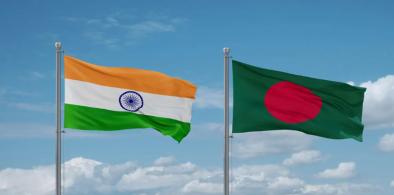
Why Dhaka and Delhi Must Find Common Ground - and Their Shared Space

If India says the security of its Northeast, border management, trade and connectivity matter, Bangladesh can equally say that water sharing, deaths at the border, market access, energy security, river management and sovereign equality matter to it. 

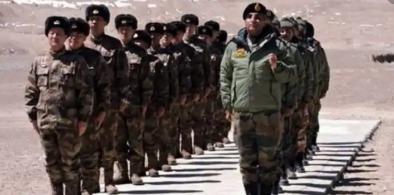
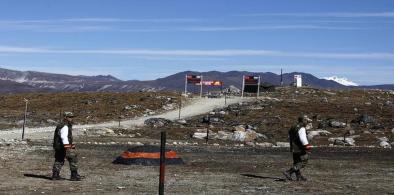
PLA’s Partial Pullbacks from Ladakh Frontier: More Tactical Than Operational Move by China

The Indian military views no disengagement in Arunachal Pradesh as part of a wider strategic recalibration, prompting India to match Chinese force rebalancing by shifting strike corps and resources equally across both northern and eastern fronts.

More on Geopolitics, Security and Strategic Affairs

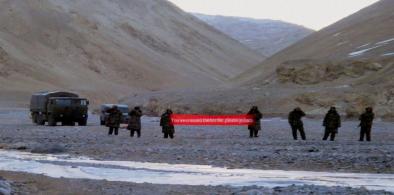
Chinese ingress in eastern Ladakh a collusive move with Pakistan?

China’s message to India is loud and clear that it has absolutely no intention to withdraw soon. It has also proved that the collusive support of China and Pakistan to each other against India has been translated into reality, writes Lt Gen Rameshwar Roy (retd) for South Asia Monitor 

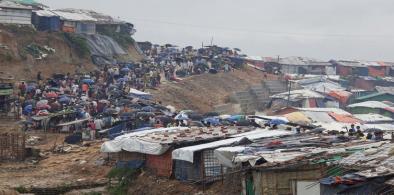
COVID-19 has worsened the dire humanitarian crisis in Rohingya camps in Bangladesh

Since Bangladesh is among the lowest testing countries, Rohingyas living in these makeshift camps are largely deprived of testing for COVID-19, writes Shanjida Shahab Uddin for South Asia Monitor

As South Asia battles COVID-19, time for strengthening regional trade connectivity

Experts feel that the outbreak of the COVID-19 pandemic has brought about new opportunities for regional cooperation in South Asia with the setting up of an emergency fund of $10 million to fight the pandemic with India's initiative, writes Partha Pratim Mitra for South Asia Monitor

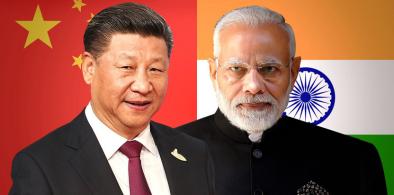
India-China dynamics in turbulent times: Civilisational ties and border dispute (Part I of three-part series)

 While India never had hegemonistic tendencies, China the ‘middle power’ always wanted to restore its past glory by any means, which included grabbing/occupying land and maritime zones based on its perception of past ownership, writes Lt Gen P R Kumar (retd) for South Asia Monitor
India’s battle against COVID-19: Response efficiency has varied from state to state

The efficiency of response has varied across India. Kerala, Karnataka, Odisha, Andhra Pradesh, Rajasthan, Punjab, Haryana and the Northeastern states responded well, with strong public health measures combined with empathetic social services, writes Prof. K. Srinath Reddy for South Asia Monitor

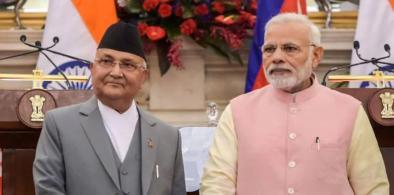
Souring India-Nepal ties

China has made all-out efforts to draw Nepal into its strategic sphere and has stoked anti-India feelings,  writes Lt Gen P. C. Katoch (retd) for South Asia Monitor
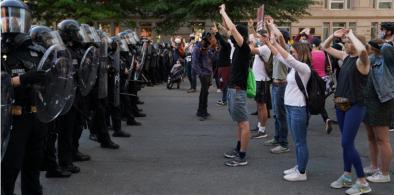
Cooperative security in South Asia: Subregional groups can show the way

In SAARC political agenda always dominated social and economic issues, whereas in successful regional organizations like ASEAN and EU, socio-economic issues prevailed over politics, writes Aneek Chatterjee for South Asia Monitor

India-China border dispute: Is a give and take possible now?

The immediate task is to get the PLA to leave Galwan without loss of face. On the other hand,  could this just be the opportunity for the two sides to settle new LACs in the three sectors? writes Mohan Guruswamy for South Asia Monitor

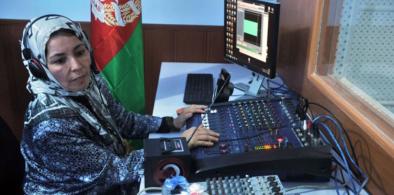
Afghan media working under constant threat

The militants and various violent groups want to suppress the 'voice of reason' and in doing so they target the media with utmost force and hatred. The factor of impunity is one of the main reasons for continued atrocity towards Afghan journalists and media, writes Dr. Sanchita Bhattacharya for South Asia Monitor

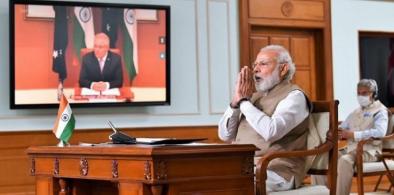
India–Australia summit: A meeting of minds

With shared concerns over Chinese hegemony, the time is right for a closer engagement between New Delhi and Canberra, writes Amit Dasgupta for South Asia Monitor

Is America’s middle class more sensitive than India’s?

What racism is in the world’s oldest democracy, communalism unfortunately is in its largest version in India. It is no secret that sizeable sections of India’s largest community, the Hindus, are communal,  writes Amulya Ganguli for South Asia Monitor

Aftermath of COVID-19: Rise of a new social class in Nepal

After the pandemic, migrant workers, including the semi-skilled and skilled labour and small-scale business people, and private job holders, who are returning from abroad, will form the neo-lower class - a new working class - that will constitute a significant population in Nepal, writes Roshan Chirag for South Asia Monitor 

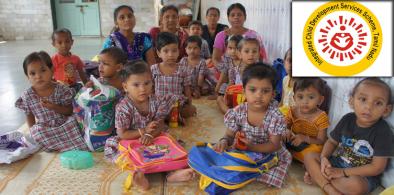
ICDS can become a model for South Asia to improve lives of children

South Asian countries can use ICDS as a blueprint and further formulate their respective policies following a tailored and local approach depending on the domestic factors pertaining to their region, writes Vishwajeet Singh Raghav for South Asia Monitor

Nepal needs a comprehensive pandemic law to battle coronavirus

It is advisable for the governments - of both Nepal and possibly India - to take a leaf from the UK Coronavirus Act, 2020 which was enacted for defeating COVID-19, writes Jivesh Jha  for South Asia Monitor

Why biodiversity conservation is necessary for dealing with the pandemic

On this Environment Day, let us commit ourselves to protect the biodiversity, for our own existence, writes Pradeep S. Mehta, George Cheriyan & Simi T. B.for South Asia Monitor