
Thousands protest in PoJK's Rawalakot

Pakistan: Oppressor at Home, Peace Broker Abroad

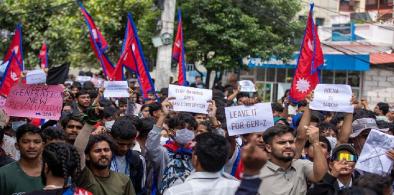
This contradiction—peace abroad, repression at home—defines Pakistan’s current posture. While Islamabad seeks international recognition as a mediator, its domestic record is marred by bloodshed and denial of democracy. The JAAC movement, rooted in basic economic grievances, has become a symbol of resistance against this hypocrisy. 

Myanmar, India and the Northeast: Balancing Security, Connectivity and Geopolitics

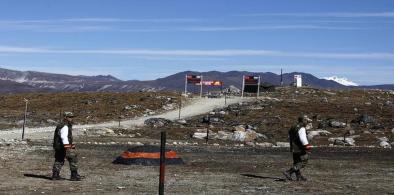
The strategic significance of the offensive lies in control over Kachin State’s heavy rare-earth deposits, which account for roughly half of the world’s supply and are critical for electric vehicles and wind turbines. The KIA took control of these lucrative mining areas near Pangwa and Chipwi in late 2024 and has since heavily fortified its positions.

Xi Jinping’s Loosening Leverage Over North Korea Amid Shifting Indo Pacific Security Dynamics

China in recent times has elevated some of its key bilateral relations, Vietnam, Pakistan, North Korea, to the level where they are now considered by Beijing as  consequential to regional and global peace and stability. China’s foreign and 'grand strategy' is aimed at realizing a shared destiny for mankind and nurturing a new type of great-power relations within a multipolar world. This requires a strategic alignment between China’s strategy and others.

Bangladesh's 'Red Telephone' Breach: More to it Than Meets the Eye?

More importantly, the alleged sabotage occurred during a period of political transition following the developments of August 2024. Institutional loyalties, political rivalries, and competing networks of influence continue to shape Bangladesh's political landscape. In such a context, any breach involving the Prime Minister's secure communications infrastructure deserves careful examination.

More on Geopolitics and Strategic Affairs

50 years of Emergency: Have any lessons been learnt?

The fateful March 1977 election vindicated Indian democratic traditions and proved the triumph of freedom over bread.  Ballot after regular ballot has shown that just because a man is poor and maybe cannot read does not mean he does not care for his liberty and human rights.

Israel and the 'Clash of Civilizations': The Case for a Muslim Nuclear Security Framework

The time has come to reject the mythology of civilizational war. It is time to reclaim the principles of sovereignty, multilateralism, and international cooperation. And it is time to imagine and construct a new security architecture for the Muslim world

Shifts And Realignments In India-Bangladesh Ties Post-Pahalgam

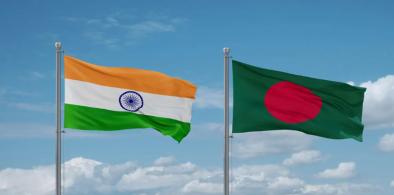
Had these events occurred during Sheikh Hasina’s tenure, Dhaka would likely have expressed solidarity with India and endorsed its right to self-defense. The current posture highlights a broader strategic shift under the interim leadership, raising questions about the future trajectory of India-Bangladesh security cooperation.

‘Himalayasia’: Reimagining South Asia beyond Mistrust and Division

The very name ‘Himalaya’ comes from two Sanskrit words Hima (snow) and Alaya (abode), a classical language of South Asia. The term 'Himalayasia'—comprising two names Himalaya and South Asia—does not privilege any one nation and is free from colonial discourse; it centers on a natural feature that has shaped the region’s ecology, mythology, and philosophy for millennia.

Global Carbon Tax Lessons for South Asia’s Green Transition

While carbon taxes are a key instrument in the climate policy toolkit, their limitations in the face of inelastic demand and global regulatory fragmentation suggest that complementary measures are essential. Subsidies for clean energy and research offer substantial emissions reductions while encouraging innovation and preserving economic competitiveness.

Bengaluru Cricket Stampede: A Mirror To Our Misplaced Priorities

Cricket—especially the IPL—is a multi-billion-rupee industry. In 2023 alone, IPL revenue touched Rs.11,770 crores, with the BCCI posting a surplus of Rs.5,120 crores. Over three years, its cumulative profits crossed ₹15,000 crores. And yet, the world’s richest sports body pays no tax—shielded by a “charitable” status. In stark contrast, research labs and educational institutions are taxed.

When Hate Overpowers Reason: Managing The Complex India-Pakistan Relationship

India’s Pakistan Conundrum is a comprehensive and somewhat concrete account of the dynamics of the power and politics in Pakistan. Though one can differ with various minor details, one must remember that the author is a diplomat, a civil servant from India, so the burden of resolving theoretical riddles is not his to carry. However, what he must be applauded for is acknowledging Pakistan's problems

Unprecedented Global Tensions in 2025: Credibility Of Global Order At Stake

The twin crises of South Asia and the Middle East in 2025 reflect a dangerous transformation of global order from a managed, rules-based system to an increasingly fragmented and militarized world. The absence of consistent international norms, selective diplomacy, and double standards by great powers are undermining peace efforts and pushing humanity closer to irreversible confrontation.

The Kananaskis Declaration That the G7 Will Never Write: A Summit of Ironies Amidst Burning Forests

But this declaration will never be signed. The actual G7 communiqué will likely promise "managed decline" disguised as "leadership"—words drafted in servitude to the oil beneath Alberta’s soil, not in the spirit of its majestic mountains.

Middle East On The Brink: What India Must Do to Shield Its Economy

The Middle East’s volatility is not an outlier—it’s a feature of the emerging global order. India’s challenge is to anticipate these tectonic shifts and act with strategic foresight, not just tactical response. Energy security, export competitiveness, and supply chain resilience must now be treated as interlinked pillars of national power. Failing to adapt could make India a casualty of distant wars.

Op Sindoor: Were India's Strategic Objectives Fulfilled?

The absence of any form of engagement with Pakistan other than military has narrowed India’s options substantially. As a sovereign state, Pakistan cannot be seen to nor will it bow to coercive tactics. The current Indian establishment’s perennially punitive approach to Pakistan and efforts to humiliate it as an object of domestic ridicule has not yielded any dividends.

50 years of G7: Multilateralism in need of renewal

For India, this summit offers a dual opportunity. First, to shape a more inclusive multilateralism; one that amplifies the Global South’s priorities on energy, security, and digital equity. Second, to rebuild strained ties with Canada, a relationship marred by recent tensions but too strategically important to neglect. 

A Month After Op Sindoor: More Questions Than Answers

So if another terror attack happens, will India launch another deep-strike operation with all the attendant risks of escalation? And how long can the tit-for-tat actions continue with the loss of soldiers and civilian lives and homes and attendant costs of military armoury and infrastructure destruction at a time when economic growth and dwindling jobs need all the attention?

Drones Over the Subcontinent: India’s New Strategic Edge

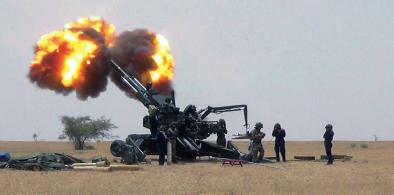
The broader picture is clear: drones have dramatically shifted the cost calculus of modern warfare. As analysts have noted, $10,000 drones are now routinely met with $2 million missiles. Only a country capable of producing its own unmanned systems, and adjusting its tactics in real time, can maintain strategic credibility under such conditions. 

Is Bangladesh slipping toward a praetorian state?

Bangladesh’s 2024 crisis has significantly strained civil-military relations. The military’s instrumental role in ousting Hasina and installing the interim government has amplified concerns of a deepening praetorian drift. As Yunus’s control weakens amid economic turmoil, law-and-order issues, and geopolitical friction, the military appears increasingly assertive—opposing civilian initiatives and resisting reforms.